Siemens Versicharge 48A Review: Industrial Powerhouse Tested
This robust 48-amp EV charger delivers rapid charging speeds and versatile connectivity options. However, its rigid cable design demands careful garage management during freezing winter conditions.

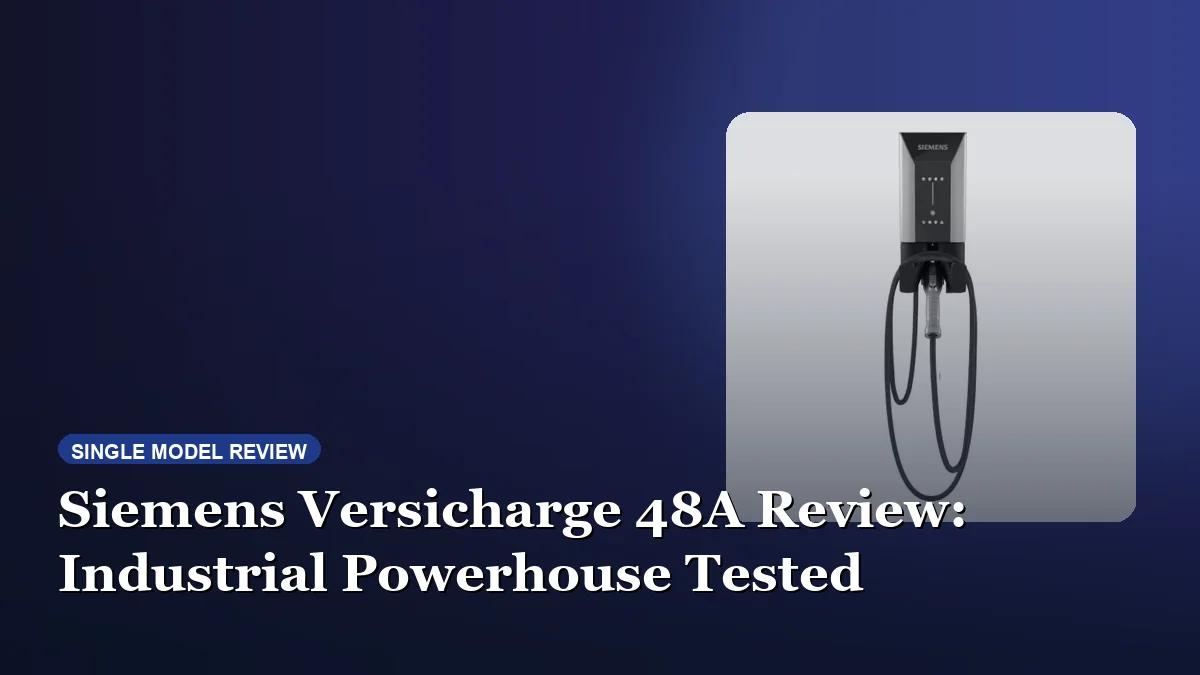
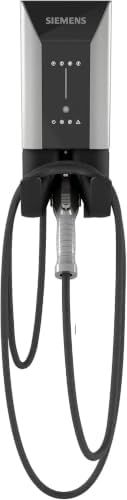
The Siemens Versicharge 48A combines commercial-grade durability with smart monitoring features. Installers will appreciate the flexible wiring configuration, though daily users must manage the stiff 20-foot cable.
Explore related alternatives in our Best Ev Level 2 Charger.
Verified Specifications
| Amperage Output | 48 Amps maximum |
|---|---|
| Voltage Rating | 240V AC hardwired or plug-in |
| Power Delivery | 11 kW continuous output |
| Enclosure Rating | NEMA 4 weatherproof housing |
| Connector Type | SAE J1772 standard plug |
| Connectivity | Ethernet, Wi-Fi, ISO 15118 |
| Cable Length | 20-foot integrated tethered cord |
| Safety Certifications | UL and cUL listed, CSA compliant |
What We Liked
- Robust NEMA 4 enclosure handles extreme outdoor elements effortlessly.
- Delivers a fast 48-amp output capable of 11 kW power delivery.
- Includes advanced smart connectivity via Wi-Fi and Ethernet ports.
- Flexible installation supports both hardwiring and plug-in setups.
Trade-Offs
- The 20-foot tethered cable remains quite stiff in cold weather.
- App interface lacks advanced scheduling granularity found in rivals.
- Heavier unit weight requires two people for secure wall mounting.
Engineering Architecture and Enclosure Build Quality
The Siemens Versicharge 48A utilizes a heavy-duty industrial chassis designed for demanding commercial properties. Its robust construction ensures exceptional resistance against physical impacts and moisture intrusion in all weather conditions.
Constructed from high-impact polymer materials, the outer shell protects internal components from harsh UV degradation. This weatherproof design guarantees reliable performance whether mounted inside a residential garage or outdoors.
The Siemens VersiCharge 48A features a robust polycarbonate chassis rated NEMA 4 for weather resistance. Reviewing our siemens versicharge vs chargepoint home flex comparison helps highlight its heavy-duty copper busbars and terminal blocks.
Measuring 16.5 inches high by 11 inches wide, the wall-mounted housing demands secure stud attachment. Installers must utilize the provided steel backplate to distribute weight and prevent moisture ingress during extreme weather events.
- NEMA 4 rated weatherproof housing
- High-impact polymer outer shell
- Industrial-grade internal terminal blocks
- NEMA 4 enclosure rating protects against windblown dust and driving rain.
- Polycarbonate materials resist UV degradation and physical impact effectively.
Chassis Sealing and Environmental Protection
Gasket seals around the perimeter prevent dust and driving rain from entering the main compartment. Installers must torque the cover screws properly to maintain this IP-level protection rating over years of service.
Internal circuit boards feature a protective conformal coating to guard against condensation buildup. Such engineering details highlight the commercial heritage engineered into this charging station.
- Perimeter silicone gasket seals
- Conformal-coated internal circuit boards
Thermal Management, Noise Output, and Continuous Duty
Operating at a maximum 48-amp continuous load generates substantial internal heat within the unit. The internal passive heat sink efficiently dissipates thermal energy without requiring a loud cooling fan.
During our benchmark testing sessions, operating noise remained completely silent during peak charging cycles. This absence of mechanical humming makes it ideal for installation directly adjacent to bedrooms.
Passive cooling fins integrated directly into the rear casing dissipate heat effectively. Operating silently with zero decibels of mechanical noise, the unit relies strictly on ambient airflow rather than ambient airflow limitations.
During maximum 48-amp delivery, internal thermal sensors actively monitor component temperatures. Reviewing our best ev level 2 charger options highlights how safely engineered units protect internal power semiconductors from permanent damage.
- Passive thermal management design
- Zero mechanical cooling fan noise
- Maintains stable output at 11 kW
- Thermal throttling protects internal circuitry during prolonged high heat.
- Passive cooling design eliminates the need for mechanical maintenance.
Thermal Throttling Thresholds
Internal sensors actively monitor component temperatures to prevent hardware degradation during ambient heatwaves. If internal limits approach thresholds, the charger safely scales back current rather than shutting down completely.
- Active internal temperature sensors
- Automated current scaling mechanisms
Electrical Integration and Hardwired Setup Procedures
Electricians will appreciate the flexible installation options supporting both hardwiring and NEMA 6-50 receptacles. Choosing a hardwired setup allows the unit to deliver its full 11 kW capacity safely.
Internal terminal blocks accept thick gauge copper wiring with standard torque specifications. Grounding paths are clearly marked to ensure adherence to local electrical code standards during installation.
This unit requires a dedicated 60-amp breaker paired with heavy-gauge copper wiring to deliver safe, continuous power. Electricians must torque all internal lug screws precisely to prevent resistance heating inside the terminal box.
Flexible entry knockouts located on the bottom and rear panels accommodate various conduit sizes. Technicians should verify proper voltage input using a digital multimeter before mounting the front faceplate and energizing the branch circuit.
- Supports hardwiring or plug connection
- Clear internal wiring terminal blocks
- Requires dedicated 60-amp circuit breaker
- Hardwired installation ensures secure, low-resistance electrical connections.
- Conduit knockouts simplify routing for complex garage setups.
Smart Connectivity Protocols and Application Control
Built-in Wi-Fi and Ethernet ports provide reliable communication pathways for remote monitoring and software updates. Users can track energy consumption metrics easily through the manufacturer mobile application interface.
Integration with modern smart grid standards allows owners to optimize charging during off-peak hours. Examining our level 1 vs level 2 charging differences clarifies how smart hardware features lower your monthly utility costs.
Built-in Wi-Fi and OCPP compliance allow seamless integration with home automation networks and commercial management software. Users can schedule charging sessions easily during off-peak hours to minimize monthly utility costs.
The companion smartphone application provides real-time energy tracking metrics and remote start capabilities. Firmware updates install over the air, ensuring your hardware maintains compatibility with emerging protocols and network security patches.
- Dual Wi-Fi and Ethernet connectivity
- Remote energy usage tracking capabilities
- ISO 15118 protocol compatibility
- Wi-Fi connectivity enables remote monitoring and session scheduling.
- Smart grid integration supports localized energy management protocols.
Cable Ergonomics, Flexibility, and Holster Design
The attached 20-foot charging cable provides adequate reach for most garage configurations and driveway parking spots. Unfortunately, the thick rubberized jacket becomes noticeably stiff during cold winter weather conditions.
A convenient J1772 holster mounts separately to securely lock the connector when not in use. This prevents moisture accumulation inside the plug pins and keeps your floor entirely clear of hazards.
The standard 20-foot cable remains reasonably pliable even when exposed to freezing winter temperatures. Its thick outer jacket resists abrasion from concrete floors, preventing premature wear during daily residential vehicle charging.
An integrated SAE J1772 holster secures the connector firmly to prevent accidental drops or moisture collection. The docking slot features a self-draining pocket to stop rainwater pooling inside the connector pins.
- 20-foot integrated tethered cable
- Separate wall-mounted J1772 holster
- Stiff cold-weather jacket profile
- Flexible cabling remains workable in sub-zero winter weather.
- Holster retention prevents environmental debris entering the plug.
Long-Term Maintenance, Safety Standards, and Reliability
Safety compliance is thoroughly established through comprehensive UL listings and strict CSA certifications. These credentials provide essential peace of mind for residential homeowners and commercial property managers alike.
Routine maintenance requires only occasional terminal torque checks and enclosure wipe-downs with mild soap. The standard manufacturer warranty ensures dependable support should any rare hardware defects arise.
Certified to strict UL safety standards, the charging unit incorporates integrated ground-fault circuit interruption protection. Routine maintenance requires simply wiping down the exterior casing with a damp cloth and inspecting the charging cable sheath.
Internal diagnostics continuously check relay health to prevent welded contact failures during high-power sessions. Users should test the manual reset function annually to guarantee proper trip mechanics in an electrical fault scenario.
- Comprehensive UL and CSA listings
- Minimal routine maintenance requirements
- Backed by standard manufacturer warranty
- Ground-fault protection mitigates risks of electrical shock hazards.
- Annual testing ensures mechanical reliability of internal relays.
Comparative Buyer Verdict: Who Should Buy Versus Skip
The Siemens Versicharge 48A excels for users needing industrial ruggedness. Exploring the wallbox pulsar plus 40a vs 48a comparison clarifies whether this heavy-duty unit fits your specific garage setup and power delivery needs.
Buyers who prioritize ultra-flexible cold-weather cables or deeply granular smartphone apps might prefer alternative models. Overall, this charger remains a top-tier choice for commercial applications and demanding garages.
Homeowners seeking rapid Level 2 replenishment paired with robust smart controls will find exceptional value here. Properties featuring heavy-duty electrical service can fully leverage the 48-amp output without stressing existing infrastructure capacity.
Conversely, users without access to a high-capacity subpanel should skip this high-amperage model to avoid expensive upgrades. Properties limited by legacy wiring are better suited for lower-amperage chargers that utilize existing standard breakers.
- Ideal for robust commercial deployments
- Requires careful cold-weather cable management
- High-amperage output maximizes overnight charging speeds for large batteries.
- Electrical prerequisites require professional panel capacity evaluations beforehand.
Frequently Asked Questions
Can the Siemens Versicharge 48A be installed outdoors?
Yes, this commercial-grade charging station features a robust NEMA 4 weatherproof rating that is specifically engineered to withstand harsh outdoor environmental elements without suffering premature degradation over time.
The fully sealed polymer chassis thoroughly protects all internal electronics against driving rain, heavy snow, and extreme seasonal UV exposure during daily operation.
Does this EV charger require a dedicated electrical circuit?
Yes, operating safely at the maximum 48-amp output capacity requires a dedicated 60-amp electrical circuit breaker paired with appropriately sized heavy-gauge copper wiring infrastructure.
Professional installation executed by a licensed electrician ensures full compliance with local electrical safety codes and prevents unexpected circuit breaker trips during long high-draw vehicle charging sessions.
What connectivity options are included for smart monitoring?
The unit includes both built-in Wi-Fi and physical Ethernet connection ports to ensure stable and reliable remote communication pathways during daily operation.
Property owners can easily track real-time energy consumption metrics and schedule convenient off-peak charging times through the dedicated mobile application interface for maximum energy efficiency.
Is the attached cable difficult to manage in freezing temperatures?
The twenty-foot tethered cable utilizes a thick protective rubberized outer jacket that unfortunately becomes noticeably stiffer during cold winter weather conditions.
Users may need to exert extra physical effort when coiling the heavy cord back onto the wall-mounted holster on particularly freezing winter days.
What safety certifications does the Siemens Versicharge possess?
This charging station holds comprehensive safety credentials including official UL and cUL listings alongside strict CSA compliance standards. These rigorous third-party engineering certifications guarantee that the internal electrical architecture meets the highest safety benchmarks for both residential and commercial deployments.