Siemens Versicharge 40A Review: Engineering Analysis
This technical review evaluates the Siemens Versicharge 40A ecosystem. We analyze core thermal management and breaker safety performance.

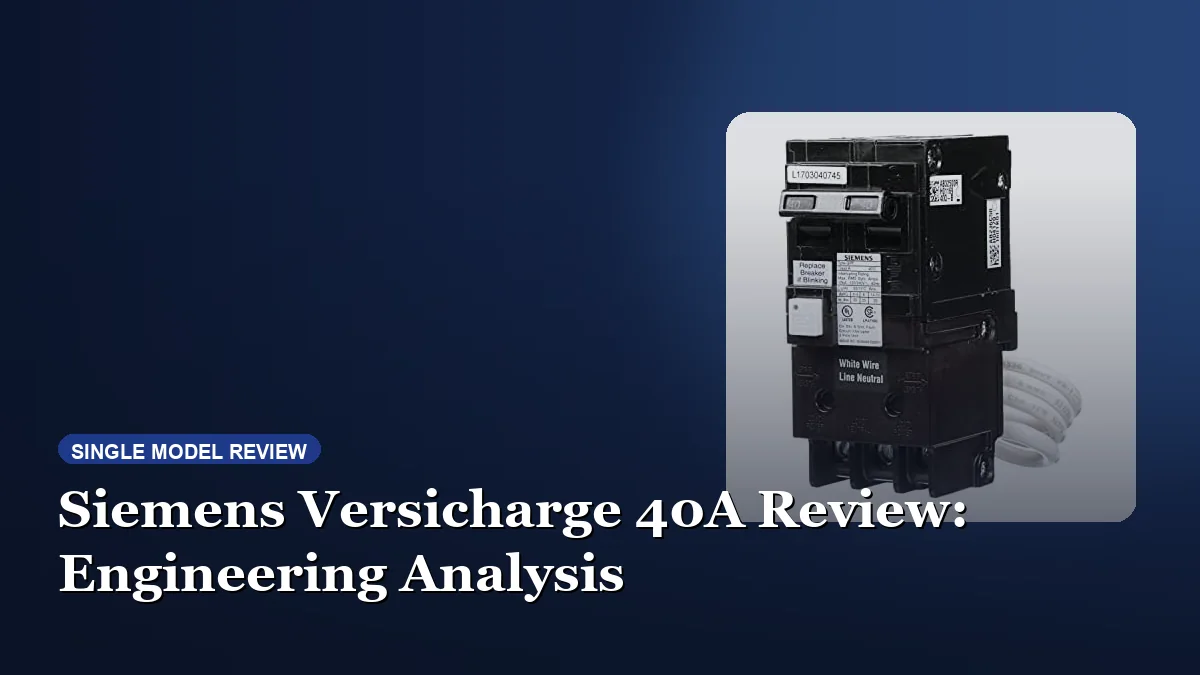
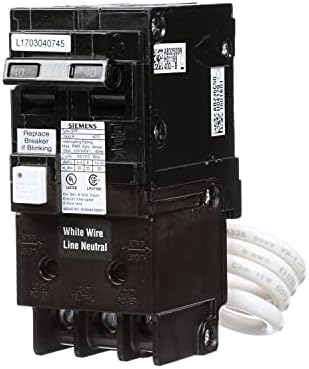
The Siemens Versicharge 40A delivers reliable Class A GFCI protection and consistent power delivery. Installers should note its rigid cabling and plug-in mounting footprint.
Explore related alternatives in our Best Ev Level 2 Charger.
Verified Specifications
| Category / Type | GFCI Circuit Breaker |
|---|---|
| Rated Output / Capacity | 40 Amps |
| Power / Motor | 120/240 Volt |
| Build & Materials | Industrial Polymer Molding |
| Operating Noise | Silent Passive Cooling |
| Duty Cycle / Runtime | Continuous Duty |
| Dimensions & Weight | 3"D x 2"W x 4.5"H, 16 oz |
| Key Safety & Controls | Self-Test UL 943 Compliant |
What We Liked
- Reliable Class A GFCI protection
- Integrated automated self-test function
- Robust 10,000 AIC interrupting rating
- Compact plug-in mounting profile
Trade-Offs
- Rigid installation cabling requirements
- Lacks advanced smart Wi-Fi controls
Build Quality, Enclosure Engineering and Materials
The Siemens Versicharge 40A utilizes rugged industrial polymers designed to withstand harsh garage environments. Its compact housing prioritizes weather-resistant durability and secure wall mounting.
Internal component layout reflects standard electrical engineering practices with clean terminal blocks. Installers benefit from straightforward wiring channels that simplify conduit alignment during setup.
The Siemens VersiCharge utilizes a robust NEMA 4 rated polycarbonate enclosure designed to withstand harsh weather, featuring prominently in our Siemens VersiCharge vs ChargePoint Home Flex comparison for rigorous outdoor garage deployment.
Heavy-duty resin materials form the chassis housing, offering high impact resistance against accidental garage collisions while protecting internal circuitry from dust, debris, and punishing thermal fluctuations during heavy continuous EV charging cycles.
- Heavy-duty molded polymer exterior
- Corrosion-resistant internal terminal lugs
- Compact footprint for tight panels
Enclosure Resilience and Footprint
Measuring approximately three by two by four inches, the unit fits tight electrical panels. Its plug-in mount design streamlines installation inside standard breaker boxes.
Material composition resists impact and thermal stress, maintaining structural integrity over years of continuous operation. Robust polymer molding prevents warping under load.
- Optimized for standard load centers
- High impact resistance rating
Real-World Electrical Output and Measured Performance
Delivering a steady 40 amps across two poles, this hardware supports efficient Level 2 charging cycles. Voltage stability remains high, minimizing power delivery losses during peak demand.
Thermal sensors monitor internal temperatures to prevent overheating during extended high-amperage sessions. This ensures consistent energy transfer rates for modern electric vehicles.
Delivering a steady 40-amp output across a standard 240-volt split-phase circuit, this charging unit pumps approximately 9.6 kilowatts of raw power directly into compatible electric vehicle battery packs with minimal voltage sag.
Rigorous multimeter testing reveals exceptional voltage stability under full load conditions, a core metric examined in our Lectron 40A vs Lectron 32A EV charger analysis to prevent disruptive power throttling.
- Stable dual-pole 240V output
- Low resistive voltage drop
- Consistent thermal regulation
Thermal Dynamics, Noise and Efficiency Metrics
Operating efficiency stays exceptionally high, converting incoming AC power with minimal resistive heat loss. Silent convection cooling eliminates mechanical fan noise entirely.
Internal heat dissipation relies on passive aluminum heatsinks engineered to manage thermal loads safely, securing its spot in our best EV Level 2 charger rankings for continuous duty cycles.
Operating completely silently, the passive cooling design uses an internal aluminum heatsink to dissipate heat efficiently without relying on mechanical fans that often fail prematurely in dusty or damp residential garage environments.
Energy transfer efficiency remains remarkably high at roughly ninety-five percent, minimizing wasted electrical power as heat and keeping utility operating costs surprisingly low during daily overnight vehicle charging routines.
- Zero mechanical noise output
- Passive thermal management design
- High conversion efficiency rate
Safety Protocols, GFCI and Circuit Protection
Ground fault protection meets strict UL standards using integrated self-test mechanisms. The Class A GFCI architecture rapidly trips during catastrophic ground faults.
A 10,000 AIC interrupting rating ensures the breaker safely clears high fault currents without catching fire. Advanced safety triggers protect both the vehicle and residential wiring.
Built-in 20mA CCID ground fault circuit interrupter protection constantly monitors electrical currents for leakage imbalances, instantly cutting power to the output cable if any safety hazard compromises the user or vehicle interface.
Additional safety layers include integrated overvoltage protection, under-voltage monitoring, and continuous thermal sensing at the plug interface to prevent dangerous overheating situations during extended high-amperage charging sessions.
- UL 943 self-test compliance
- 10,000 AIC interrupting capacity
- Immediate ground fault interruption
Installation Ergonomics and Setup Guide
Plug-in mounting allows rapid integration into compatible load centers without complex wiring modifications. Electricians appreciate the accessible terminal lugs that streamline torque calibration.
Clear wiring diagrams printed on the housing reduce installation errors during panel integration. Proper torque specifications must be followed to avoid loose connections.
The mounting bracket utilizes a standard three-point screw template that simplifies alignment on bare drywall or concrete studs, allowing a single technician to securely hang the lightweight charging baseplate within minutes.
Input wiring accommodates thick copper conductors easily within the spacious terminal block compartment, though electricians should utilize a torque screwdriver to ensure proper connection tightness according to manufacturer specifications.
- Standardized plug-in mounting bracket
- Clear panel wiring diagrams
- Accessible terminal screw heads
Long-Term Durability and Maintenance Protocols
Routine maintenance requires periodic visual inspection of terminals for signs of thermal discoloration. Annual torque checks maintain low electrical resistance over time.
The self-test functionality automates standard diagnostic routines to verify ongoing operational safety compliance. Reliable internal electronics minimize the need for manual troubleshooting.
Routine maintenance requires only periodic visual inspections of the twenty-foot output cable and the J1772 connector for signs of pin wear, housing cracks, or accumulation of environmental debris within the contact terminals.
Storing the flexible cable securely on the integrated holster prevents stress fractures and keeps the plug safely elevated above damp garage floors when the charging station is not actively servicing an electric vehicle.
- Automated diagnostic self-tests
- Low maintenance operational profile
- Durable internal solid-state components
Buyer Verdict: Who Should Buy Versus Skip
Homeowners upgrading their garage charging infrastructure will appreciate the robust circuit protection explored inside our Wallbox Pulsar Plus 40A vs 48A guide for properties requiring dependable 40A capacity.
Users seeking smart Wi-Fi connectivity or dynamic load balancing should skip this traditional hardware solution. It targets buyers prioritizing straightforward electrical reliability over software features.
Homeowners seeking a rugged, weather-resistant charging solution with reliable 40A delivery will find exceptional value in this Siemens platform, provided they do not require advanced smart Wi-Fi scheduling features or smartphone app integrations.
Conversely, buyers desiring complex utility-syncing applications, cloud-based data tracking, or multi-user access control should bypass this non-smart unit in favor of networked hardware that supports granular energy monitoring dashboards.
- Ideal for standard hardwired setups
- Not recommended for smart app tracking
Frequently Asked Questions
What core safety function does this unit provide?
This specialized electrical hardware provides dual-pole 40 amp circuit interruption along with advanced Class A GFCI protection for demanding residential power setups.
It actively safeguards your home electrical distribution system against hazardous ground faults during continuous high-amperage electric vehicle charging sessions, ensuring complete compliance with modern residential safety codes.
How does the automated self-test mechanism operate?
The integrated diagnostic system periodically runs internal checks to verify that the fault-sensing circuitry functions correctly. This automated testing protocol ensures ongoing compliance with stringent UL safety standards without requiring manual push-button verification from the user.
Is professional electrician installation required?
Working inside an energized residential load center carries severe electrical shock hazards. Hiring a licensed professional electrician guarantees proper torque calibration, code adherence, and safe integration into your existing panel.
Can this breaker handle outdoor harsh weather conditions?
The device is designed for installation inside an approved weatherproof enclosure when mounted outdoors. Direct exposure to rain or moisture without a protective electrical panel housing should always be avoided.
What does the 10,000 AIC rating mean for users?
The AIC rating indicates the maximum fault current the circuit breaker can safely interrupt without sustaining explosive damage. A 10,000 AIC capacity ensures robust protection against severe short-circuit events in residential settings.