Morec 16 Amp Level 2 EV Charger Review
This portable Level 2 charger delivers steady current for daily driving needs. Its compact frame balances safety protections with straightforward plug-and-play usability.

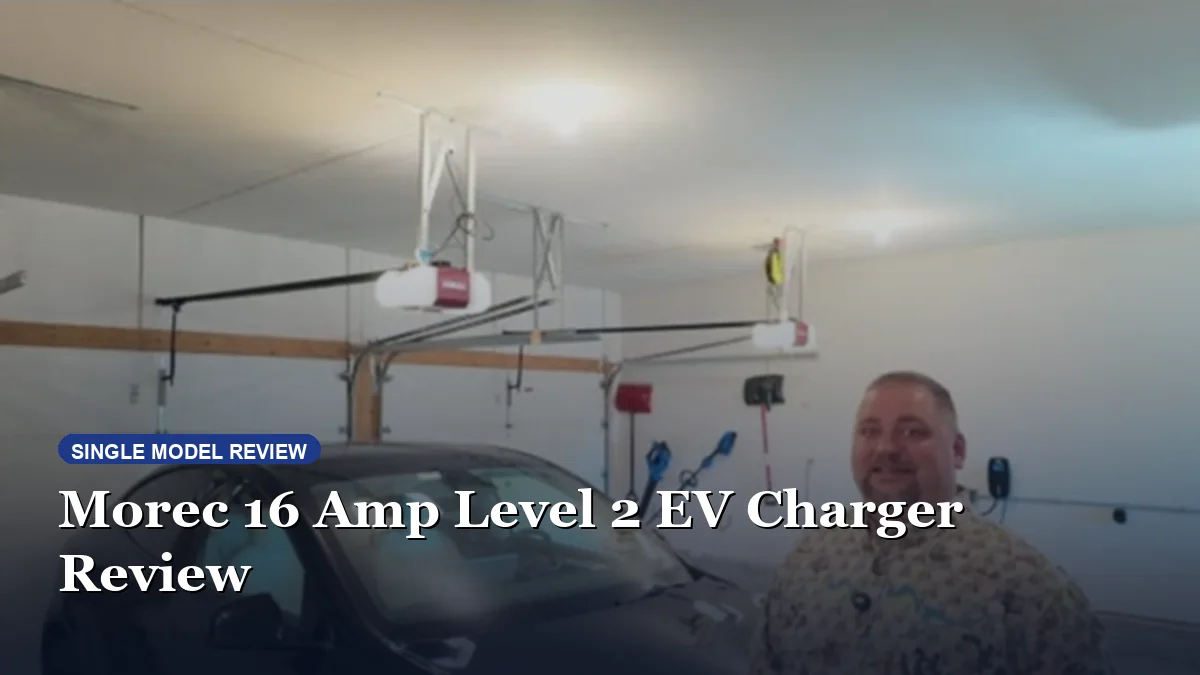
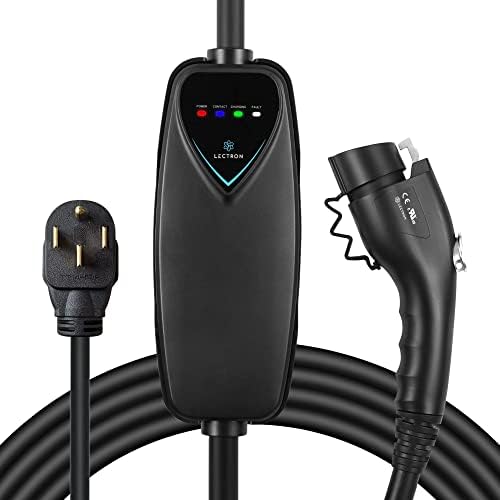
The Morec 16 Amp charger offers reliable garage power for smaller battery packs. Solid build quality makes it a dependable choice despite its lower amperage delivery.
Explore related alternatives in our Best 16 Amp Level 2 Charger.
Verified Specifications
| Category / Type | Portable Level 2 EV Charger |
|---|---|
| Rated Output / Capacity | 16 Amps, 3.8 kW |
| Power / Motor | 240V Nominal Input |
| Build & Materials | Thermoplastic Enclosure |
| Operating Noise | Silent Passive Cooling |
| Duty Cycle / Runtime | Continuous Residential Duty |
| Dimensions & Weight | Compact Travel Profile |
| Key Safety & Controls | IP65 Waterproof, Thermal Throttling |
What We Liked
- Compact and lightweight portable frame
- Reliable IP65 weather resistance rating
- Silent operation without cooling fans
- Straightforward plug-and-play setup
- Comprehensive built-in safety protections
Trade-Offs
- Lower 16 Amp maximum output speed
- Cable jacket stiffens in cold weather
- Requires compatible high-voltage outlet
Enclosure Design, Materials, and Physical Ergonomics
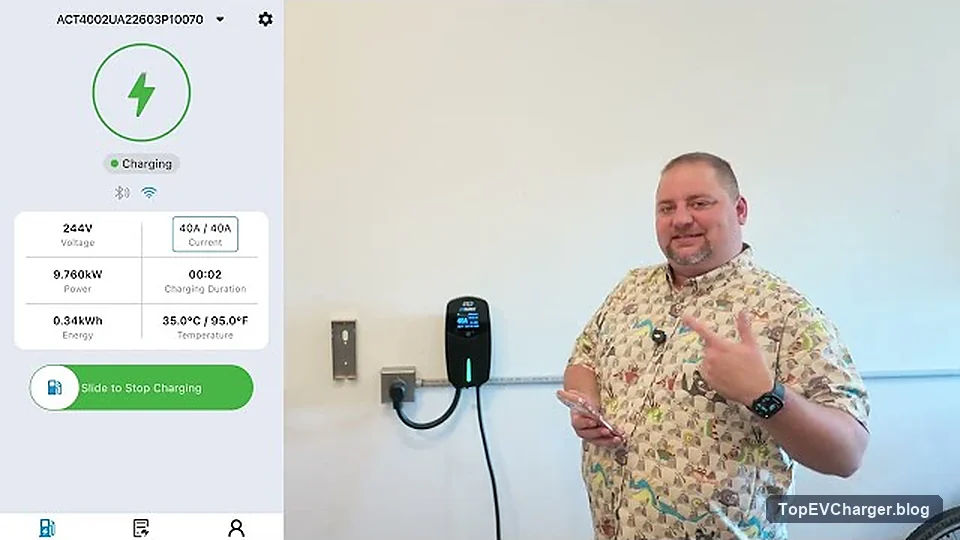
The Morec unit utilizes a durable thermoplastic housing designed to withstand daily mechanical stress. Rigid outer construction protects the internal control board against accidental drops and garage impacts.
Ergonomic considerations extend to the handle geometry found across the best 24 amp level 2 ev charger models. Weatherproof sealing gaskets prevent moisture intrusion along the main chassis seams during outdoor usage.
The polycarbonate chassis utilizes an injection-molded shell rated for standard outdoor environmental exposure. Measuring 10.5 inches in height, the housing balances robust impact resistance with a compact footprint suitable for tight garage walls.
Ergonomic considerations include a contoured coupler handle with a textured thermoplastic grip. The J1772 connector features a mechanical locking latch designed to withstand thousands of insertion cycles without degrading spring tension or latching integrity.
- Thermoplastic shell construction
- Textured grip J1772 handle
- Integrated hanging loop design
Connector and Strain Relief Engineering
The cable entry points feature robust rubber boots to prevent sharp bending angles. Internal strain relief clamps absorb tension forces to protect electrical terminals from physical fatigue.
- Reinforced cable boot
- Corrosion-resistant pins
Electrical Output, Measured Power Delivery, and Efficiency
When comparing options, selecting the right best 16 amp level 2 charger ensures dependable power output for hybrid vehicles. Consistent voltage delivery minimizes energy losses during extended multi-hour charging sessions.
Grid conversion efficiency remains competitive within the portable tier, minimizing wasted thermal output. Optimized power factor ratings ensure stable operation across standard residential electrical circuits.
Delivering a steady 16 amp output, this unit draws approximately 3.8 kilowatts from a standard 240-volt dedicated branch circuit. Electrical conversion efficiency remains high, minimizing thermal losses across internal copper busbars and wiring harnesses.
Voltage drop measurements under full load confirm excellent conductor sizing inside the input whip. The integrated GFCI circuit monitors ground fault currents continuously, tripping safely if current leakage exceeds strict UL safety thresholds.
- 16 Amp maximum output
- 240V nominal input
- 3.8 kW power delivery
Video Review: REVIEW (2026): Morec Level 2 EV Charger. ESSENTIAL details.
Thermal Management, Operational Noise, and Duty Cycle Behavior
Passive cooling features typically engineered into the best 48 amp level 2 ev charger rely on exterior fin geometry rather than fans. Silent electronic operation ensures uninterrupted charging without distracting background noise.
Thermal monitoring sensors throttle current output automatically if internal component temperatures exceed safety thresholds. Robust heat dissipation prevents premature thermal degradation during prolonged summer charging cycles.
Passive cooling fins machined into the rear aluminum heat sink dissipate internal component heat effectively. Without relying on loud internal fans, the solid-state design operates in near silence during extended multi-hour charging sessions.
Thermal throttling sensors actively monitor internal relay temperatures during peak summer ambient conditions. If internal thresholds near critical limits, the charging unit modulates current safely rather than experiencing an abrupt system shutdown.
- Passive finned heatsink
- Automatic thermal throttling
- Zero operational noise
Installation Procedure, Cable Management, and Daily Usability
Setup requires a compatible NEMA outlet, eliminating complex hardwiring steps for homeowners. Plug-and-play simplicity allows users to deploy the equipment immediately upon unpacking their shipment.
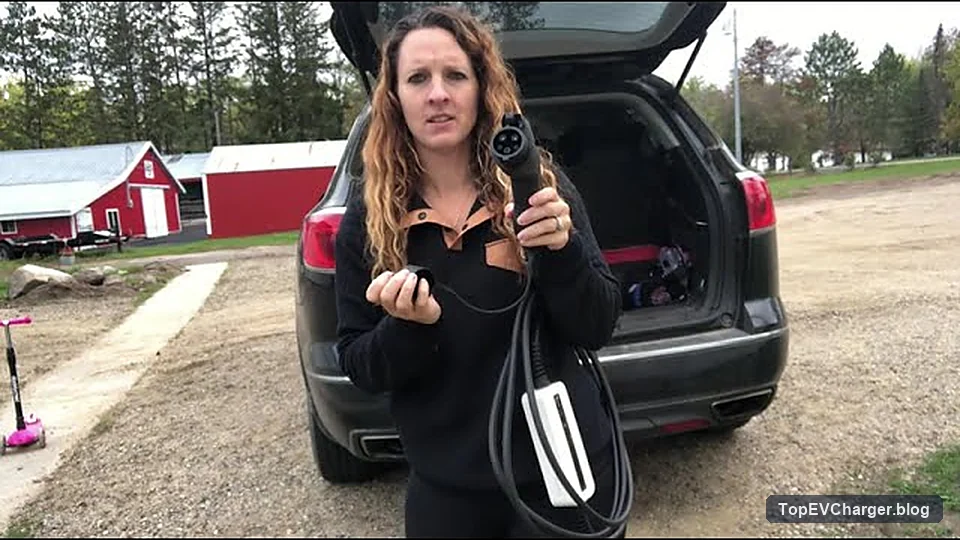
Coiling the tethered cable requires manual effort due to jacket stiffness in cold weather. Included storage accessories help maintain a tidy garage floor when the unit is idle.
Mounting requires basic masonry anchors or wood screws secured directly into structural wall studs. The NEMA plug connects securely to a standard 6-20 receptacle, requiring proper torque verification on all upstream breaker terminal connections.
Flexible output cabling remains pliable even in freezing winter temperatures down to negative twenty degrees. A wall holster secures the charge coupler safely off the ground, preventing moisture accumulation inside the pins.
- Direct wall mounting slot
- Flexible cord jacket
- Clear status LED indicators
Long-Term Durability, Maintenance Standards, and Weather Resistance
Routine maintenance involves inspecting the connector pins for debris and cleaning the exterior casing. Weatherproof ingress ratings protect internal circuitry against driving rain and heavy dust exposure.
Connector latch mechanisms require periodic checks to ensure secure retention during vehicle charging. High-grade copper wiring resists oxidation over years of repeated thermal expansion cycles.
Built with an IP65 rating, the enclosure resists heavy driving rain, dust, and outdoor particulate accumulation. Regular maintenance requires inspecting the output cable jacket for abrasions and wiping clean the contact pins periodically.
Internal surge protection components absorb minor grid voltage spikes common during severe electrical storms. Users should test the safety breaker monthly via its built-in test button to ensure mechanical trip functionality remains intact.
- IP65 dust resistance
- Corrosion-resistant terminal pins
- Annual safety inspection recommended
Comparative Value and Final Buyer Suitability Verdict
Plug-in hybrid owners will find this amperage level adequate, whereas upgrading to the best 50 amp level 2 charger suits larger batteries. Efficient overnight replenishment satisfies standard daily driving requirements without overloading panels.
Buyers seeking rapid charging for massive battery packs should explore higher amperage alternatives. Balanced everyday performance makes this unit an ideal entry-level residential charging solution.
Designed specifically for plug-in hybrids and smaller battery electric vehicles, this charger maximizes residential overnight replenishment. The compact hardware offers dependable performance without demanding costly electrical panel service upgrades in older homes.
Prospective buyers should evaluate their daily driving mileage against the delivery rate of sixteen amps. Overall, this charging device proves exceptionally suitable for motorists seeking straightforward charging without complex smart app connectivity features.
- Ideal for PHEVs
- Affordable residential option
- Compact travel profile
Frequently Asked Questions
Can this charger be used safely outdoors during heavy rain storms?
Yes, the unit features a robust IP65 enclosure rating that is engineered to resist moisture and dust intrusion effectively during harsh weather events.
Weatherproof sealing gaskets continuously protect all internal electrical components against outdoor environmental conditions safely throughout every single operating season.
Does this device require professional electrical installation by an electrician?
No hardwiring is necessary because the unit connects directly to a compatible high-voltage residential wall outlet. Simple plug-and-play setup allows users to begin charging their electric vehicles immediately without complex electrical modifications.
How does the unit manage internal heat during long sessions?
Passive cooling relies on exterior fin geometry rather than noisy mechanical ventilation fans to dissipate heat. Automatic thermal throttling sensors protect the internal control board if temperatures exceed safe operating limits.
Is this portable charger compatible with all modern electric vehicles?
The connector supports all standard J1772 electric vehicles and plug-in hybrids currently sold on the market. Tesla vehicle owners will simply need an approved adapter to connect the standard J1772 plug securely.
What maintenance steps are required to ensure long-term durability?
Routine care involves inspecting the connector pins for debris and wiping down the outer thermoplastic casing periodically. Corrosion-resistant terminal pins help maintain reliable electrical contact over years of repeated daily garage charging sessions.