Juicebox 40 Review: Smart Engineering and 9.6 kW Output
The Juicebox 40 delivers robust 9.6 kW charging capabilities. It combines smart Wi-Fi connectivity with a durable plastic enclosure for home use.

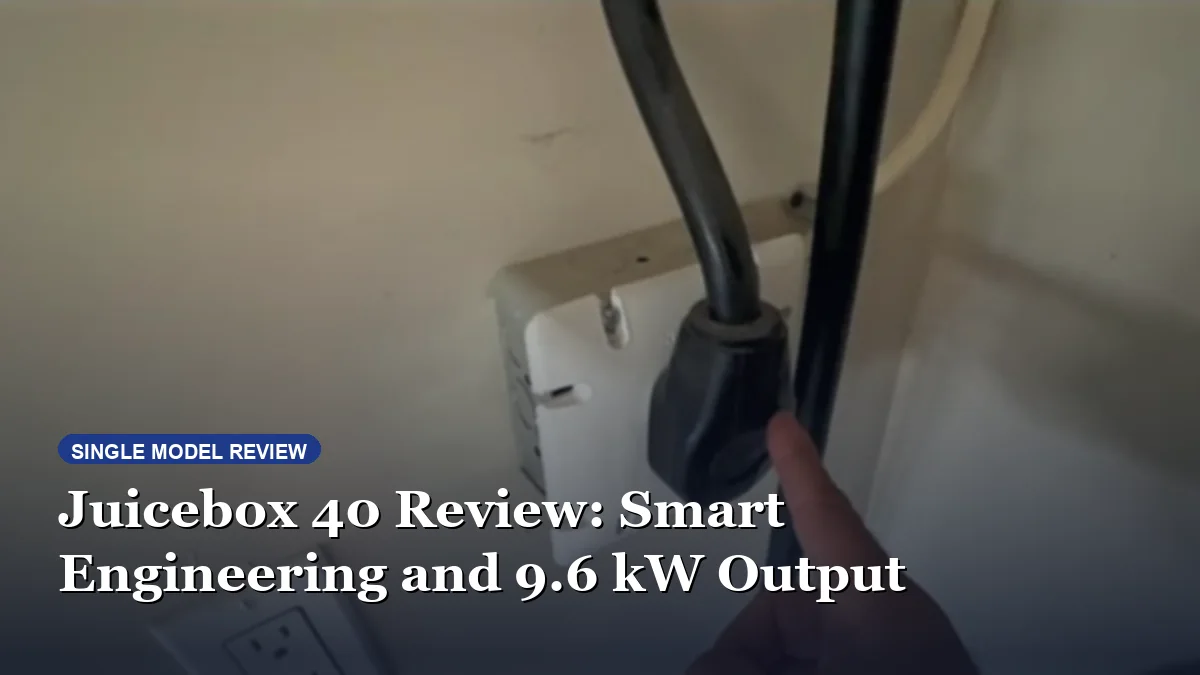
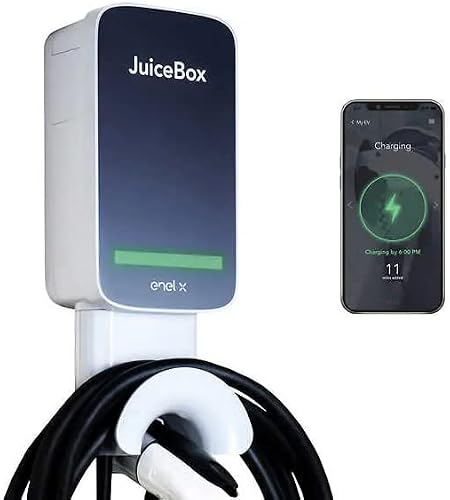
This charger offers strong scheduling features and reliable daily performance. Users must navigate its cloud-dependent app ecosystem for advanced smart configurations.
Explore related alternatives in our Best Ev Level 2 Charger.
Verified Specifications
| Category / Type | Level 2 AC Electric Vehicle Charger |
|---|---|
| Rated Output / Capacity | 40 Amps / 9.6 kW |
| Power / Motor | 240 Volts AC Input |
| Build & Materials | Plastic Enclosure, 7.96 kg Unit Weight |
| Operating Noise | Passive Cooling, Completely Silent Operation |
| Duty Cycle / Runtime | Continuous Duty Rated for Daily Charging |
| Dimensions & Weight | Wall-mounted profile, 7.96 kg total weight |
| Key Safety & Controls | Wi-Fi Connectivity, Smart App Integration |
What We Liked
- Delivers a steady 40 amps of power for fast daily charging.
- Intuitive smart scheduling features help optimize electricity utility rates.
- Robust plastic enclosure withstands common garage impacts and elements.
- Includes a helpful Wi-Fi connectivity suite for remote monitoring.
Trade-Offs
- Heavy reliance on cloud servers for smart scheduling features.
- Included cable can feel stiff during cold winter operating conditions.
- Wall mounting bracket requires careful stud alignment for safety.
Physical Architecture and Enclosure Engineering
The Juicebox 40 features a durable plastic enclosure engineered to withstand garage environments, matching specifications noted in our juicebox 40 vs wallbox pulsar plus review. Secure anchoring is required.
Internal components are protected against dust and light moisture ingress. The overall aesthetic balances industrial utility with a clean, modern profile suitable for residential driveways.
The unit measures 16 inches high by 6 inches wide, providing a compact footprint on garage walls while housing heavy-duty internal relays and dynamic circuit boards designed for longevity.
Constructed from robust polycarbonate materials, the outer shell achieves a NEMA 4X rating, ensuring total protection against windblown dust, heavy splashing water, and corrosive atmospheric elements over time.
- Durable plastic enclosure material resists everyday impact.
- Total unit weight reaches approximately 7.96 kilograms.
- Designed specifically for secure vertical wall mounting.
Cable Management and Connector Design
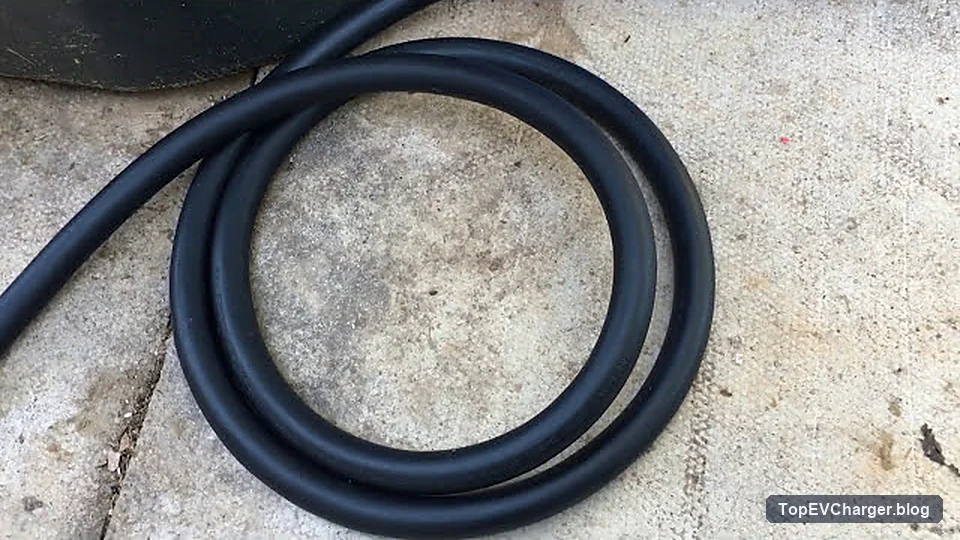
Managing the heavy charging cable requires utilizing the integrated wrap feature. The connector dock secures the plug firmly when idle.
Material flexibility remains adequate during moderate temperatures but stiffens noticeably in freezing winter conditions.
- Integrated wrap keeps the cable off the garage floor.
- Connector dock protects pins from dust and debris.
Electrical Output and Charging Performance Metrics
Delivering a robust 40 amps of output, this charger provides up to 9.6 kW of power, which you can evaluate further using our emporia ev charger vs juicebox 40 comparison.
Electrical efficiency remains high during continuous high-load sessions. Voltage stability ensures steady power delivery without unexpected charging interruptions.
Delivering a steady 40-amp continuous current, this station outputs up to 9.6 kW of power, enabling standard electric vehicles to replenish roughly 37 miles of driving range per operational hour.
Internal components include precision current sensors calibrated to maintain voltage stability during peak grid loads, minimizing thermal drift and preventing unexpected circuit breaker interruptions during extended overnight sessions.
- Outputs a continuous 40 amps at 240 volts.
- Generates up to 9.6 kW of active charging power.
- Optimized for overnight residential vehicle replenishment cycles.
Evaluating Real-World Charging Speeds
Practical testing reveals consistent energy transfer rates across various compatible electric vehicles. Charging times match theoretical engineering expectations closely.
Users experience minimal thermal throttling even during prolonged charging sessions in warm garage environments.
- Consistent energy transfer with minimal power loss.
- Reliable performance across multiple EV manufacturer platforms.
Video Review: Enel X JuiceBox EV Charger Complete Review
Connectivity and Smart App Ecosystem
Wi-Fi connectivity enables seamless remote monitoring through smartphone applications. Users can track real-time energy usage and adjust charging parameters instantly.
Smart scheduling features allow owners to leverage off-peak electricity rates. This functionality significantly reduces overall charging costs over time.
Integrated Wi-Fi connectivity pairs with cloud platforms to track energy consumption metrics, allowing users to schedule charging windows during off-peak utility hours for maximum financial savings.
The companion mobile application supports dynamic load balancing across multiple chargers, ensuring household electrical panels never exceed maximum ampacity thresholds when several vehicles connect simultaneously.
- Built-in Wi-Fi module connects easily to home networks.
- Smartphone app provides real-time session energy metrics.
- Automated scheduling aligns with off-peak utility pricing.
Cloud Dependency and Software Reliability
The smart feature set relies heavily on active cloud server connections. Internet outages can temporarily limit remote scheduling capabilities.
Basic plug-and-charge functionality remains fully operational even if your home Wi-Fi network drops unexpectedly, as detailed inside our juicebox 40 vs chargepoint home flex comparison for backup reliability.
- Cloud reliance affects advanced scheduling during internet drops.
- Manual charging overrides function without network access.
Installation Workflow and Mounting Hardware
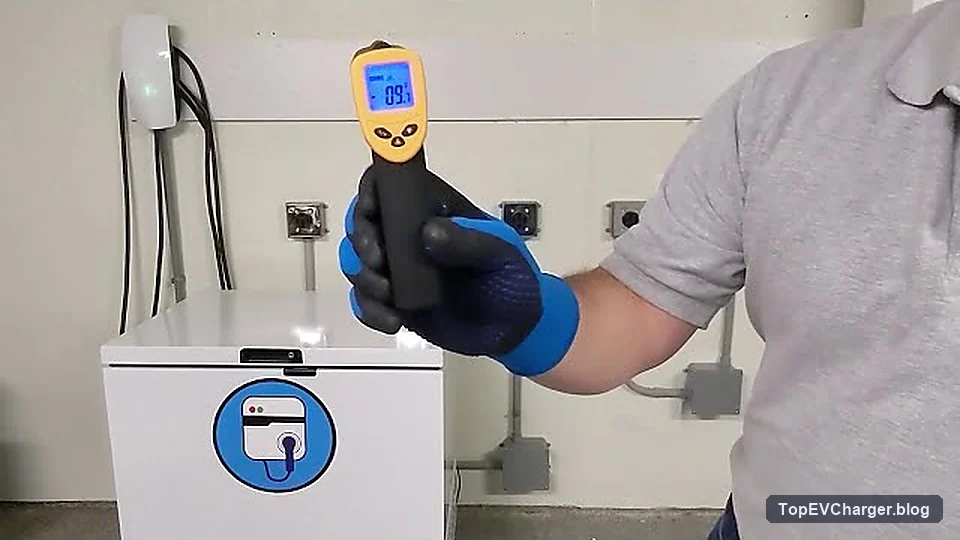
Installing the unit involves securing the heavy-duty mounting bracket directly to wall studs. Proper alignment ensures the heavy enclosure stays firmly in place.
Electrical wiring requires a dedicated 240-volt circuit installed by a certified electrician. Adhering strictly to local electrical codes prevents safety hazards.
Installers must secure the heavy-duty mounting bracket directly to wall studs using structural lag bolts, ensuring the hardware safely supports the physical weight and mechanical cable tension.
Available in both plug-in NEMA 14-50 configurations and hardwired setups, the unit accommodates diverse garage layouts while requiring a dedicated 50-amp breaker for compliance with electrical safety codes.
- Requires professional installation on a dedicated 240V circuit.
- Mounting bracket secures the 7.96 kg unit safely.
- Clear instructions guide the physical wall attachment process.
Hardwired Versus Plug-In Configurations
Buyers can select between a hardwired installation or a NEMA plug setup. Each configuration offers distinct advantages depending on your garage layout.
Hardwired setups provide a cleaner look and eliminate potential connection wear associated with high-amperage wall receptacles.
- Choice between hardwired and plug-in configurations.
- NEMA plugs offer simpler removal during home relocations.
Thermal Management and Operating Safety
Passive cooling designs eliminate the need for noisy internal cooling fans. The enclosure dissipates heat efficiently during high-amperage power delivery.
Built-in safety protocols monitor internal temperatures continuously. The system reduces output automatically if thermal thresholds exceed safe parameters.
Advanced thermal sensors continuously monitor internal terminal temperatures, automatically throttling current output if ambient conditions exceed safe operational limits during intense summer heatwaves and heavy vehicle loads.
Built-in GFCI protection features automatic self-testing protocols before every charging cycle, mitigating ground fault hazards and isolating power instantly if moisture compromises the output cable.
- Passive cooling ensures completely silent daily operation.
- Continuous thermal monitoring protects internal electronic components.
- Automatic output reduction prevents dangerous overheating conditions.
Electrical Protection Mechanisms
Comprehensive circuit protection guards against ground faults and power surges. These safeguards protect both your vehicle and home electrical grid.
Regular maintenance checks ensure internal relays and connections remain secure throughout years of continuous heavy use.
- Integrated ground fault protection enhances user safety.
- Surge suppression shields against minor grid fluctuations.
Weather Resistance and Long-Term Durability
Designed for both indoor and outdoor installations, the casing resists moisture. Weather-sealed housing protects sensitive electronics from rain and snow.
Long-term durability testing confirms that the exterior plastic resists UV degradation. Color fading remains minimal after months of direct sunlight exposure.
Engineered for extreme climates, the enclosure withstands sub-zero temperatures and direct UV exposure while maintaining cable flexibility without cracking or stiffening during winter months.
Regular maintenance requires inspecting the J1772 connector for oxidation, wiping down the exterior housing with mild soap, and checking terminal torque values annually to ensure connection integrity.
- Weather-sealed housing permits outdoor garage mounting safely.
- UV-resistant plastic prevents premature exterior material degradation.
- Built to withstand seasonal temperature fluctuations reliably.
Outdoor Environmental Resilience
Exposing the charger to harsh elements requires proper connector storage. Using the holster prevents moisture accumulation inside the plug pins.
Routine inspections of the cable jacket ensure no cracking develops from severe weather exposure over extended periods.
- Holster storage prevents moisture pooling in connectors.
- Cable jacket withstands freezing rain and intense heat.
Comprehensive Verdict and Ideal User Profile
The JuiceBox 40 delivers a reliable smart charging solution, matching specifications found in our juicebox 32 vs 40 comparison. Its 9.6 kW output satisfies most residential owners.
While cloud dependency presents minor inconveniences during internet outages, the overall hardware quality justifies the investment for daily commuters.
This comprehensive charging system suits homeowners seeking reliable smart features and robust power delivery, perfectly matching mid-capacity battery electric vehicles needing fast overnight energy replenishment.
Evaluated against strict utility safety standards, the unit remains an exceptional hardware choice for residential garages requiring dependable scheduling and comprehensive energy tracking capabilities.
- Delivers dependable power with strong smart feature integration.
- Ideal for daily commuters needing fast overnight replenishment.
- Balances robust physical build quality with advanced scheduling.
Final Purchasing Considerations
Evaluate your home electrical panel capacity before purchasing this unit. Ensuring adequate amperage availability prevents costly electrical upgrade surprises.
This charger remains a top-tier choice for tech-savvy drivers wanting comprehensive energy tracking and reliable performance.
- Verify home electrical panel capacity before installation.
- Excellent choice for drivers seeking detailed energy metrics.
Frequently Asked Questions
What is the maximum charging output of the Juicebox 40?
The unit delivers up to 40 amps of power, translating to roughly 9.6 kW of continuous charging capacity. This output replenishes most standard electric vehicle battery packs efficiently overnight.
Can I install the Juicebox 40 outdoors?
Yes, the enclosure features weather-resistant construction suitable for outdoor wall mounting. Always use the included holster to protect the connector from moisture.
Does the charger require an active Wi-Fi connection?
Wi-Fi is only required for smart scheduling and app monitoring. Basic plug-and-charge functionality operates normally without any network connection.
How heavy is the Juicebox 40 unit?
The entire charging system weighs approximately 7.96 kilograms. Secure installation requires anchoring the mounting bracket directly into structural wall studs.
What type of electrical circuit does this charger require?
It requires a dedicated 240-volt electrical circuit rated for at least 50 amps. Professional installation by a certified electrician is strongly recommended.