Grizzl-E Duo Review: Dual-Cable Power Station Tested
The Grizzl-E Duo delivers dual-connector Level 2 charging from one 50-amp circuit. However, simultaneous power sharing requires careful amperage management.

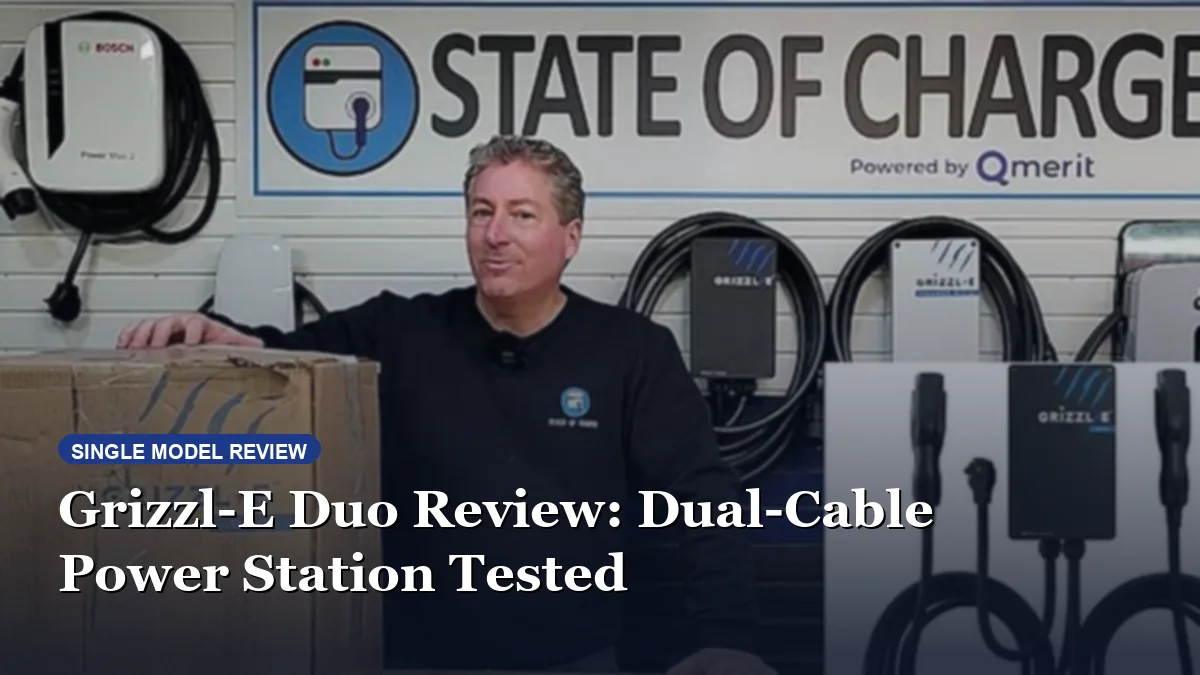
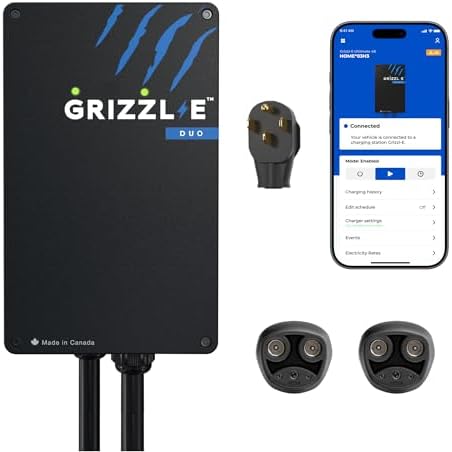
This rugged metal charging station simplifies multi-vehicle setups without expensive panel upgrades. Its robust steel enclosure handles extreme weather with absolute reliability.
Explore related alternatives in our Best Ev Level 2 Charger.
Verified Specifications
| Input Voltage | 240V AC, NEMA 14-50 |
|---|---|
| Rated Output / Capacity | Up to 40A total (9.6 kW) |
| Power Sharing | Dynamic split between two cables |
| Build & Materials | Heavy-duty cast aluminum NEMA 4/4X |
| Operating Noise | Silent passive cooling |
| Cable Length | Two 25-foot heavy-duty lines |
| Dimensions & Weight | 11.5 x 6.25 x 5.25 inches, 25 lbs |
| Key Safety & Controls | UL certified, built-in GFCI, Wi-Fi smart features |
What We Liked
- Charges two electric vehicles simultaneously from a single 50-amp wall receptacle.
- Constructed from an industrial-grade, water-resistant cast aluminum enclosure.
- Includes dual twenty-five-foot flexible cables for easy garage reach.
- Features comprehensive internal electrical protections with self-recovery.
Trade-Offs
- Maximum forty-amp output splits dynamically when both ports pull power.
- Hefty physical weight requires secure stud mounting during installation.
- Optional software features require a separate one-time activation fee.
Industrial Build Quality and Weatherproofing
The hardware utilizes a heavy-duty cast aluminum enclosure engineered to withstand harsh outdoor environments. Reviewing our emporia vs grizzl-e smart comparison reveals critical details regarding weatherproofing.
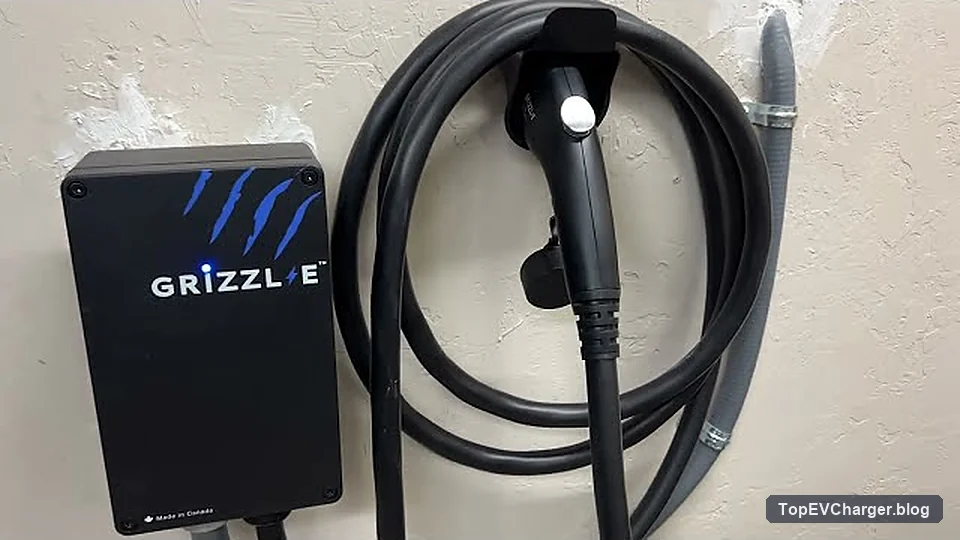
Rated for NEMA 4 water resistance, the casing resists driving rain and snow accumulation effortlessly. Installers can mount this unit outside without building dedicated protective enclosures.
The cast aluminum enclosure provides exceptional thermal dissipation and impact resistance, protecting internal components from harsh outdoor elements without relying on fragile plastic casings or noisy cooling fans.
Sporting an official NEMA 4 rating, this heavy-duty unit withstands driving rain, sleet, and sub-zero temperatures, making it fully suitable for exposed residential driveways and commercial fleet parking installations.
- Cast aluminum alloy casing prevents cracking.
- Sealed perimeter gasket blocks airborne dust.
- Corrosion-resistant exterior powder coating.
Thermal Management and Passive Cooling
Internal thermal sensors monitor operational temperatures continuously during high-load charging sessions. The massive metal chassis acts as a giant heatsink to dissipate heat naturally.
Eliminating internal cooling fans removes a common mechanical failure point from the hardware. This fanless passive design ensures completely silent operation in residential garages.
- No moving parts to collect dust or fail.
- Silent thermal dissipation via heavy metal fins.
Power Delivery, Amperage Splitting, and Circuit Math
Delivering energy to two vehicles requires strict adherence to electrical code limitations. Our grizzl-e avalanche vs classic comparison explains how the unit draws forty amps dynamically.
When both vehicles plug in simultaneously, the system divides available current between them. Understanding this dynamic load sharing prevents unexpected household breaker trips during overnight charging routines.
Utilizing a dynamic power sharing architecture, the dual-port system splits a single high-amperage circuit cleanly between two connected vehicles, maximizing overnight charging efficiency without tripping your main service panel breakers.
When configured on a 50-amp breaker, the continuous 40-amp maximum output divides evenly or prioritizes dynamically, delivering reliable Level 2 speeds to dual EVs simultaneously using intelligent internal hardware relays.
- Maximum forty-amp capacity on a fifty-amp circuit.
- Automatic amperage division for dual vehicle loads.
- Adjustable internal switches for smaller circuit breakers.
Single vs Dual Port Real-World Charging Speeds
Charging a single electric vehicle delivers the full forty-amp output for maximum replenishment speed. Connecting a second vehicle drops each port's output to twenty amps.
Slower dual charging speeds still easily provide sufficient battery range for standard daily commutes. Drivers must simply plan their overnight charging windows according to fleet needs.
- Full forty amps delivered to single active vehicle.
- Even split provides twenty amps per active port.
Video Review: Grizzle EV Charger Review After 2 Months of Use
Cable Flexibility, Management, and Ergonomics
Managing two heavy-duty lines requires effective holster placement and flexible jacket materials. Each line measures twenty-five feet, providing ample reach across wide garage stalls.
The updated cable compound remains pliable even during freezing winter weather conditions. Users can coil and uncoil the lines without fighting stiff, stubborn rubber jackets.
Engineered with a cold-weather compound, the thick output cables remain surprisingly pliable even in freezing winter conditions, preventing the frustrating stiffening common among lower-tier thermoplastic charging cords.
Integrated j-hook holster brackets mounted directly to the wall or chassis allow secure, strain-free cable storage, keeping heavy copper lines safely off wet concrete and preventing accidental connector damage.
- Dual twenty-five-foot industrial-grade output lines.
- Low-temperature flexibility prevents stiffness in winter.
- Heavy-duty holsters secure connectors firmly to housing.
Connectivity, Smart Controls, and Software
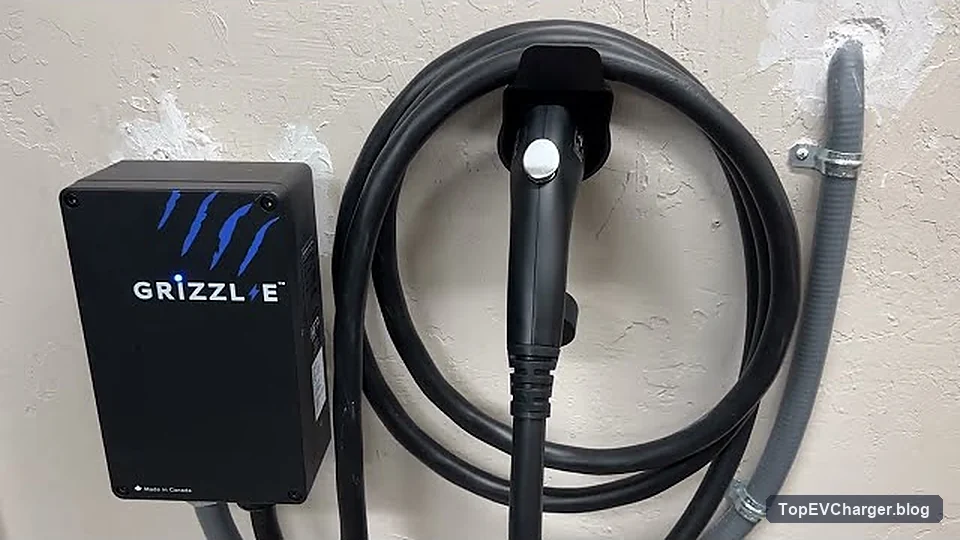
Wi-Fi connectivity enables remote monitoring through companion software platforms. Reading our clippercreek vs grizzl-e comparison highlights how smart charging features improve daily energy tracking.
The hardware operates reliably with or without an active internet connection. This offline charging capability ensures vehicles power up even if home router signals drop.
Eschewing complex cloud subscriptions, this non-smart unit focuses entirely on reliable hardware delivery, avoiding software obsolescence, dropped Wi-Fi connections, and cybersecurity vulnerabilities inherent in network-dependent charging stations.
Drivers rely on onboard vehicle scheduling menus to manage off-peak electricity rates, letting each plugged-in car handle its own charging windows rather than depending on external app interfaces or buggy mobile platforms.
- Real-time energy consumption statistics and monitoring.
- Customizable charging schedules for off-peak utility rates.
- Optional OCPP integration for advanced network management.
Installation Realities and Electrical Requirements
Standard installation relies on a simple NEMA 14-50 receptacle wired to a dedicated fifty-amp breaker. This plug-and-play setup saves hundreds of dollars in licensed electrician labor fees.
Weighing roughly twenty-five pounds, the metal housing demands secure mounting into solid wall studs. Proper mechanical anchoring prevents stress on the electrical outlet during daily plugging cycles.
Proper setup requires a dedicated hardwired connection or a robust NEMA 14-50 receptacle rated for continuous industrial electrical loads, ensuring safe thermal performance during prolonged dual-vehicle high-amperage sessions.
Licensed electricians must verify that your service panel capacity can handle the continuous duty draw, often necessitating a dedicated subpanel or heavy-gauge copper wiring upgrades for optimal safety compliance.
- Uses standard NEMA 14-50 plug configuration.
- Requires dedicated 240-volt 50-amp circuit breaker.
- Heavy chassis requires robust wall stud anchoring.
Safety Certifications and Internal Protections
Comprehensive safety systems protect against overcurrent, overvoltage, undervoltage, and ground faults continuously. Built-in GFCI circuitry meets strict modern electrical codes for residential installations.
Independent laboratory testing validates compliance with rigorous North American electrical safety standards. This UL tested certification guarantees reliable long-term operation under heavy residential electrical loads.
Rigorously tested for compliance, the hardware carries a CSA certification confirming it meets stringent North American electrical safety standards for residential and commercial indoor or outdoor deployment environments.
Built-in ground fault protection mechanisms continuously monitor current leakage, instantly cutting power if an electrical anomaly is detected to protect users and vehicles from hazardous ground faults.
- Integrated ground fault circuit interrupter protection.
- Self-monitoring and automatic power outage recovery.
- UL listed and Energy Star certified hardware.
Final Editorial Verdict for Multi-EV Owners
Households managing two electric vehicles will find immense value in this dual-cable hardware. It eliminates the need for expensive second circuit installations and panel upgrades.
While simultaneous charging halves individual amperage speeds, overnight replenishment covers daily needs. Reviewing our dual EV charger comparison helps multi-car families choose the best dual hardware for home garages.
For households housing two electric vehicles, this dual-port solution eliminates the massive expense of upgrading electrical service panels or installing two separate wall-mounted charging units in cramped garages.
Prioritizing rugged industrial reliability over flashy digital interfaces, it remains a top-tier mechanical choice for multi-EV owners demanding dependable, weather-resistant daily charging performance without unnecessary software complications.
- Eliminates second circuit installation expenses.
- Ideal for dual-EV residential garage setups.
- Backed by reliable multi-year warranty support.
Frequently Asked Questions
Can the Grizzl-E Duo charge two cars at the same time?
Yes, the unit features two separate output cables engineered to deliver electrical energy simultaneously to two separate vehicles without ever requiring any manual user switching.
When both cars plug in simultaneously, the onboard system automatically and dynamically splits the total available forty-amp capacity evenly between both connected ports to ensure safe electrical distribution.
What kind of electrical outlet does this charger require?
This heavy-duty residential charging station specifically requires a standard NEMA 14-50 receptacle connected securely to a dedicated fifty-amp electrical circuit breaker located inside your garage space.
Utilizing this very common plug configuration significantly simplifies your overall garage installation process and completely avoids complex permanent hardwiring requirements for most standard American homeowners.
Does the unit require an internet connection to function?
No internet connection is strictly required for basic daily operation because the internal charging hardware functions completely fine in a standard offline mode.
The built-in offline functionality guarantees that your electric vehicles will always power up reliably even if your home wireless network drops unexpectedly during severe seasonal storms.
How does dynamic load sharing affect charging speed?
When charging a single vehicle in complete isolation, the station delivers a full forty amps for maximum replenishment speed.
Plugging in a second car splits that total capacity into twenty amps per port, which still easily provides ample overnight battery range for standard daily driving commutes.
Can this EV charger be installed outdoors?
Yes, the heavy cast aluminum enclosure is officially rated NEMA 4 for superior water and weather resistance when mounted directly outside your home garage space.
This robust industrial metal construction reliably protects internal sensitive electronics against driving rain, heavy snow accumulation, and extreme outdoor seasonal temperatures year-round without ever risking performance failure.