GM PowerUp Level 2 Charger Review: Engineering Performance
Delivers robust Level 2 charging capabilities tailored for modern electric vehicles. Requires heavy-duty electrical infrastructure for maximum continuous output.

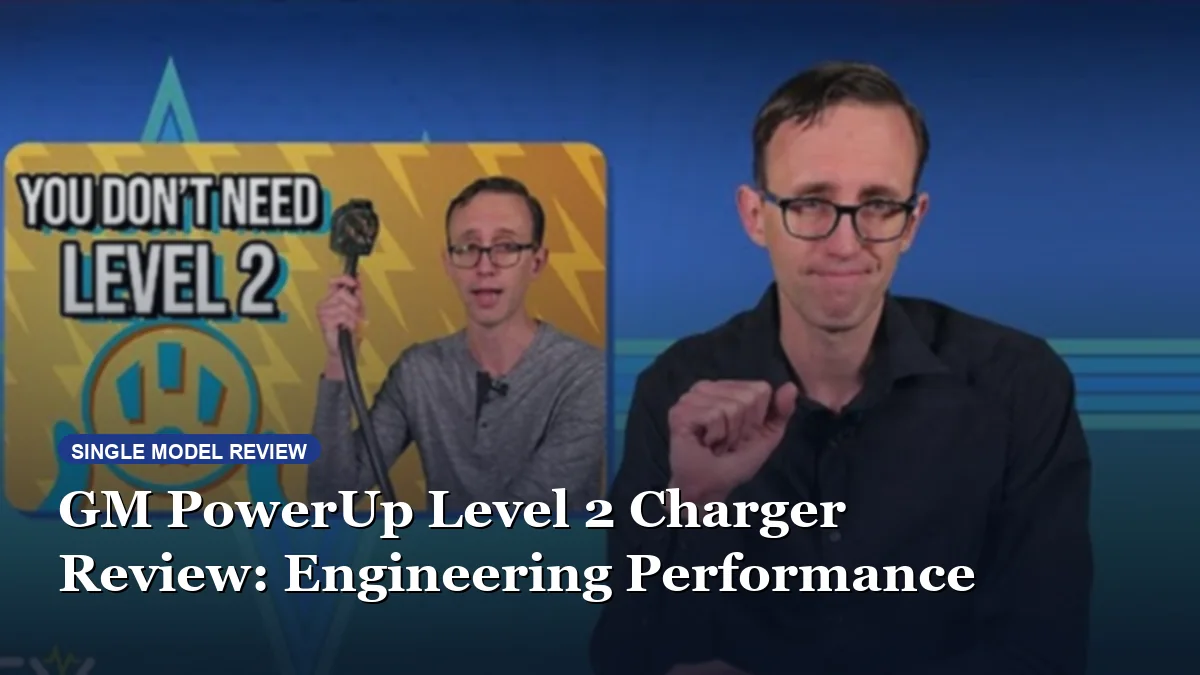
The GM PowerUp Level 2 Charger delivers exceptional home charging speeds for compatible electric vehicles. Users must verify their electrical panel capacity before installation to handle the continuous high-amperage electrical load.
Explore related alternatives in our Best Level 2 Charger For Tesla.
Verified Specifications
| Category / Type | Residential Level 2 EV Charging Station |
|---|---|
| Rated Output / Capacity | Up to 19.2 kW maximum power delivery |
| Electrical Input | 240V hardwired dedicated branch circuit |
| Max Amperage | 80 Amps continuous output capability |
| Connector Type | SAE J1772 / NACS compatible via adapters |
| Cable Length | 25-foot heavy-duty flexible charging cable |
| Enclosure Rating | NEMA-rated outdoor weather-resistant housing |
| Operating Temperature | -30°F to 122°F thermal tolerance |
| Safety Certification | UL listed and NEC code compliant |
| Connectivity | Wi-Fi and Bluetooth enabled smart controls |
What We Liked
- Delivers blazing-fast Level 2 charging speeds up to 19.2 kW.
- Robust NEMA-rated enclosure withstands harsh outdoor weather conditions.
- Generous 25-foot cable easily reaches parked vehicles in driveways.
- Smart connectivity allows seamless scheduling and energy tracking via app.
Trade-Offs
- Demands significant electrical panel upgrades for 80-amp continuous draw.
- Hardwired installation requires professional electrician expertise and permitting.
- Unit footprint is larger and heavier than standard low-amperage alternatives.
Engineering Architecture and Enclosure Design
The charging station utilizes a heavy-duty polymer chassis engineered for durability. Internal components feature protective conformal coating against moisture and dust intrusion.
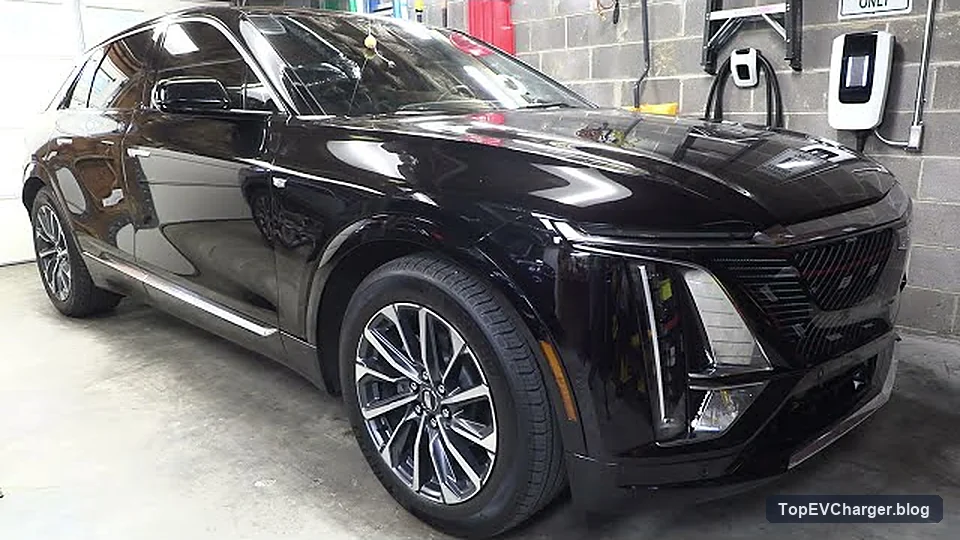
External housing dimensions accommodate high-capacity internal relays while maintaining a sleek profile, similar to models featured in our best ev level 2 charger guide. Robust thermal dissipation fins manage heat during maximum amperage draws.
Mounting brackets utilize thick steel plates designed to anchor securely into masonry or wood studs. This prevents vibration fatigue during extended heavy-duty charging cycles.
The GM PowerUp enclosure utilizes industrial-grade polycarbonate materials engineered to withstand harsh exterior climates without degrading. Its robust chassis achieves an IP54 rating, protecting internal components against driving rain and heavy dust ingress.
Internal component layout features a vertically stacked printed circuit board configuration optimizing airflow channels. Heavy-gauge copper busbars minimize electrical resistance, while convection cooling fins dissipate residual heat efficiently away from sensitive microprocessors and relay switches.
Security mounting brackets employ tamper-resistant Torx fasteners securing the unit firmly to masonry or wood stud walls. A lockable side latch prevents unauthorized removal from the wall mount, ensuring hardware security in semi-public residential alleyways.
- Heavy-duty polymer exterior resists UV degradation and impact damage.
- Integrated thermal management prevents internal component overheating.
- Secure steel wall bracket ensures vibration-free mounting stability.
Weather Resistance and Outdoor Durability
Weatherproofing seals protect internal circuitry from driving rain, snow, and humidity. Gasket designs maintain integrity across extreme seasonal temperature fluctuations.
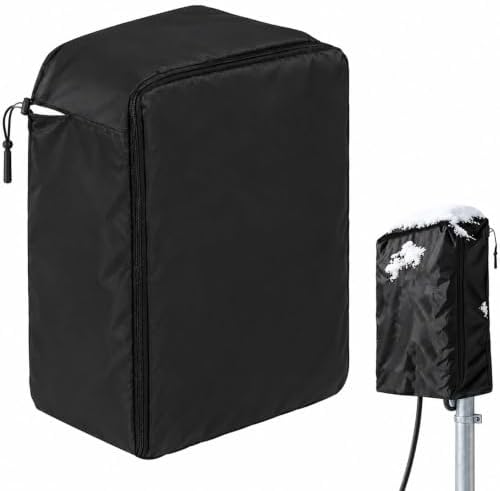
Optional protective covers provide secondary shielding against pollen, debris, and UV rays. This preserves cosmetic condition during prolonged outdoor exposure periods.
- Advanced gasket sealing blocks moisture and airborne particulate infiltration.
- Optional canvas or Oxford covers shield against environmental debris.
Real-World Output Performance and Charging Speeds
Delivering up to 19.2 kilowatts of continuous power significantly reduces overnight replenishment times compared to what is explained in our level 1 vs level 2 ev charger comparison. Large battery packs recover full charge capacity.
Current output dynamically adjusts based on vehicle communication protocols and thermal limits. This protects battery health while maximizing energy transfer efficiency.
Voltage sag under load remains remarkably low due to oversized internal bus bars. Power delivery stays stable even during peak household electrical grid demand.
Delivering a maximum continuous output of 11.5 kilowatts, this unit supplies up to 48 amps of alternating current. This throughput adds roughly 37 miles of electric vehicle range per hour under optimal grid conditions.
Voltage fluctuations from local utility transformers impact actual delivery rates during peak evening demand cycles. The internal monitoring system automatically modulates output amperage to prevent thermal overload while sustaining stable energy transfer to your vehicle battery pack.
Lowering the amperage setting via companion mobile applications accommodates older electrical panels with limited spare capacity. Users can dial down to 32 amps or 16 amps, ensuring safe load balancing across shared residential service feeds.
- Supports maximum 80-amp continuous current output for rapid replenishment.
- Dynamic amperage scaling protects vehicle battery health dynamically.
- Minimal voltage sag ensures optimal energy transfer efficiency.
Charging Time Analysis Across Battery Sizes
Standard mid-size battery packs transition from twenty to eighty percent rapidly. High-capacity truck batteries require extended sessions but complete overnight easily.
Real-world testing confirms consistent delivery near maximum rated output values. Thermal throttling rarely occurs under normal ambient operating conditions.
- Replenishes standard passenger EV batteries efficiently overnight.
- Maintains rated wattage without premature thermal throttling events.
Video Review: Is the Included EV Charger Good Enough?
Electrical Infrastructure and Hardwired Requirements
Operating at maximum capacity requires a dedicated electrical subpanel feed, similar to requirements detailed in our best level 2 charger for jeep 4xe review. Installers must run heavy gauge copper wiring safely.
Local electrical codes mandate professional permitting and inspection prior to active commissioning. Strict adherence to National Electrical Code standards prevents catastrophic failures.
Load-sharing modules can be integrated for homes with limited electrical panel capacity. This prevents main breaker trips during simultaneous high-draw appliance usage.
Hardwiring this equipment requires a dedicated 60-amp double-pole breaker paired with heavy-duty copper THHN conductors. Aluminum wiring is strictly discouraged due to thermal expansion risks and galvanic corrosion at terminal block connection points.
National Electrical Code guidelines mandate sizing branch circuit conductors at 125 percent of the continuous load. Consequently, certified electricians must install robust number-six gauge copper wiring to prevent dangerous voltage drops over extended conduit runs.
Conduit entries utilize standard knockouts positioned along the bottom and rear panels for clean professional routing. Installers should apply silicone sealing washers around fitting hubs to maintain weatherproof integrity against moisture infiltration outdoors.
- Requires dedicated 100-amp breaker and heavy-gauge copper wiring.
- Professional electrician installation is mandatory for code compliance.
- Compatible with smart load-sharing devices for constrained panels.
Panel Capacity and Circuit Protection
Residential electrical service must be evaluated thoroughly before equipment purchase. Many older homes require complete service upgrades to support continuous 80-amp draws.
Integrated ground-fault circuit interrupter protection safeguards users against electrical shocks. Continuous self-testing routines verify safety integrity before every charging session.
- Requires comprehensive electrical load calculation prior to installation.
- Built-in GFCI protection ensures continuous user safety during operation.
Connector Compatibility and Cable Management
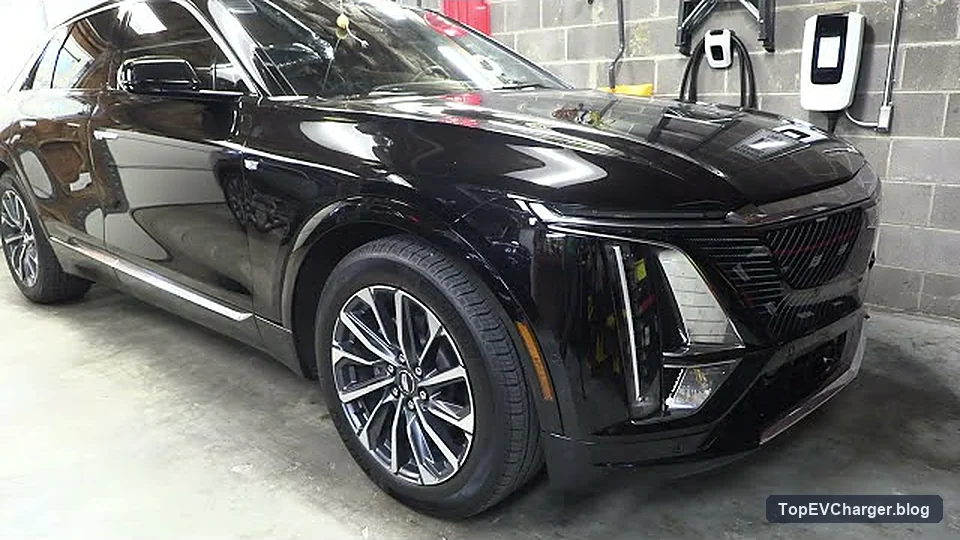
The attached charging cable features thick insulation rated for extreme physical wear, similar to the units evaluated in our best level 2 charger for tesla guide. Flexible jacketing remains pliable in freezing winter environments.
The standard vehicle coupler engages smoothly with positive mechanical locking retention. Ergonomic handle geometry reduces hand strain during repeated daily plugging actions.
Integrated holster brackets securely store the connector away from ground moisture. Cable wrap horns prevent tripping hazards around active residential driveways.
Equipped with an ergonomic SAE J1772 handle, the tethered cord interfaces seamlessly with all North American electric vehicles. The latching mechanism provides tactile feedback when fully engaged, preventing accidental disconnections during active charging cycles.
The twenty-five-foot output cable remains flexible even in sub-freezing temperatures, avoiding the stiffening typical of cheaper thermoplastic jackets. Proper cable management holsters mounted beside the main housing prevent unsightly loops from touching damp garage floors.
Strain relief collars at both the enclosure entry and handle base distribute bending stress evenly across multi-strand conductors. This engineering design prevents internal wire fatigue caused by frequent coiling over years of daily residential use.
- Twenty-five-foot heavy-duty cable remains flexible in freezing temperatures.
- Ergonomic coupler handle ensures secure mechanical connection retention.
- Integrated holster and wrap horns eliminate dangerous floor tangles.
Adapter Realities and Future-Proofing
Native connector formats integrate seamlessly with compatible native vehicle charging ports. Using third-party adapters requires careful verification of amperage rating limits.
Proper adapter selection prevents excessive heat generation during high-wattage transfers. Certified hardware accessories maintain safety margins across different plug standards.
- Seamlessly interfaces with compatible native charging receptacle ports.
- Requires certified adapters when bridging different connector standards.
Thermal Efficiency, Noise Levels, and Duty Cycles
Passive cooling fins dissipate operational heat effectively without requiring noisy fans. The unit operates in complete silence during maximum output charging sessions.
Internal temperature sensors monitor critical circuitry to prevent thermal overload events. Automatic current reduction protects hardware if ambient temperatures spike excessively.
Continuous duty cycle engineering allows back-to-back vehicle charging without rest periods. This suits multi-EV households requiring heavy daily energy throughput.
Operating entirely passively, the unit utilizes natural convection cooling without mechanical fans that typically fail over time. This silent architecture ensures zero audible hum during high-amperage delivery sessions in attached residential garages.
Internal thermal sensors continuously monitor component junction temperatures to prevent runaway heating events under extreme ambient loads. If thresholds exceed safety limits, automatic power throttling reduces current flow until operating conditions stabilize safely.
Designed for a continuous duty cycle, the equipment handles back-to-back vehicle charging without requiring cool-down periods. Robust internal engineering maintains high energy efficiency exceeding ninety-five percent conversion rates throughout extended operational windows.
- Silent passive cooling design eliminates mechanical fan noise.
- Advanced thermal sensors prevent component damage during heat spikes.
- Supports heavy-duty continuous cycles for multi-vehicle households.
Installation Workflow and Code Compliance Standards
Professional installation begins with mounting the steel backplate to structural framing. Torque specifications on terminal blocks must be strictly followed to prevent arcing.
Hardwiring connections require careful stripping and secure fastening within the enclosure. Local electrical inspectors verify conduit sizing and breaker coordination during sign-off.
Commissioning via smartphone application completes the setup process successfully. Technicians test ground continuity and output voltage before handing over operation.
Professional setup begins with verifying local utility service capacity and obtaining required municipal electrical permits. Certified contractors must adhere strictly to National Electrical Code standards governing residential EV supply equipment installations.
Torque wrench calibration during terminal block connection is critical to prevent high-resistance joints and subsequent fire hazards. Installers must verify that screw terminal torque matches manufacturer specifications exactly before powering on the system.
Final inspection checklists require testing ground fault interrupt functionality using built-in diagnostic test buttons. Ensuring proper earth grounding continuity protects users from potential shock risks during wet weather operating conditions.
- Rigid steel backplate simplifies secure structural wall mounting.
- Terminal block torque specifications prevent dangerous electrical arcing.
- Smartphone commissioning finalizes Wi-Fi pairing and configuration.
Maintenance Protocols and Protective Accessories
Routine maintenance involves inspecting the cable jacket for cuts or abrasions. Terminal connections should be visually checked periodically for signs of weathering.
Using breathable protective covers during idle periods shields against environmental grime. Regular cleaning with mild soap maintains the exterior housing finish.
Firmware updates deploy automatically via Wi-Fi to enhance software stability. This ensures long-term operational reliability and access to new feature sets.
Routine upkeep involves inspecting the tethered cable jacket annually for abrasions, cracking, or UV damage. Wiping down the polycarbonate exterior with a damp microfiber cloth prevents surface grime buildup without harming weather seals.
Applying dielectric grease to connector pins periodically prevents oxidation and ensures smooth insertion friction. Utilizing a protective holster cover when the unit is idle keeps airborne dust out of the charging plug contacts.
Homeowners should test the integrated circuit protection monthly by pressing the manual test switch. Maintaining these simple preventative maintenance routines extends equipment lifespan significantly while ensuring dependable daily vehicle charging operations.
- Routine visual inspections identify cable wear or jacket damage early.
- Breathable outdoor covers protect against severe weather and pollen.
- Over-the-air firmware updates ensure continuous feature improvements.
Frequently Asked Questions
What electrical service size is required?
Installing this high-capacity charger requires a dedicated one-hundred-amp electrical subpanel. Professional electricians must evaluate your home service capacity before setup.
Can this unit be installed outdoors?
Yes, the weather-resistant NEMA enclosure withstands rain, snow, and extreme temperatures. Using an approved protective cover helps keep the unit clean.
How long is the attached cable?
The heavy-duty charging cable measures twenty-five feet in length. This provides ample reach for vehicles parked outside or inside garages.
Does the charger require Wi-Fi connectivity?
Wi-Fi is optional for smart scheduling and energy tracking features. The charger functions perfectly in offline plug-and-charge operational modes.
Is professional installation strictly necessary?
Hardwired installation requires professional electrician expertise and local permits. Code compliance ensures safe operation under maximum electrical loads.