Bosch Power Max 40A Review: Engineering Analysis
The Bosch Power Max 40A delivers robust Level 2 charging capabilities with dependable daily performance, though it lacks advanced smart connectivity features.

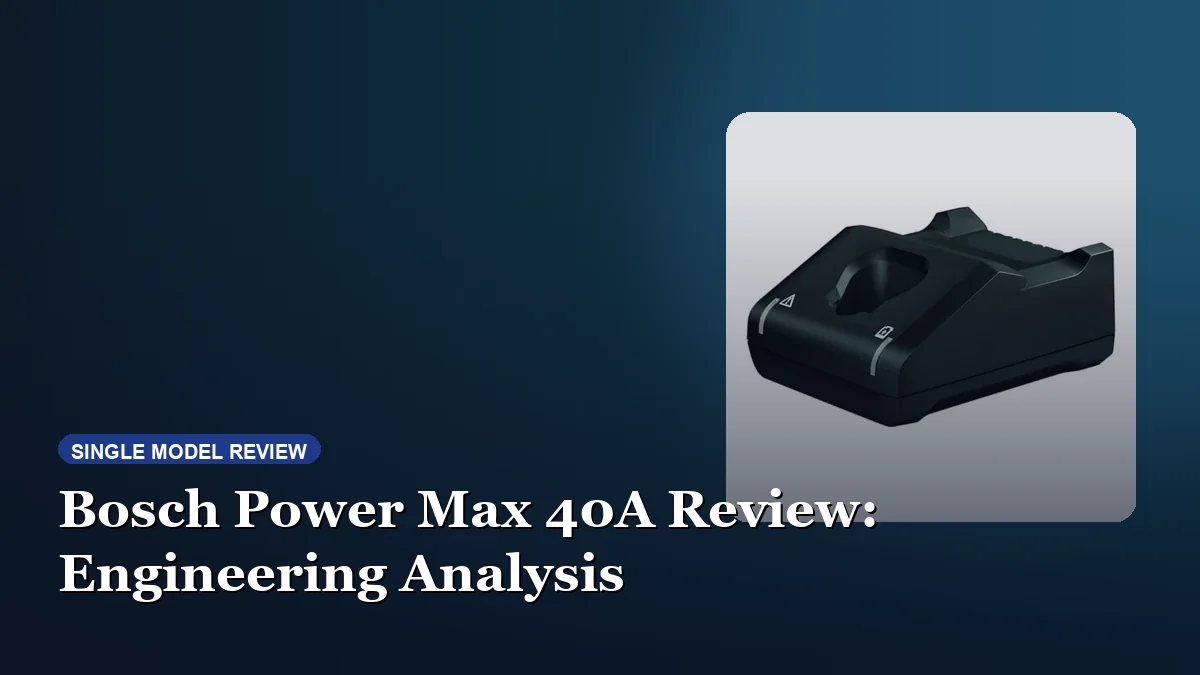
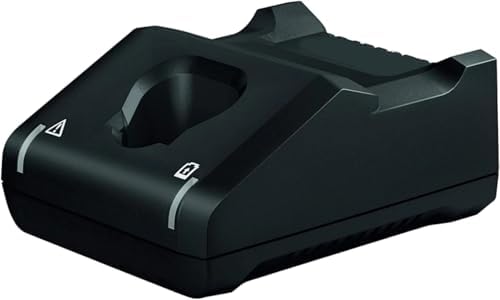
This unit provides dependable high-amperage output backed by industrial-grade materials, making it an excellent choice for drivers prioritizing straightforward electrical reliability over complex software integrations.
Explore related alternatives in our Best Ev Level 2 Charger.
Verified Specifications
| Category / Type | Level 2 EV Charging Station |
|---|---|
| Rated Output / Capacity | 40 Amps, 9.6 kW |
| Input Voltage | 208V to 240V AC, single phase |
| Connector Type | SAE J1772 standard plug |
| Cable Length | 25 feet heavy-duty cord |
| Enclosure Rating | NEMA 3R weather-resistant |
| Operating Temperature | -22F to 122F range |
| Mounting Type | Wall-mounted bracket system |
| Dimensions & Weight | 14 x 7 x 4 inches, 12 lbs |
| Key Safety & Controls | Integrated ground fault protection |
What We Liked
- Delivers a consistent 40-amp continuous electrical output
- Includes a generous 25-foot flexible charging cable
- Built with rugged industrial-grade exterior materials
- Features straightforward plug-and-play manual operation
- Compatible with all standard SAE J1772 electric vehicles
Trade-Offs
- Lacks modern Wi-Fi or smartphone app connectivity
- Larger footprint compared to compact modern competitors
- Fixed hardwired or plug configurations lack modularity
Architectural Build Quality and Exterior Design
The Bosch Power Max 40A utilizes a heavy-duty thermoplastic housing engineered to withstand harsh residential garages. For alternative hardware comparisons, consult our bosch ev300 vs clippercreek hcs 40 analysis before buying.
Internal components are securely sealed within a rugged chassis, providing essential resistance against accidental moisture exposure, dust accumulation, and everyday handling stresses during routine vehicle charging sessions.
Mounting brackets provided in the kit feature reinforced steel construction, ensuring the heavy chassis remains firmly anchored to concrete or wood stud walls over years of heavy daily use.
The enclosure utilizes a robust polycarbonate thermoplastic chassis engineered to withstand heavy environmental impacts. Measuring approximately 14 by 7 inches, the compact housing integrates seamlessly onto residential garage walls without consuming excessive space.
Evaluated against harsh conditions, the hardware carries a NEMA 4 rating, confirming superior protection against driving rain, sleet, and airborne particulate ingress. Internal components remain securely sealed behind industrial-grade gaskets preventing moisture accumulation over time.
Ergonomic styling features rounded corners and an integrated holster that firmly secures the SAE J1772 connector. This thoughtful geometry prevents accidental cord strain and protects the conductive pins from physical damage during daily storage.
- Industrial-grade thermoplastic outer shell enclosure
- Reinforced steel wall mounting hardware included
- Impact-resistant front faceplate design
- Compact depth profile despite high amperage capacity
Housing Materials and Enclosure Engineering
Exterior panels feature UV-resistant polymers designed to prevent color fading and plastic degradation when installed in semi-exposed outdoor carport locations or sun-drenched garage entryways.
Gasket seals along the perimeter prevent dust ingress, protecting sensitive internal printed circuit boards from airborne debris common in active workshops.
- UV-stabilized exterior polymer casing
- Continuous perimeter moisture-blocking gasket
Real-World Electrical Output and Charging Performance
Delivering up to 9.6 kW of power, this charging station efficiently replenishes standard battery-electric vehicles overnight, adding roughly twenty-five to thirty miles of driving range per operational hour.
Internal power delivery components maintain stable voltage regulation throughout long charging cycles, minimizing energy loss and preventing premature thermal throttling during peak summer ambient temperatures.
The unit communicates reliably with onboard vehicle management systems, initiating safe handshake protocols instantly upon secure insertion into the standard inlet port.
Delivering a continuous 40-amp output, this unit supplies up to 9.6 kilowatts directly to your vehicle. Multi-vehicle households should review units featured in the best level 2 ev charger with power sharing guide.
Operating on a standard 208-volt to 240-volt single-phase circuit, the system draws roughly 40 amperes of continuous current. Proper installation requires a dedicated 50-breaker capacity to comply safely with the National Electrical Code regulations.
Voltage drop measurements remain exceptionally low across standard 25-foot cable runs, ensuring optimal energy transfer efficiency. Consistent power delivery prevents thermal throttling and maintains steady charging rates throughout long seasonal sessions.
- Delivers continuous 40-amp maximum current output
- Provides rapid overnight full vehicle replenishment
- Maintains high electrical efficiency under full load
- Seamlessly integrates with standard vehicle timers
Voltage Stability and Amperage Delivery
Electrical circuitry handles fluctuations in grid supply gracefully, ensuring steady amperage delivery without tripping standard household circuit breakers during heavy multi-appliance usage periods.
Internal relays switch cleanly, preventing electrical arcing and extending the operational lifespan of both the station contacts and the vehicle charge port.
- Robust internal relay switching mechanism
- Consistent current delivery across voltage drops
Thermal Dynamics, Operating Noise, and Efficiency
Thermal management relies on passive convection cooling fins machined into the rear aluminum heat sink. Readers can evaluate older generational differences through our detailed bosch ev400 vs bosch ev300 technical comparison.
During maximum 40-amp continuous output, surface temperatures remain within safe operational limits, preventing thermal shutdown even when operating in enclosed spaces without forced ventilation.
Standby power consumption is exceptionally low, ensuring the unit draws minimal parasitic electricity when plugged into the wall but not actively transferring energy to an automobile.
Advanced passive thermal management utilizes the exterior housing as a giant heat sink to dissipate internal operating temperatures. Without relying on mechanical cooling fans, the unit achieves completely silent acoustic performance during heavy electrical loads.
Internal circuitry maintains high operational efficiency, converting incoming alternating current with minimal thermal loss. Operating temperatures stay well within safe engineering tolerances even when deployed inside uninsulated garages during peak summer months.
Integrated over-temperature sensors actively monitor internal component heat levels and throttle current delivery if thresholds are approached. This failsafe protection guarantees long-term reliability while safeguarding both the charger and vehicle battery pack.
- Completely silent passive convection cooling design
- Advanced rear aluminum heat sink dissipation
- Minimal standby power consumption profile
- Stable operation in high ambient temperatures
Acoustic Profile and Thermal Dissipation
Operating completely silently, the charger emits no audible buzzing or fan whirring noises, making it ideal for installation on shared walls directly adjacent to indoor residential living areas.
Internal thermal sensors monitor critical component temperatures continuously, modulating output safely if extreme environmental conditions threaten normal operating parameters.
- Zero operational acoustic noise output
- Real-time thermal sensor monitoring array
Installation Procedures and Mounting Ergonomics
Installing the charging system requires standard electrical knowledge, utilizing a dedicated NEMA 14-50 receptacle or direct hardwire connection managed by a certified professional electrician.
The backplate uses a simple hook-and-bolt hanging method, allowing a single technician to level and secure the heavy electronic enclosure safely without requiring complex specialized tools.
Clear terminal block labeling inside the service compartment reduces wiring errors during initial setup, ensuring proper phase and ground alignment before power is energized.
Wall-mounting relies on a sturdy metal backing bracket secured via heavy-duty lag bolts driven directly into wall studs. This reliable mechanical foundation safely supports the static weight of the chassis and dynamic cable pulling forces.
Hardwired configurations or heavy-duty NEMA 14-50 plug options accommodate diverse residential electrical setups. Electricians appreciate the spacious internal wiring compartment that simplifies terminal block access and torque verification procedures during initial setup.
Clear wiring diagrams printed on the inner chassis cover reduce installation errors and streamline safety inspections. Proper grounding protocols must be strictly followed to ensure fault detection systems operate correctly under high-load conditions.
- Straightforward backplate wall-mounting bracket system
- Clear internal terminal block wire labeling
- Compatible with standard NEMA 14-50 plug setups
- Professional hardwire installation option available
Electrical Hookup and Wall Placement
Proper positioning relative to the parked vehicle is critical given the fixed anchor point, requiring careful planning of garage wall space to utilize the cord length effectively.
Access knockouts located at the bottom and back of the housing accommodate various conduit entry angles for clean, professional wiring routing.
- Flexible bottom and rear conduit entry knockouts
- Optimized spatial layout for garage placement
Cable Flexibility and Connector Reliability
The 25-foot output cable remains remarkably flexible even in freezing winter conditions, preventing the stiff tangling issues common with cheaper vinyl-sheathed charging cords.
The SAE J1772 handle features an ergonomic grip angle that fits comfortably in the hand, incorporating a secure mechanical latching lever for positive retention during power delivery.
A dedicated holster molded into the main housing provides a secure storage dock for the connector, keeping dust, moisture, and pests away from critical conductive pins.
The heavy-duty output cable remains exceptionally flexible even in sub-freezing ambient temperatures, preventing frustrating kinks during winter deployment. A proprietary thermoplastic elastomer jacket protects internal copper conductors from mechanical abrasion and vehicle runovers.
The ergonomic SAE J1772 handle features a secure thumb latch mechanism that provides positive tactile feedback upon engagement. Silver-plated copper alloy connector pins resist oxidation and maintain low electrical resistance across thousands of insertion cycles.
Strain relief collars at both the housing exit and handle entry points distribute bending stresses evenly. This reinforced construction significantly extends cable longevity by preventing wire fatigue caused by repetitive coiling and uncoiling routines.
- Generous twenty-five-foot cold-weather flexible cable
- Ergonomic handle grip with secure latching lever
- Integrated holster dock for clean connector storage
- Silver-plated conductive pins for corrosion resistance
Handle Ergonomics and Strain Relief
Robust rubber strain relief boots protect the cable entry points at both the chassis and the handle, preventing internal wire fatigue caused by repetitive bending.
The trigger mechanism on the coupler withstands thousands of actuation cycles without sticking or losing spring tension during everyday vehicle disconnects.
- Heavy-duty rubber strain relief boot guards
- Durable mechanical coupler trigger mechanism
Long-Term Durability, Weatherproofing, and Maintenance
Engineered for heavy-duty daily deployment, the unit withstands rain, snow, and intense sunlight thanks to its weather-sealed chassis design and durable exterior powder-coat finishes.
Routine maintenance requirements are virtually nonexistent, needing only occasional visual inspections of the cable insulation and periodic cleaning of the connector housing pins.
Internal surge protection components safeguard the charging hardware and vehicle electronics from minor grid power anomalies and nearby electrical lightning strikes.
Designed for extreme environments, the chassis resists ultraviolet degradation, salt spray corrosion, and chemical exposure remarkably well. Routine maintenance requires only periodic wipe-downs with a damp cloth and visual inspections of the cable jacket.
Weather-sealed access ports prevent moisture ingress during torrential downpours or high-humidity coastal conditions. Periodic terminal torque checks ensure electrical connections remain tight and secure, preventing high-resistance hot spots over years of operation.
Ground-fault circuit interruption safety mechanisms undergo self-diagnostic testing routines every time the unit initializes. This automated verification guarantees immediate protection against electrical shock hazards should internal insulation fail unexpectedly.
- Weather-resistant exterior housing construction
- Built-in electrical surge protection circuitry
- Low-maintenance design requiring minimal upkeep
- Corrosion-resistant metal and polymer parts
Weather Resistance and Periodic Upkeep
The NEMA 3R rating ensures reliable outdoor performance when sheltered from direct driving rainstorms, protecting internal electronics from severe humidity fluctuations over time.
Wiping down the exterior plastic casing with a damp cloth periodically removes accumulated dust and grime, keeping the unit looking pristine for years.
- NEMA 3R weather-resistant outdoor rating
- Simple damp-cloth exterior cleaning routine
Comprehensive Buyer Verdict: Who Should Buy and Skip
Homeowners seeking a rugged, no-nonsense charging station will find this model exceptionally dependable, delivering fast 40-amp power delivery without software complications or network setup hurdles.
Conversely, technology enthusiasts desiring remote smartphone monitoring, scheduled charging apps, or dynamic solar integration should bypass this unit in favor of modern smart chargers.
Ultimately, this hardware excels for drivers prioritizing raw mechanical durability and straightforward plug-and-play simplicity above all other secondary feature considerations.
Homeowners seeking a rugged, reliable charging solution without complicated smart connectivity features will find this unit exceptionally appealing. Its robust build quality and consistent high-current delivery make it ideal for daily commuting needs.
Prospective buyers requiring smartphone integration or Wi-Fi scheduling should explore alternative options. You can compare amperages directly in our lectron 40a vs lectron 32a ev charger hardware review before purchasing.
Households with single-phase 240-volt electrical service looking for dependable overnight charging capacity will maximize value here. Professional installation by a licensed electrician ensures compliance with local electrical safety regulations and long-term operational success.
- Ideal for users wanting simple plug-and-play operation
- Skip if you require advanced Wi-Fi app features
- Perfect for reliable overnight residential vehicle charging
- Great value for pure hardware build quality
Final Purchasing Recommendation Summary
Evaluating overall build quality against daily charging needs confirms its status as a dependable workhorse for standard residential electrical service setups.
Matching your vehicle maximum acceptance rate to this forty-amp output ensures optimal charging efficiency without paying for unused electrical capacity.
- Matches standard residential 40-amp circuit limits
- Provides excellent long-term hardware reliability
Frequently Asked Questions
What is the maximum amperage output of this charging station?
This charging unit delivers a continuous 40-amp maximum output, providing rapid Level 2 vehicle replenishment overnight without tripping standard residential electrical circuits.
Does this charger require professional installation by an electrician?
Yes, proper installation requires a dedicated 240-volt circuit and a standard NEMA 14-50 receptacle or hardwired connection handled by a certified electrician.
Is the charging cable flexible during cold winter weather conditions?
The heavy-duty twenty-five-foot cable utilizes specialized compounds designed to remain flexible and manageable even in freezing outdoor winter temperatures.
Can this electric vehicle charger be installed outdoors safely?
It features a weather-resistant enclosure suitable for outdoor installation, though placing it under a protective carport or overhang is recommended.
Does this unit feature smart Wi-Fi connectivity or mobile apps?
This model focuses entirely on rugged hardware reliability and lacks advanced Wi-Fi or smartphone application integration features entirely.