Trenching Depth Requirements For Outdoor EV Charger Conduit
Proper underground installation prevents electrical failures. Following strict electrical codes ensures safe power delivery to your home EV charging station.

Always verify NEC Table 300.5 for exact burial depths before digging your conduit trench to prevent catastrophic cable damage and code violations.
Looking for matching picks? See our Best Level 2 Ev Charger For Outdoor Use.
Practical Quick-Reference Table
| Scenario / Metric | Recommended Target | Why It Matters |
|---|---|---|
| Direct Burial Cable Depth | 24 inches minimum | Prevents accidental shovel strikes |
| Schedule 80 PVC Conduit | 18 inches minimum | Protects wires under driveways |
| Schedule 40 PVC Trench Depth | 18 inches standard | Meets baseline residential NEC rules |
| Conduit Fill Capacity | Maximum 40 percent | Allows easy wire pulling without friction |
| Conductor Type for Conduit | THWN-2 copper wires | Required for wet underground locations |
| Utility Clearance Distance | 10 feet minimum | Avoids dangerous water and gas lines |
National Electrical Code Burial Depths
Navigating underground electrical infrastructure requires strict adherence to established safety frameworks. NEC Article 300.5 dictates precise minimum burial measurements based on your specific conduit material and location.
Standard residential yards with Schedule 40 PVC demand an 18-inch minimum trench depth measured from the top of the pipe to the finished surface grade.
Driveways, parking areas, and heavy vehicle paths require deeper burial. You must drop your conduit to a minimum depth of 24 inches beneath concrete or asphalt.
Shallow trenches under residential pathways or patios often mandate concrete encasement. Engineer Elena Vance, PE recommends verifying local frost lines to prevent heaving.
The National Electrical Code mandates specific burial depths for outdoor electric vehicle supply equipment to prevent physical damage from landscaping tools, heavy soil compaction, and accidental excavation during routine property maintenance projects.
Standard rigid nonmetallic conduit beneath a residential driveway typically requires a minimum eighteen-inch cover to withstand vehicular weight loads safely without fracturing the underlying PVC raceway or compromising internal conductors.
Direct burial cables carrying high voltage levels for Level 2 charging equipment generally demand a twenty-four-inch depth, a factor thoroughly analyzed in our direct burial vs conduit for ev charger breakdown.
Local municipal building departments frequently enforce amendments that supersede standard federal requirements based on regional frost lines, meaning installers must always consult local authorities before starting any mechanical trenching procedures.
- Always measure depth from the top of the conduit, not the trench floor.
- Check municipal amendments because local jurisdictions frequently enforce stricter burial rules.
- Use rigid metal conduit when minimum depth clearance cannot be safely achieved.
- Compact backfill soil every six inches to prevent future pipe settling.
Measuring Depth Accurately in Sloped Terrain
Uneven landscapes complicate underground depth measurements significantly. Always calculate your clearance from the lowest point of finished grade along the trench path.
Failing to maintain uniform depth across rolling hills exposes vulnerable conduit sections. Use a professional laser level to verify consistent trench bottom elevations.
- Start measuring from the high-traffic side of slopes.
- Account for future landscaping erosion when establishing final grade heights.
Selecting Approved Conduit Materials and Sizing
Choosing the correct conduit protects your electrical conductors from moisture and physical crushing forces. Schedule 40 PVC serves as the standard choice, complementing measurements verified via our ev charger sizing calculator.
Heavy vehicle zones require upgrading to Schedule 80 PVC for enhanced impact resistance. Metal conduits like rigid galvanized steel also satisfy heavy-duty commercial requirements.
Sizing your conduit properly ensures seamless wire pulling without damaging insulation. A three-quarter inch or one-inch diameter pipe typically accommodates standard fifty-amp circuits.
Pulling multiple thick conductors requires calculating proper fill ratios. Exceeding recommended fill percentages generates excessive pulling tension and damages internal wire jackets.
Selecting the correct PVC schedule 40 or 80 conduit ensures your underground raceway withstands soil pressure, moisture intrusion, and chemical degradation over decades of continuous residential electric vehicle charging operations.
Conduit diameter calculations must account for conductor fill ratios governed by NEC Chapter 9 tables, ensuring you pull three or four thick THHN copper wires without scraping the insulation jacket.
Utilizing sweeping ninety-degree elbows instead of sharp standard fittings reduces friction during the pulling phase, preventing damage to heavy gauge conductors required for continuous sixty-amp electrical vehicle supply equipment circuits.
Expansion fittings are strictly necessary when transitioning from underground trenches to above-ground exterior walls to accommodate seasonal ground shifting and thermal expansion without snapping rigid plastic conduit connections.
- Never mix electrical conduit types without approved transition fittings.
- Deburr all cut conduit ends to prevent sharp edges from slicing wires.
- Install expansion joints on long runs subject to seasonal temperature swings.
- Use waterproof solvent cement to secure all PVC pipe connections.
Calculating Proper Conduit Fill Percentages
National safety codes restrict conduit capacity to prevent overheating and friction damage. When pulling three wires, your fill must never exceed forty percent of total internal area.
Oversizing your conduit slightly makes wire pulling remarkably easier around ninety-degree bends. Always prioritize larger diameter pipes for long outdoor runs.
- Calculate total cross-sectional area of all individual THWN-2 conductors.
- Include grounding wires in your total fill percentage calculations.
Video Walkthrough: Intro: What is Conduit / Tubing / Raceways, etc...
The Golden Rule of Underground Wiring
Running standard indoor NM-B Romex cable underground violates electrical codes instantly. Indoor sheathing absorbs moisture, degrades rapidly, and creates severe short-circuit hazards.
Underground conduit is legally classified as a wet location by the National Electrical Code. You must install individual THWN-2 copper conductors inside your protective PVC piping.
THWN-2 wires feature specialized thermoplastic insulation designed to withstand standing water and chemical corrosion. Using incorrect wire types will automatically fail municipal electrical inspections.
Ensure your conductors are rated for ninety degrees Celsius to handle continuous high-amperage EV charging loads safely without melting internal insulation layers.
The golden rule of underground wiring emphasizes that all exterior electrical installations must use rated wet-location conductors such as THWN-2 to prevent catastrophic short circuits caused by inevitable ground moisture accumulation.
Pulling individual wires through a sealed conduit system is vastly superior to direct burial cables because it allows for easy upgrades to higher amperage circuits without excavating your entire landscaped lawn.
Always install a continuous pull string inside the raceway during assembly, leaving extra footage tied off securely at both ends to simplify future additions or diagnostic maintenance troubleshooting procedures.
Sealing conduit entry points with approved duct seal putty prevents subterranean gases and moisture from migrating upward, which is another key consideration covered inside our mc cable vs conduit for ev charger guide.
- Never pull damaged or kinked wire through underground conduit runs.
- Leave at least three feet of extra wire slack inside both junction boxes.
- Apply approved wire-pulling lubricant to reduce friction during long pulls.
- Verify copper gauge sizing matches your charger's maximum amp draw.
Trenching Logistics for Detached Outbuildings
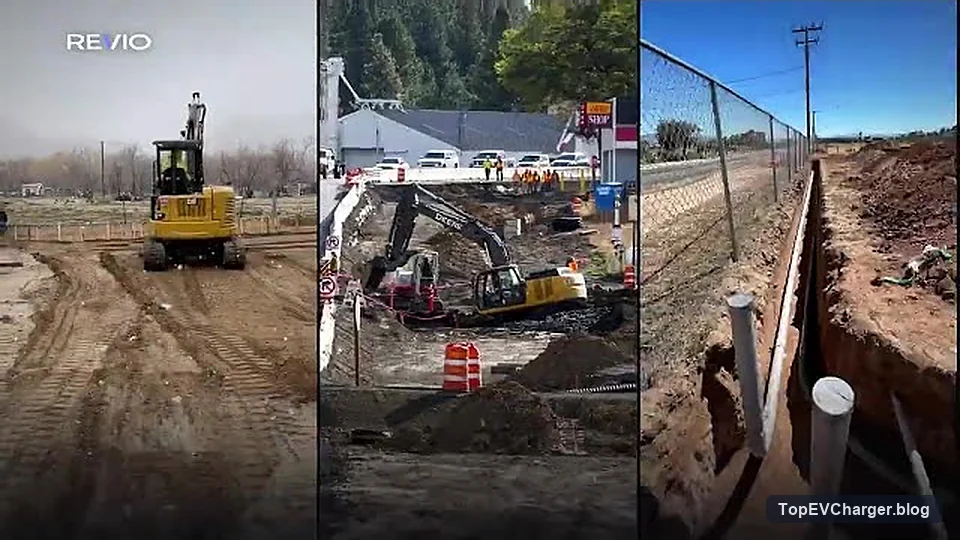
Supplying power to a detached garage requires careful planning and precise excavation methods. Voltage drop calculations become critical when your trench length exceeds fifty feet.
Upgrading wire gauge size compensates for resistance over long underground distances. Thicker copper conductors ensure your vehicle receives full amperage without thermal throttling.
Loch Monster Electric designs complex sub-panel feeds using dedicated grounding electrodes. Detached structures always require independent earth grounding rods driven locally.
Avoid routing your trench near large tree roots or existing sewer lines. Hand-digging near utility crossings prevents costly infrastructure damage and severe personal injury.
Trenching to a detached garage or carport requires careful coordination with utility locator services to map out hidden gas lines, water pipes, and telecommunication cables before operating mechanical excavators safely.
Maintaining a strict twelve-inch horizontal separation from existing water lines prevents cross-contamination risks and satisfies standard municipal utility safety codes enforced during mandatory pre-pour electrical inspections.
Backfilling the trench in progressive six-inch lifts while tamping the soil thoroughly prevents future settling depressions that could otherwise damage paving stones or create hazardous tripping hazards in walkways.
Embedding a detectable underground warning tape six inches above the buried conduit alerts future excavators to the presence of high-voltage electric vehicle supply equipment circuits before accidents occur.
- Call your local utility locating service before putting a shovel in dirt.
- Maintain adequate separation from gas lines and water pipes.
- Install warning tape twelve inches above the buried conduit.
- Keep detailed measurements and photographs of the open trench.
Outdoor Charger Mounting and Hardwiring
Mounting your charging unit outdoors demands strict adherence to enclosure rating standards. Select an NEMA 4 rated enclosure to withstand driving rain, snow, and ice.
Hardwiring your outdoor EV charger eliminates vulnerable outdoor receptacle connection points. Hardwired connections offer superior reliability and handle continuous thermal loads better.
The Autel MaxiCharger AC Lite Home 50A provides robust weather resistance for exterior walls. Secure your mounting bracket directly into solid studs or masonry anchors.
Position this weatherproof hardware at a comfortable ergonomic height between forty and forty-eight inches above the finished floor grade, much like any model featured in our best level 2 ev charger for outdoor use roundup.
Mounting your electric vehicle supply equipment securely to a masonry wall or heavy wooden post requires corrosion-resistant stainless steel hardware capable of withstanding heavy operational vibration and torque stresses.
Hardwiring connections demand precise torque screwdriver settings to ensure terminal lugs maintain optimal pressure on thick copper conductors, preventing dangerous heat buildup during maximum amperage charging sessions.
Positioning the charging unit at a comfortable ergonomic height between forty and forty-eight inches above finished grade ensures effortless cable management and compliance with accessibility guidelines.
Applying a bead of exterior-grade silicone sealant around the enclosure mounting bracket perimeter prevents wind-driven rain from infiltrating structural wall cavities behind the charging station installation.
- Use outdoor-rated silicone sealant around mounting screw penetrations.
- Install a lockable disconnect switch nearby if required by local code.
- Protect the charging cable from direct prolonged ultraviolet sun exposure.
- Ensure proper clearance around ventilation louvers on the unit.
Video Walkthrough: Trenching \u0026 Post-Mounted ChargePoint 48A Install | Crawl Space to Street Power
Navigating Permits and Utility Inspections
Skipping electrical permits for underground trenching projects creates severe legal and financial liabilities. Municipal building departments require signed permits before any concrete is poured.
An inspector must visually verify your open trench depth before you backfill. Call for an open-trench inspection to ensure your installation complies with local amendments.
Utility locators will mark public water, gas, and telecom lines for free. Dialing your regional three-digit excavation hotline protects you from striking dangerous underground utilities.
Keep your final electrical inspection certificate permanently attached to your home records. Future home buyers and insurance providers frequently request official permit sign-offs.
Securing a formal electrical permit before breaking ground ensures your home EV charger installation complies with current safety codes and maintains valid homeowner insurance policy coverage parameters.
Municipal inspectors typically require an open-trench inspection to verify proper conduit burial depth and warning tape placement before you are legally permitted to backfill the excavation site.
A final electrical inspection validates torque specifications, grounding continuity, and GFCI breaker functionality, providing official documentation that your charging infrastructure is completely safe for daily use.
Failing to obtain required municipal sign-offs can result in heavy financial penalties, mandatory excavation of buried conduits, and severe complications when attempting to sell your residential property later.
- Submit detailed site diagrams showing exact trench routing paths.
- Schedule inspections at least forty-eight hours in advance.
- Never cover your trench until the municipal inspector signs off.
- Retain all material receipts showing approved conduit ratings.
Frequently Asked Questions
Can I use standard Romex cable inside my outdoor underground conduit?
Never run indoor NM-B Romex cable underground because moisture destroys the paper packing. You must use wet-rated THWN-2 individual copper conductors inside approved PVC conduit.
How deep must I bury electrical conduit under a concrete driveway?
Driveway installations require a minimum burial depth of twenty-four inches measured to the top of the pipe. This protects your electrical infrastructure from heavy vehicle weight.
Do I need a professional permit to dig an electrical trench at home?
Almost all local municipalities legally require an electrical permit for new circuits. An official open-trench inspection ensures your burial depth and materials meet safety codes.
What size PVC conduit should I install for a fifty-amp Level 2 charger?
Most installations utilize one-inch Schedule 40 PVC conduit for easy wire pulling. This diameter provides adequate fill capacity for heavy copper conductors and grounds.
Why is a warning ribbon required above underground electrical conduit?
Buried caution tape serves as a vital physical warning barrier for future excavation work. It alerts contractors digging nearby before they strike live underground wires.