EV Charger Wire Size Chart: Technical Installation Manual
Proper wire sizing prevents dangerous overheating during high-amperage vehicle charging. This engineering guide details National Electrical Code requirements for safe copper installations.

Always size conductors for 125 percent of the continuous load to comply with electrical safety standards. Running oversized wire over long distances prevents destructive voltage drop.
Looking for matching picks? See our Best 240V Ev Charger.
Practical Quick-Reference Table
| Scenario / Metric | Recommended Target | Why It Matters |
|---|---|---|
| 40 Amp Charger | 8 AWG Copper | Matches standard continuous draw. |
| 50 Amp Charger | 6 AWG Copper | Standard for NEMA 14-50 receptacles. |
| 60 Amp Hardwired | 4 AWG Copper | Required for 48A continuous output. |
| Long Runs (>100ft) | Upgraded Wire Gauge | Mitigates dangerous voltage drop. |
| Aluminum Conductors | One Size Larger | Prevents thermal expansion failures. |
| Conduit Fill Limit | Maximum 40 Percent | Ensures safe heat dissipation space. |
EVSE Circuit Sizing Quick Reference and Code Standards
Installing home charging equipment requires strict adherence to the National Electrical Code Article 625. Proper sizing protects residential infrastructure from catastrophic thermal overloads during multi-hour sessions.
Electric vehicle supply equipment operates as a continuous load under regulatory definitions. Using an ev charger sizing calculator ensures your circuit conductors handle maximum amperage continuously without thermal degradation.
Professional electricians rely on standardized lookup tables to match breaker ratings with exact conductor gauges. Following these parameters prevents insulation breakdown and premature equipment failure.
Local jurisdictions may enforce specific amendments that modify baseline national standards. Always verify municipal inspection guidelines before purchasing building materials or pulling electrical permits.
National Electrical Code requirements mandate strict sizing for all residential electric vehicle equipment. Installers must reference Article 625 for specific compliance guidelines and mandatory safety margins before starting any physical wiring projects.
Standard Level 2 chargers typically draw forty amperes of continuous current. This demands a minimum 6 AWG copper conductor when paired with a properly rated fifty-ampere circuit breaker to prevent overheating hazards over time.
Local municipal amendments often supersede national standards regarding residential garage installations. Always verify if your jurisdiction requires GFCI protection at the breaker panel even when using hardwired wall units inside enclosed spaces.
Accurate load calculations prevent nuisance tripping and protect household electrical infrastructure. Review total dwelling demand using NEC 220 formulas to ensure your main service panel can handle the added electric vehicle charging load safely.
- Reference NEC Article 625 for baseline rules.
- Treat all charging sessions as continuous loads.
- Match breaker ratings precisely to wire ampacity.
- Check local municipal amendments before starting work.
Minimum Ampacity Requirements
Branch circuits feeding electric vehicle equipment must be rated for the maximum output. Using undersized wiring creates severe fire hazards inside residential wall cavities.
Verify terminal temperature ratings on both the charger and breaker blocks. Most modern equipment requires 75 degree Celsius terminations to prevent terminal degradation.
- Verify terminal temperature ratings carefully.
- Calculate maximum continuous amperage draws.
Decoding the Continuous Load Rule for Electric Vehicle Supply Equipment
The National Electrical Code classifies electric vehicle charging as a continuous load. This means equipment draws maximum current for three hours or longer without interruption.
Because of this sustained operational profile, circuits require a 125 percent multiplier on the nameplate rating. A forty-amp charger therefore demands a fifty-amp rated circuit.
Ignoring this multiplier leads to chronic overheating inside service panels and junction boxes. Standard residential breakers will trip prematurely or suffer irreversible terminal damage over time.
Proper engineering calculations ensure your home electrical system operates safely within thermal limits. Always apply the continuous load factor before selecting your final wire gauge.
Electric vehicle supply equipment operates as a continuous load under electrical codes. This means the circuit must sustain maximum current draw for three hours or more without exceeding thermal limits of the conductors.
To account for this sustained thermal stress, the National Electrical Code requires a 125 percent multiplier applied to the maximum nameplate current rating when selecting breaker and wire sizes for installations.
For instance, a thirty-ampere charger requires a circuit rated for at least thirty-seven point five amperes. Installers round this up to a fifty-ampere breaker to maintain safe operational headroom during daily vehicle charging sessions.
Ignoring this continuous load rule causes accelerated terminal degradation and melting insulation. Proper engineering guarantees long-term reliability and prevents catastrophic electrical fires in residential garages during peak summer ambient temperatures.
- Multiply nameplate amperage by 1.25.
- Account for continuous thermal stress factors.
- Prevent nuisance breaker trips during charging.
- Protect residential electrical service infrastructure.
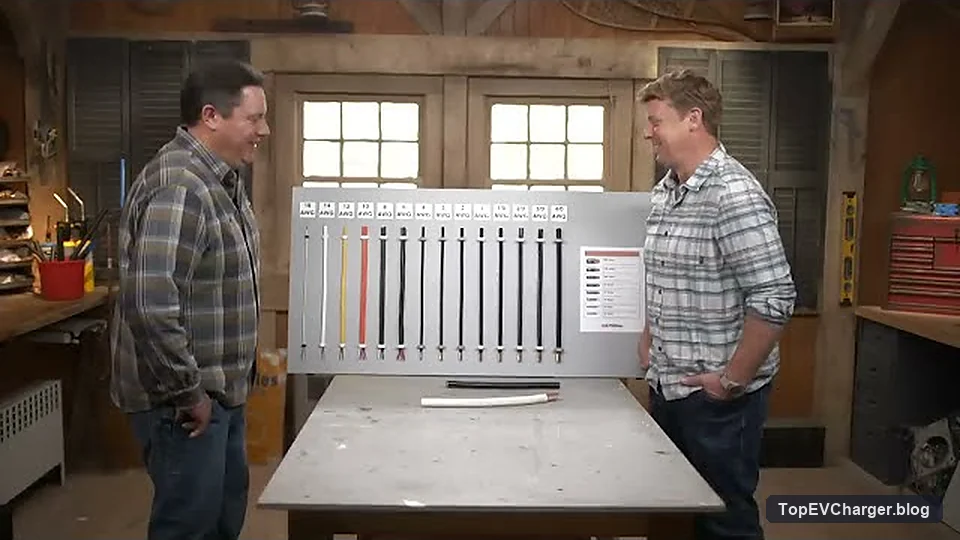
Video Walkthrough: Understanding Wire Gauges | Ask This Old House
Comprehensive Wire Gauge Selection for Residential Chargers
Choosing the correct conductor size depends directly on your charger output amperage. Reviewing our 6 awg vs 4 awg wire guide helps determine exact specifications for high-draw residential units.
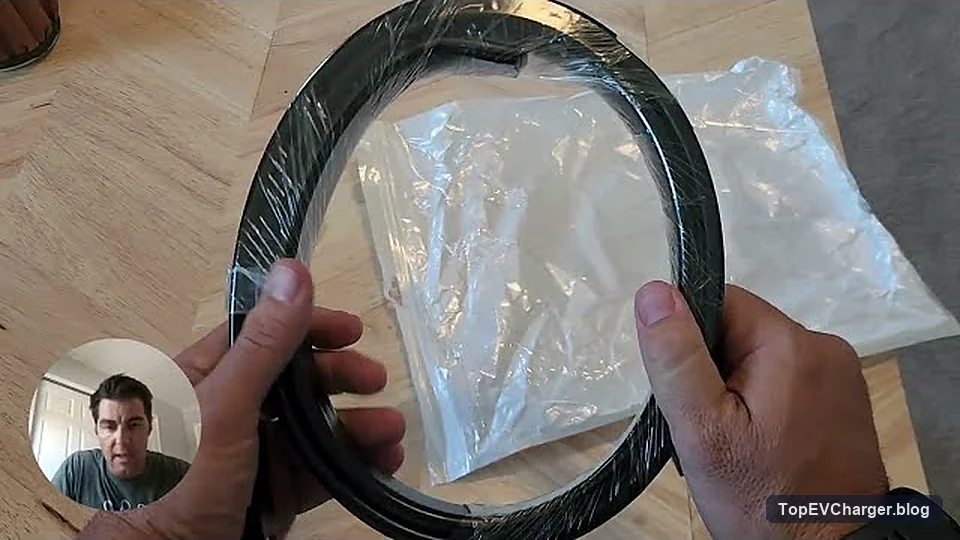
A thirty-amp circuit utilizing copper conductors requires ten gauge wire for short runs. Forty-amp setups mandate eight gauge copper to maintain safe operating temperatures.
High-output forty-eight amp chargers require six gauge copper conductors when hardwired directly. Larger sixty-amp breakers demand massive wiring to safely transmit electricity without excessive resistance.
Never compromise on conductor thickness to save money on installation materials. Thicker wire provides essential thermal headroom and accommodates future vehicle charging capacity upgrades.
Selecting the correct wire gauge depends on total amperage, conductor material, and terminal temperature ratings. Most residential chargers utilize THHN copper wire pulled through rigid or flexible metallic conduit systems safely.
A standard forty-ampere continuous load requires 6 AWG copper conductors rated for seventy-five degrees Celsius. Using undersized wiring creates excessive resistance, causing severe voltage drops and potential insulation failure along the run.
For higher-output forty-eight-ampere chargers, installers must step up to 4 AWG copper conductors. This heavier gauge accommodates the sixty-ampere breaker requirement mandated by the continuous load multiplier rules in the code.
Always verify terminal block torque specifications using a calibrated tool. Proper mechanical connections prevent high-resistance joints that generate localized heat and damage expensive charging hardware over extended periods of daily use.
- Use 10 AWG for 30A circuits.
- Use 8 AWG for 40A circuits.
- Use 6 AWG for 48A circuits.
- Use 4 AWG for 60A circuits.
Conductor Material Comparisons Between Copper and Aluminum
Installers can choose between copper and aluminum conductors for heavy-duty feeder runs. Copper remains the gold standard due to superior conductivity and exceptional corrosion resistance properties.
Aluminum wiring offers a cost-effective alternative for long outdoor or detached garage runs. However, aluminum requires significantly larger gauge sizes to match copper current capacity.
Special anti-oxidant paste must be applied to all aluminum connections during installation. This compound prevents galvanic corrosion between dissimilar metals at the terminal attachment points.
Always verify that your circuit breakers and charger terminals accept aluminum conductors. Consult our copper vs aluminum wire guide to evaluate safety considerations before purchasing feeder cables.
Copper remains the gold standard for residential electrical wiring due to superior conductivity and flexibility. However, Feeder-grade aluminum provides a cost-effective alternative for long outdoor runs connecting detached garages to service panels.
Because aluminum has higher electrical resistance than copper, you must use larger gauges. A circuit requiring 6 AWG copper typically demands 2 AWG aluminum to carry identical current loads safely without overheating.
Aluminum conductors require specialized anti-oxidation paste during termination to prevent galvanic corrosion between dissimilar metals inside breaker lugs and charger terminal blocks over years of thermal expansion cycles.
Always check if your specific wall connector manufacturer allows direct aluminum termination. Many units feature brass or copper lugs that mandate transition splices if you run aluminum cable from the main panel.
- Copper offers superior electrical conductivity.
- Aluminum requires larger gauge sizes.
- Apply anti-oxidant paste to aluminum joints.
- Check terminal lug material compatibility.
Calculating Voltage Drop on Extended Electrical Runs
Electrical resistance increases significantly over long wiring distances between panels and chargers. Voltage drop reduces charging efficiency and wastes valuable energy as dissipated thermal heat.
National electrical standards recommend keeping total circuit voltage drop under three percent. Exceeding this threshold requires stepping up your wire gauge to the next larger size.
Measure the precise physical path length from your main breaker panel to the charger. Include every bend and vertical drop when calculating total conductor footage requirements.
Long garage runs exceeding one hundred feet almost always mandate wire uprating. Investing in thicker conductors preserves charging speed and protects vehicle onboard power conversion hardware.
Voltage drop occurs naturally as electricity travels through long conductors from your panel to the charger. Electrical standards recommend keeping total voltage drop under three percent to ensure efficient vehicle charging performance.
Excessive voltage drop forces the onboard vehicle charger to draw higher current to compensate. This inefficiency generates excess heat and can trigger thermal fault protection shutdowns during long overnight charging cycles.
To combat voltage drop on runs exceeding fifty feet, installers must upsize the conductors. Stepping up from 6 AWG to 4 AWG copper compensates for increased resistance over extended wiring distances.
Use standard electrical formulas factoring in current, distance, and circular mil area. Precise calculations guarantee optimal energy transfer and protect sensitive vehicle battery management systems from low-voltage operational anomalies.
- Keep voltage drop below three percent.
- Measure exact physical wire run lengths.
- Upsize conductors for runs over 100 feet.
- Mitigate excessive thermal energy dissipation.
Hardwired Installations Versus NEMA Receptacle Wiring
Homeowners must choose between hardwired connections and plug-in NEMA receptacle configurations. Hardwiring eliminates vulnerable plug interfaces and allows maximum amperage output up to forty-eight continuous amps.
NEMA 14-50 receptacles provide convenient plug-in flexibility but introduce mechanical connection points. These outlets require GFCI breaker protection at the main service panel under current codes.
Constant thermal cycling can degrade receptacle spring tension over years of heavy use. Hardwired connections bypass this mechanical wear point entirely for enhanced long-term system reliability.
Consult local electrical inspectors to determine which installation method your municipality prefers. Many regions now favor permanent hardwired setups for high-capacity residential electric vehicle charging.
Hardwired electric vehicle chargers offer superior reliability and eliminate vulnerable plug-in connection points. Direct wiring also bypasses the costly requirement for a NEMA GFCI breaker mandated for outdoor outlet installations.
NEMA 14-50 receptacles provide flexibility for portable chargers but introduce mechanical wear points. Frequent plugging and unplugging can loosen spring tension, creating dangerous arcing hazards inside the plastic outlet enclosure over time.
When installing any high-amperage outlet, electricians must select industrial-grade receptacles. Cheap residential outlets lack the robust clamping force required to handle continuous thermal stress without melting or failing prematurely.
Hardwiring directly into the unit allows maximum amperage delivery up to forty-eight amps on a sixty-amp circuit. This setup provides faster charging speeds and superior safety compared to standard receptacle setups.
- Hardwiring enables 48A continuous output.
- NEMA 14-50 requires panel GFCI breakers.
- Eliminate mechanical plug wear points.
- Comply with local electrical inspection preferences.
Conduit Fill Capacities and Thermal Rating Adjustments
Pulling wires through protective conduit requires careful calculation of fill percentage limits. Overcrowding conduits traps heat and causes conductor insulation to degrade under sustained electrical loads.
Code regulations typically restrict conduit fill to forty percent for three conductors. This leaves adequate internal space for natural air circulation and effective heat dissipation.
Ambient temperatures along the conduit run also dictate necessary conductor ampacity adjustments. Hot attic spaces or sun-exposed exterior walls require derating your wire carrying capacity.
Select rigid metal or schedule eighty PVC conduit to protect underground or exposed runs. Proper conduit sizing makes pulling thick copper conductors significantly easier during installation.
Running multiple conductors through a single conduit requires careful adherence to fill capacity limits. Overcrowded pipes trap heat, forcing electricians to apply ampacity derating factors outlined in National Electrical Code tables.
Temperature ratings of wire insulation dictate how much current a conductor can carry safely. Reading our thhn vs romex wire analysis clarifies proper installation choices for dry indoor conduit environments.
When conduits pass through exterior walls or unconditioned garages, ambient temperature swings require careful calculation. Installers must adjust ampacity ratings based on local climate extremes to prevent premature insulation breakdown.
Using oversized conduit simplifies wire pulling and improves natural heat dissipation around conductors. A one-inch PVC conduit easily accommodates three heavy gauge wires for standard residential charger setups without binding.
- Limit conduit fill to forty percent.
- Allow space for heat dissipation.
- Derate wires in high ambient temperatures.
- Use rigid metal or schedule 80 PVC.
Breaker Coordination and Overcurrent Protection Devices
Circuit breakers protect residential wiring from dangerous short circuits and thermal overloads. The breaker rating must match the maximum ampacity of your installed circuit conductors.
Installing a sixty-amp breaker on eight-gauge wire creates a severe fire hazard. The breaker would allow dangerous current levels before tripping, melting the protective wire insulation.
Modern smart chargers allow internal amperage configuration to match your installed breaker size. This software limitation ensures compliance even when physical wire upgrades are temporarily impractical.
Always test your circuit breaker functionality and verify torque specifications on terminal screws. Proper mechanical torque prevents high-resistance connections that generate localized heat during charging.
Overcurrent protection devices safeguard home wiring from dangerous short circuits and sustained overloads. The circuit breaker must coordinate perfectly with the ampacity rating of your chosen copper or aluminum conductors.
Installing a breaker larger than the wire capacity violates safety codes and risks fire. Always match breaker size strictly to the conductor ampacity limit after applying any necessary temperature correction factors.
Smart charging equipment often requires dedicated breakers to prevent tripping during simultaneous household appliance use. Panel capacity audits ensure your home main breaker will not trip under peak aggregate loads.
Modern installations increasingly utilize tandem or specialized circuit breakers depending on panel manufacturer specifications. Proper breaker selection guarantees system longevity and absolute safety throughout the lifespan of your charger.
- Match breaker rating to wire gauge.
- Configure smart charger internal limits.
- Verify terminal screw torque specifications.
- Prevent high-resistance localized heating events.
Frequently Asked Questions
What size wire do I need for a 50 amp EV charger?
A standard fifty-amp electric vehicle charger requires heavy-duty six gauge copper conductors to safely handle continuous electrical loads without experiencing dangerous thermal degradation over extended operating periods.
You must always pair this exact wire size with a matching fifty-amp double-pole circuit breaker located inside your main residential electrical service panel.
Can I use aluminum wire for my home charging station?
Yes, you can use aluminum conductors, but you must select one size larger gauge compared to standard copper requirements to match current capacity.
Furthermore, you must apply an approved anti-oxidant joint compound to prevent galvanic corrosion at every single terminal connection point.
Why do electric vehicle chargers require a 125 percent continuous load sizing rule?
National electrical regulations classify continuous equipment operating for over three hours as a high thermal stress factor. Applying this twenty-five percent multiplier prevents premature breaker trips and protects residential wiring insulation from catastrophic failure.
What wire gauge is necessary for a high-output forty-eight amp hardwired charger?
Achieving forty-eight amps of continuous output safely requires robust four gauge copper conductors when factoring in the continuous load multiplier. Installing a smaller gauge will cause excessive voltage drop and trigger thermal overcurrent protections.
How does long distance wiring affect my electric vehicle charger installation requirements?
Extended wiring runs between your main electrical panel and charging station introduce significant resistance and voltage drop. To compensate for this energy loss, you must increase your wire gauge to maintain proper operating voltage.