Ev Charger Electrical Panel Capacity Requirements Evaluated
Assessing your home electrical infrastructure prevents overloads. Proper planning ensures safe, reliable daily vehicle charging.

Always perform a professional load calculation before installation. This prevents costly service upgrades and ensures compliance.
Looking for matching picks? See our Best Level 2 Ev Charger For 200 Amp Panel.
Practical Quick-Reference Table
| Scenario / Metric | Recommended Target | Why It Matters |
|---|---|---|
| Standard Service | 200-Amp Minimum | Handles concurrent household demands safely. |
| Continuous Load | 80% Max Rating | Prevents overheating of breakers and wires. |
| Level 2 Draw | 40-Amp Output | Balancing speed and residential panel limits. |
| Subpanel Setup | Dedicated Feeder | Isolates high-draw automotive charging loads. |
| Voltage Drop | Under 3 Percent | Maintains optimal energy transfer efficiency. |
| Ambient Temp | Below 85°F | Reduces thermal stress in utility closets. |
Core Electrical Sizing Fundamentals
Residential charging equipment draws substantial electrical current continuously for hours. Understanding service amperage limits prevents dangerous thermal overloads inside your main distribution center.
Most modern homes feature standard service capacity, making our best level 2 ev charger for 200 amp panel guide essential when evaluating heavy continuous loads from your new EV supply equipment.
The continuous load rule mandates that circuit breakers operate at a maximum of eighty percent of their rated capacity during prolonged charging cycles.
Ignoring these fundamental sizing principles can lead to nuisance tripping, degraded insulation, or severe electrical fires within older residential properties.
Assessing home electrical capacity requires measuring continuous loads against your main service rating. Most modern residences feature 200-amp panels, though older properties might only support 100-amp service safely.
Level 2 chargers typically draw between 32 to 48 amps continuously. The National Electrical Code mandates that continuous loads must not exceed 80 percent of the dedicated circuit breaker rating.
Voltage drop calculations become critical when running conduits over 50 feet from the main service panel to the garage. Thicker copper conductors minimize resistance and prevent excessive thermal buildup.
Ambient temperature ratings inside unconditioned garages dictate conduit fill capacities and wire insulation types. Using THHN copper wire inside rigid metal conduit ensures compliance with strict local electrical codes.
- Verify main breaker rating before selecting charger amperage.
- Account for all major heavy-draw household appliances.
- Calculate continuous load using the eighty percent rule.
- Inspect existing busbars for signs of thermal wear.
Understanding Continuous Load Demands
Continuous loads run for three hours or longer without interruption. Your electrical panel must handle this sustained heat generation safely.
Upgrading undersized panels protects your entire home infrastructure from premature component failure.
- Monitor sustained thermal output during peak summer months.
- Verify conductor gauge matches the continuous amperage draw.
Calculating Total Household Amperage Loads
A standard electrical service calculation follows strict national standards. You must tally all lighting, receptacle, and fixed appliance demands accurately.
Subtracting the existing baseline load from your total panel capacity reveals available headroom for your new charging hardware.
Many older properties feature 100-amp or 125-amp services. These legacy systems almost always require a service upgrade for high-output chargers.
Professional electricians use standardized worksheets to determine exact diversified load values for residential dwellings.
Standard electrical load calculations utilize the Optional Method outlined in Article 220. Total square footage, major appliances, and HVAC units dictate your baseline demand load before adding an EV charger.
Electric water heaters, ranges, and clothes dryers consume substantial amperage simultaneously. Factoring in a demand factor prevents overloaded service drops and main breaker trips during peak evening cooking and charging hours.
If your calculated load surpasses eighty percent of service ratings, consult our subpanel vs main panel upgrade guide before installation. Professional electricians always use clamp meters to verify actual usage.
Historic peak demand data gathered from smart utility meters offers precise insights into your actual energy consumption patterns. This real-world data replaces generalized estimates for safer installations.
- Tally all dedicated appliance circuits in the dwelling.
- Include future expansion plans in your initial calculation.
- Consult licensed electricians for complex load worksheets.
- Evaluate peak usage windows during evening hours.
Standard Load Calculation Worksheet Steps
Start by measuring square footage to determine baseline lighting and general receptacle loads. Add nameplate ratings for all major motorized appliances.
Apply demand factors allowed by code before subtracting from the total service amperage limit.
- Calculate general lighting based on floor area.
- Add fixed appliance nameplate values directly.
Video Walkthrough: Introduction and context
National Electrical Code Compliance Standards

The National Electrical Code provides strict guidelines for residential EV supply equipment installations. Compliance ensures legal safety and prevents insurance disputes.
Article 625 specifically covers electric vehicle charging systems, outlining unique requirements for disconnecting means and wiring methods.
Conductor sizing must account for terminal temperature ratings, usually rated for seventy-five degrees Celsius in modern breaker panels. Use our ev charger sizing calculator to determine correct wire gauges.
Always secure local permits before beginning any electrical work to guarantee adherence to municipal building codes.
National Electrical Code Article 625 specifically governs electric vehicle charging infrastructure. Compliance requires dedicated branch circuits protected by GFCI breakers to prevent severe ground fault hazards in damp environments.
Outdoor installations demand NEMA-rated enclosures and weather-resistant fittings. A NEMA 4X enclosure provides superior protection against driving rain, windblown dust, and corrosive coastal salt sprays.
Working clearance rules around electrical panels require a dedicated space measuring 30 inches wide and 36 inches deep. Nothing can obstruct access to the main disconnect switches during emergencies.
Conduit physical protection standards dictate specific mounting heights and support intervals along garage walls. Secure strut channels and heavy-duty clamps prevent sagging over extended runs of heavy armored cable.
- Review Article 625 for specific installation mandates.
- Ensure all materials carry recognized safety certifications.
- Install a separate disconnecting means if required.
- Schedule mandatory inspections with local building officials.
Navigating Local Amendments and Permits
Municipalities often enforce stricter rules than the baseline national code. Check with your local building department regarding specific regional amendments.
Permit applications typically require detailed diagrams showing panel layouts and conductor routing paths.
- Submit accurate single-line diagrams with permit requests.
- Ask inspectors about specific local grounding requirements.
Evaluating Existing Breaker Space Availability
Physical space inside your distribution panel is just as important as total electrical capacity. High-output charging requires two dedicated adjacent slots.
If your panel is completely full, you might need to install tandem breakers or add a dedicated subpanel to accommodate the load.
Overcrowded panels restrict airflow and increase internal operating temperatures, leading to premature breaker fatigue and potential failure.
Ensure your physical enclosure has adequate knockouts and clearance for heavy conduit fittings required by thick copper cables.
Physical panel capacity depends entirely on available physical slot availability and busbar amperage ratings. Older load centers often lack the physical space needed for a double-pole breaker.
Tandem breakers can create extra slots, but they introduce thermal constraints and may violate local building codes or panel manufacturer listings. Panel crowding increases internal resistance and operating temperatures.
Subpanel installations provide a practical workaround when the main service panel is completely full. Running a properly sized feeder cable to a 100-amp subpanel accommodates multiple high-draw loads safely.
Busbar corrosion and pitting inspection must precede any new breaker installation. Technicians clean contact surfaces and apply antioxidant compound to ensure low-resistance mechanical connections inside older panels.
- Check for available physical breaker slots immediately.
- Consider space-saving tandem breakers if approved.
- Evaluate subpanel installation for cramped enclosures.
- Maintain required working clearances around the panel.
Assessing Subpanel Feasibility and Placement
Subpanels allow you to expand circuit capacity away from a crowded main service panel. They require a dedicated feeder breaker.
Keep subpanel wire runs as short as possible to minimize voltage drop and installation complexity.
- Calculate feeder cable size based on subpanel rating.
- Mount subpanels in accessible, well-lit utility areas.
Dynamic Load Management and Smart Systems
Smart energy management systems offer a practical alternative to expensive service upgrades. These devices monitor real-time household electrical consumption closely.
When total home demand spikes, the system automatically reduces your vehicle charging rate to prevent tripping the main breaker.
This technology allows homes with limited electrical capacity to support modern charging equipment without exceeding utility limits.
Configuration requires careful communication between the smart monitor, the main panel current transformers, and the charging unit.
Dynamic load management systems monitor real-time home energy consumption via current transformers clamped around service entrance wires. These smart units modulate charging speeds automatically to prevent overloads.
When heavy appliances activate, the charger temporarily throttles its output. Reviewing our load management vs dedicated panel ev charger comparison helps avoid costly service upgrades while maintaining safety.
Hardwired communication cables or encrypted radio frequencies link the monitoring sensor directly to the EV supply equipment. Reliable wireless protocols ensure sub-second response times during high household demand spikes.
Commissioning smart energy managers requires configuring maximum amperage limits through installer menus. Proper setup guarantees compliance with NEC safety guidelines regardless of external electrical fluctuations.
- Install current transformers on main service lines.
- Program maximum threshold limits matching utility rules.
- Test automated throttling during high-demand simulations.
- Ensure stable Wi-Fi connection for smart monitoring.
Configuring Smart Current Sensors
Accurate sensor placement determines how effectively the system protects your service panel. Clamp them securely around ungrounded service conductors.
Calibrate the software interface to match your exact utility meter rating and main breaker threshold.
- Verify correct arrow direction on current transformers.
- Test throttling response times under simulated loads.
Video Walkthrough: Installing a ChargePoint EV Charger with EV Tap Load Management on a 100 Amp Panel
Step-by-Step Panel Assessment Protocol
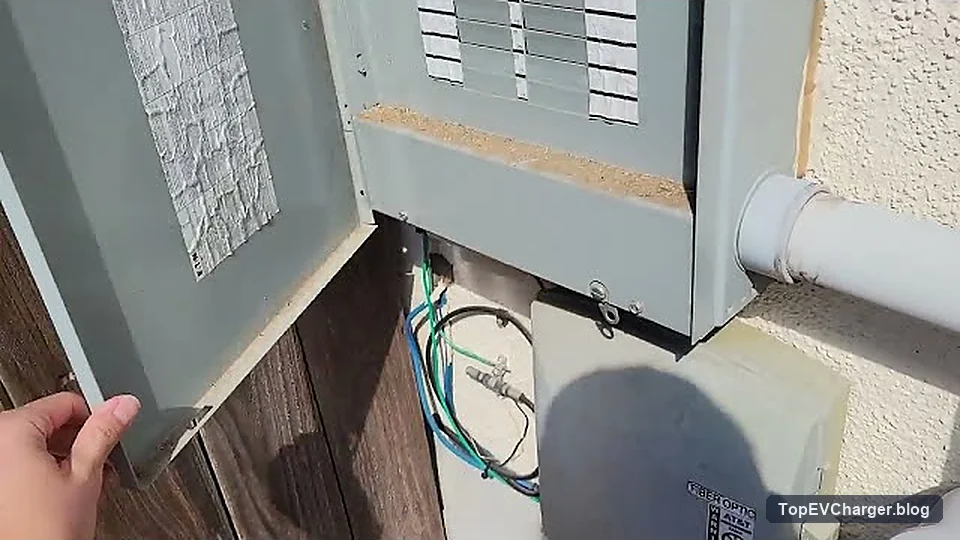
Begin your evaluation by inspecting the main breaker label for amperage ratings and manufacturer specifications. Take clear photographs for reference.
Look for signs of rust, scorching, or buzzing sounds that indicate failing busbars or loose terminal connections needing immediate repair.
Measure available physical space for a double-pole breaker before purchasing any hardware or scheduling installation dates.
Consult a licensed electrician to verify your findings and perform precise voltage measurements under active household load conditions.
Begin every assessment by visually inspecting the main breaker and utility meter socket for signs of thermal stress. Discolored insulation or melting plastic indicates chronic overloading requiring immediate remediation.
Measure voltage levels across phases under active load conditions using a calibrated digital multimeter. Voltage drops exceeding 3 percent signal undersized service conductors from the utility transformer.
Document existing breaker manufacturer specifications carefully because mixing incompatible brands voids warranties and creates arc-fault hazards. Only install listed replacement breakers approved for your specific panel.
Verify grounding electrode system integrity by checking ground rods and cold water pipe bonds. A low-resistance earth ground connection is mandatory for proper surge suppression and personal safety.
- Photograph main breaker label and panel interior.
- Inspect for thermal discoloration and corrosion.
- Measure physical dimensions for new breaker spacing.
- Record voltage readings under normal household operation.
Executing Voltage Drop and Continuity Checks
Use a digital multimeter to check voltage levels at the panel and potential mounting locations. Excessive drop indicates wiring issues.
Verify proper grounding electrode continuity to ensure maximum protection against electrical surges and faults.
- Measure voltage under no-load and full-load conditions.
- Verify resistance values on grounding conductor paths.
Maintenance and Safety Best Practices
Routine maintenance keeps your electrical infrastructure operating safely year-round. Schedule annual visual inspections of your main service panel.
Check circuit breaker terminals for tightness, as thermal expansion can loosen connections over extended periods of heavy use.
Keep the area surrounding your electrical panel completely clear of storage boxes, flammable items, and household clutter.
Immediately replace any breaker that trips repeatedly or feels unusually hot to the touch during normal vehicle charging cycles.
Routine maintenance schedules should include annual thermal imaging scans of electrical panels under load. Infrared cameras quickly reveal loose terminal screws before they escalate into catastrophic electrical fires.
Torque all breaker terminal connections to manufacturer specifications using a calibrated torque wrench. Proper mechanical pressure prevents micro-arcing and maintains optimal electrical conductivity over years of daily charging.
Keep the area surrounding your charging station and main electrical panel completely clear of combustible storage items. Maintaining clear workspaces ensures rapid emergency access during unexpected utility incidents.
Test built-in ground fault protection monthly by pressing the integrated test button on the breaker. Routine testing guarantees that the safety mechanism trips instantly during a simulated fault condition.
- Schedule annual professional panel inspections.
- Maintain clear working space around all enclosures.
- Replace warm or tripping breakers immediately.
- Keep accurate logs of all maintenance procedures.
Identifying Early Warning Signs of Failure
Faint burning smells near your electrical panel require immediate professional investigation. Never ignore persistent humming noises.
Promptly addressing minor thermal anomalies prevents catastrophic equipment damage and ensures long-term operational safety.
- Investigate unusual odors near electrical enclosures.
- Listen for abnormal humming or buzzing sounds.
Frequently Asked Questions
What size electrical panel is needed for a Level 2 charger?
A 200-amp panel is generally recommended for modern homes supporting continuous vehicle charging loads. Smaller 100-amp services usually require careful load management or a complete electrical service upgrade.
Can I install an EV charger on a full electrical panel?
A full panel requires creative solutions like installing space-saving tandem breakers or adding a dedicated subpanel. Always consult a licensed electrician before altering your existing distribution setup.
What is the 80 percent rule for EV chargers?
The 80 percent rule states that continuous electrical loads must not exceed eighty percent of a circuit's maximum rating. This prevents overheating and protects wiring insulation during long sessions.
How does dynamic load management help with capacity limits?
Smart monitoring devices automatically reduce charging amperage when household electricity use spikes. This prevents main breaker overloads without requiring expensive utility service upgrades.
Do I need a permit to install an EV charger circuit?
Most local jurisdictions require electrical permits and professional inspections for new dedicated circuits. This ensures compliance with regional safety codes and protects property values.