Wallbox Pulsar Plus 40A vs. 48A: Which Fits Your Setup Better?
Selecting between these two hardwired Level 2 configurations dictates your daily residential charging speed. Properly evaluating your home electrical infrastructure prevents costly service panel upgrades and ensures maximum safety.


Choose the 40A variant for standard 50-amp circuits and flexible plug-in options. Opt for the 48A model if you require maximum overnight replenishment speeds and possess a dedicated hardwired circuit.
Compare all top models in our Best Ev Level 2 Charger.
Side-by-Side Breakdown
| Criteria | Wallbox Pulsar Plus 40A | 48A | Edge |
|---|---|---|---|
| Peak Performance & Output | 9.6 kW / 40 Amps | 11.5 kW / 48 Amps | 48A |
| Duty Cycle & Consistency | Continuous thermal regulation | Advanced heavy-duty thermal management | Tie |
| Operating Noise & Vibration | Whisper-quiet solid state | Whisper-quiet solid state | Tie |
| Portability & Footprint | NEMA 14-50 plug compatible | Hardwired permanent installation only | Wallbox Pulsar Plus 40A |
| Maintenance & Service Life | Commercial-grade polycarbonate chassis | Commercial-grade polycarbonate chassis | Tie |
| Power Requirements | 50-amp breaker minimum | 60-amp breaker minimum | Wallbox Pulsar Plus 40A |
| Best Ideal Use-Case | Standard daily commuters | Electric trucks and large SUVs | 48A |
Architectural Footprint and Hardware Design
Both units share an identical compact chassis measuring approximately seven by seven inches. This minimalist footprint saves garage wall space while maintaining exceptional internal component layout density and premium polycarbonate casing integrity.
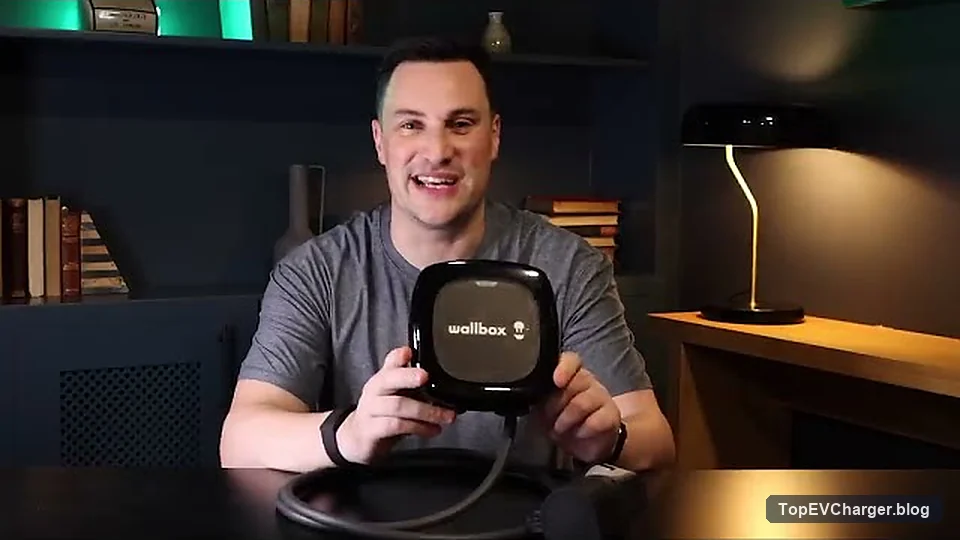
Internal layout variations primarily concern the power delivery board and thicker internal busbars. As noted in our Wallbox Pulsar Plus 48A review, this hardware demands heavy gauge copper routing to safely handle continuous high-amperage electrical loads.
- Identical exterior dimensions for both units
- Heavy-gauge internal wiring on the 48A model
- Robust polycarbonate exterior casing materials
Visual Aesthetics and Wall Mounting
Mounting brackets utilize standard hole patterns that simplify installation across various wall surfaces. The sleek matte finish resists scuffs while securely locking the charger body into position.
Cable management requires thoughtful placement near your EV charging port to reduce strain. Utilizing the integrated holster prevents connector damage and keeps your garage floor completely free of hazards.
- Standardized wall bracket hole patterns
- Integrated holster for secure connector storage
Electrical Infrastructure and Hardwired Installation
The 40A variant offers dual installation pathways including a NEMA 14-50 plug or hardwiring. Selecting the plug-in option provides portability for renters or homeowners planning future residential relocations.
Conversely, the 48A configuration mandates permanent hardwiring to a dedicated branch circuit. Meeting National Electrical Code standards requires a 60-amp breaker and heavy copper wiring to support continuous operation safely.
- Plug-in versatility available on the 40-amp version
- Mandatory hardwiring required for the 48-amp unit
- Strict adherence to local electrical code standards
Circuit Breaker Demands
Continuous load rules dictate that a 40A charger requires a 50-amp breaker. Upgrading to the 48A capacity necessitates sizing your breaker up to sixty amps for safe operation.
Professional electrician consultation ensures your existing electrical panel can handle these heavy continuous loads. Ignoring load calculations risks frequent breaker trips and potential thermal damage to wiring.
- Fifty-amp breaker required for 40A output
- Sixty-amp breaker required for 48A output
Thermal Management and Cold Weather Performance
Cold weather testing reveals robust performance from both wall-mounted units during freezing winter conditions. The flexible charging cable remains remarkably pliable even when temperatures plummet below zero outdoors.
Internal thermal sensors continuously monitor component temperatures to prevent overheating during maximum output draws. If internal heat spikes, the system automatically throttles current to protect sensitive semiconductors safely.
- Reliable operation in sub-zero winter environments
- Advanced thermal sensors prevent component overheating
- Automatic current throttling during extreme heat events
Cable Pliability in Freezing Climates
Thicker conductors on the 48A model slightly increase overall cable stiffness during deep freezes. However, specialized elastomer jackets prevent the outer insulation from cracking under harsh winter conditions.
Storing the cable loosely coiled prevents permanent kinks and maintains inner wire integrity over years of seasonal temperature fluctuations. Proper maintenance guarantees consistent energy transfer regardless of weather.
- Elastomer cable jackets resist cracking
- Proper coil storage prevents permanent kinks
J1772 Connector Durability and Cable Flexibility
The attached twenty-five-foot cable provides ample reach for vehicles parked inside or outside garages. A durable J1772 connector locks securely into your electric vehicle port with a satisfying tactile click.
Evaluated thoroughly in our Wallbox Pulsar Plus 48 review, silver-plated contacts inside the handle resist corrosion over thousands of cycles, ensuring low electrical resistance during heavy charging sessions.
- Generous twenty-five-foot standard cable length
- Corrosion-resistant silver-plated connector contacts
- Ergonomic handle design with secure latching
Strain Relief Engineering
Robust strain relief boots protect the cable entry points from bending fatigue and structural failure. High-stress areas are reinforced internally to withstand accidental tension from vehicle tires or pulls.
Regular inspections of the connector pins ensure debris does not accumulate inside the charge handle. Keeping contacts clean maximizes power delivery efficiency across both hardware configurations.
- Reinforced internal entry point boots
- Routine pin inspections maintain efficiency
Connectivity Protocols and Software Scheduling
As outlined in our Wallbox Pulsar Plus review, built-in Wi-Fi and Bluetooth modules enable seamless smartphone integration through the official app, allowing users to monitor charging sessions remotely.
Smart scheduling features allow you to program charging times during off-peak utility rate hours. Optimizing your schedule significantly reduces monthly electricity bills by leveraging cheaper overnight power tariffs.
- Dual Wi-Fi and Bluetooth wireless connectivity
- Intuitive smartphone application for remote management
- Advanced scheduling for off-peak electricity savings
App Ecosystem Integration
The MyWallbox platform tracks historical energy usage and calculates estimated charging costs per session. Sharing access among multiple household users is simple through the centralized administrative control panel.
Local dynamic load balancing features require optional hardware accessories to monitor whole-home energy consumption. This prevents main service panel overloads when other heavy household appliances operate simultaneously.
- Historical energy tracking and cost estimation
- Multi-user access management via app
Outdoor Enclosure Weatherproofing and Safety
Both charging units feature NEMA 4-rated enclosures designed to withstand severe weather elements. This robust weatherproof rating protects internal electronics against driving rain, sleet, snow, and heavy dust.
Integrated grounding monitors provide an extra layer of electrical safety during outdoor installations. The system automatically halts power if a ground fault or wiring irregularity is detected instantly.
- Certified NEMA 4 weather-resistant enclosure rating
- Protection against driving rain, snow, and dust
- Continuous ground fault monitoring for safety
Enclosure Locking Mechanisms
Optional security locks prevent unauthorized removal of the charger unit from mounting walls. This mechanical safeguard is essential for outdoor setups located in open residential parking areas.
Durable polycarbonate plastics resist ultraviolet degradation and discoloration from prolonged direct sunlight exposure. Your equipment maintains its professional appearance over years of continuous outdoor operation.
- Optional mechanical security locks available
- UV-resistant exterior polycarbonate plastics
Daily Charging Efficiency and Workload Scenarios
Highlighted in our Wallbox Pulsar Plus 40A review, the 40A variant delivers up to 9.6 kW of power, adding roughly thirty miles of range hourly to satisfy standard daily commutes.
Upgrading to the 48A unit pushes output to 11.5 kW, recovering nearly thirty-seven miles per hour. This faster replenishment rate benefits large battery packs found in electric trucks and SUVs.
- 9.6 kW output delivering thirty miles per hour (40A)
- 11.5 kW output delivering thirty-seven miles per hour (48A)
- Ideal for diverse vehicle battery capacities
Matching Charger to Vehicle Onboard Capacity
Many electric vehicles limit AC charging intake to 48A or lower on-board acceptance rates. Selecting a higher amperage charger only benefits vehicles capable of handling that maximum electrical input.
Verifying your car's maximum AC acceptance rate prevents unnecessary spending on electrical infrastructure upgrades. Choosing the correct charger ensures optimal efficiency without wasting installation resources.
- Review vehicle onboard charger limits first
- Match hardware capability to car intake
Frequently Asked Questions
Can the 40A Wallbox Pulsar Plus be adjusted down for smaller circuits?
Yes, the Wallbox Pulsar Plus features convenient internal current selectors allowing you to easily dial back output amperage during initial installation procedures in your garage space.
This exceptional engineering flexibility lets you match smaller existing circuit breakers like thirty or forty amps safely while maintaining complete system reliability and optimal daily charging performance.
What specific electrical wiring is required for the 48A model?
Operating the 48A Wallbox Pulsar Plus requires a dedicated branch circuit permanently paired with a robust sixty-amp circuit breaker to handle heavy daily electrical demands safely.
You must use heavy gauge copper wiring to comfortably support continuous high-amperage electrical loads without generating dangerous thermal buildup inside your residential walls or primary service panels.
Is the Wallbox Pulsar Plus suitable for permanent outdoor installation?
Both variants feature a certified NEMA 4 weather-resistant enclosure designed to withstand driving rain, snow, and severe winter conditions outdoors on exterior residential walls.
Advanced weatherproofing safeguards internal components effectively, but utilizing an optional mechanical security lock provides added protection against potential theft or unauthorized equipment removal in open parking areas.
How does smartphone connectivity enhance daily charging management?
Integrated Wi-Fi and Bluetooth connectivity allows you to monitor real-time energy consumption and schedule charging sessions during low-cost utility off-peak hours every single night of the week.
This smart app control significantly reduces monthly utility bills by leveraging cheaper overnight electricity rates automatically without requiring manual intervention from everyday electric vehicle drivers.
Which charger configuration is better for electric trucks and large SUVs?
Modern electric trucks and large SUVs feature massive battery packs that benefit immensely from the faster 11.5 kW maximum output of the 48A model configuration.
However, you must carefully verify your vehicle onboard charger acceptance capacity before final hardware installation to ensure complete compatibility with high-amperage residential electrical power inputs.