V2H vs. V2G Home Charging: Which Setup Fits Your Energy Needs?
Bidirectional charging transforms electric vehicles into dynamic mobile energy reserves. Selecting between residential backup and utility-scale grid participation demands rigorous electrical analysis.

For complete resilience during extended utility outages, Vehicle-to-Home (V2H) is the clear winner for local backup. When prioritizing automated revenue generation through utility demand response, Vehicle-to-Grid (V2G) dominates.
Compare all top models in our Best Ev Level 2 Charger.
Side-by-Side Breakdown
| Criteria | V2H | V2G Home Charging | Edge |
|---|---|---|---|
| Peak Performance & Output | Up to 19.2 kW continuous residential delivery | Varies by utility grid aggregation limits (typically 10 to 19.2 kW) | Tie |
| Duty Cycle & Consistency | Optimized for isolated backup during emergency grid failures | Engineered for frequent cycling and continuous grid dispatch | V2G |
| Operating Noise & Vibration | Silent solid-state inverter operation with minimal cooling fan hum | Standard inverter acoustic output under active grid synchronization | V2H |
| Portability & Footprint | Compact wall-mounted EVSE with dedicated transfer switch integration | Complex utility-interfaced meter collars and heavy-duty gateway panels | V2H |
| Maintenance & Service Life | Lower cumulative cycle wear focused on storm preparedness | Higher daily throughput requiring strict battery warranty tracking | V2H |
| Power Requirements | Requires dedicated 200-amp main service panel capacity | Demands strict utility IEEE 1547 compliance and fast-acting relays | Tie |
| Best Ideal Use-Case | Mitigating storm blackouts and reducing peak home demand charges | Earning recurring utility credits via ancillary frequency regulation | Split |
Engineering Fundamentals of Bidirectional Power Transfer
Bidirectional charging fundamentally changes how electric vehicles interact with electrical infrastructure. Instead of unidirectional power flow from grid to battery, DC-to-AC inverters permit electrons to flow backward safely.
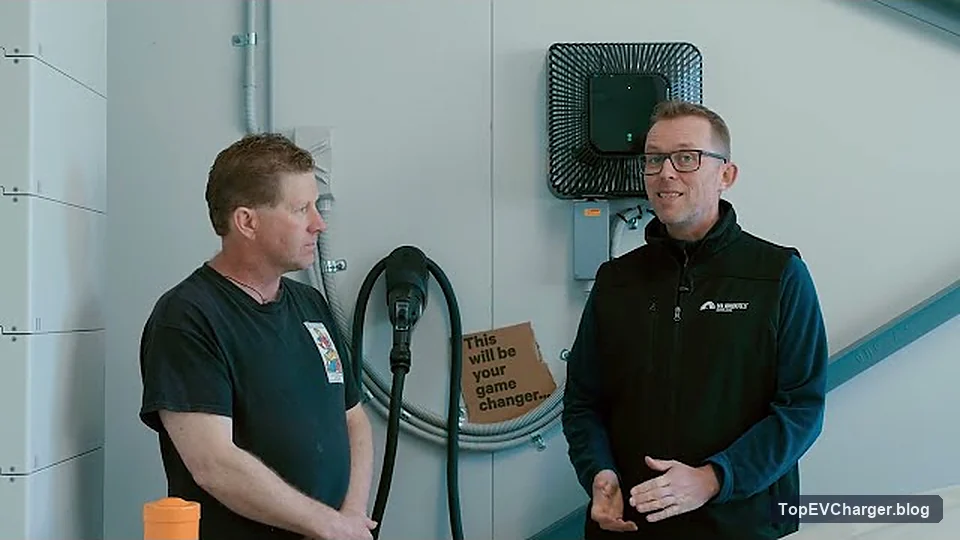
This capability turns your parked vehicle into a mobile energy storage unit, a concept explored inside our chargepoint home flex review. Engineers must carefully manage complex thermal loads and strict voltage synchronization.
Understanding the core architecture requires looking closely at onboard versus offboard conversion hardware. Modern systems leverage high-frequency switching to achieve over 95 percent round-trip efficiency across varied loads.
Bidirectional systems rely on sophisticated DC-to-AC inverters to manage bidirectional power flow between your electric vehicle and the residential breaker panel during active charging and discharging operations.
Energy conversion introduces inherent thermal loads and resistance, typically resulting in a cumulative round-trip efficiency rating ranging between eighty-five and ninety-two percent for modern bidirectional hardware.
Advanced power electronics incorporate wide bandgap semiconductor materials like silicon carbide and gallium nitride to reduce switching losses and enhance high-voltage thermal dissipation inside the charger enclosure.
- Enables dual-direction power flow between vehicle and home or grid.
- Utilizes advanced DC-to-AC conversion topologies for minimal energy loss.
- Requires precise phase-locking to match local electrical grid frequencies.
Power Electronics and DC-AC Inversion
The heart of any bidirectional system is the power conversion module. Whether integrated onboard the vehicle or housed within the wall-mounted EVSE, this hardware must handle massive thermal dissipation.
Advanced silicon carbide semiconductors reduce switching distortion and maintain high conversion efficiencies. This ensures your vehicle battery delivers clean, stable sine-wave power without damaging sensitive household appliances.
- Silicon carbide chips minimize electrical resistance and heat buildup.
- Stable sine-wave output protects household electronics from voltage spikes.
Hardware Architectures and Residential Infrastructure Requirements
Deploying bidirectional backup power at home requires upgrading beyond a standard unit by choosing the best level 2 home charging station. You also need specialized hardware like an automatic transfer switch and communication gateways.
Electrical contractors must evaluate your existing service panel capacity before installation. Most residential setups demand a 200-amp minimum main panel to safely support simultaneous household loads and backfed vehicle power.
Furthermore, physical installation footprint matters significantly for cramped residential garages. Wall-mounted units must feature NEMA-rated weatherproofing if installed outdoors to withstand extreme ambient temperature swings.
Residential deployments require robust off-board conversion hardware or specialized on-board architecture capable of sustaining high-amperage DC fast charging profiles across heavy-duty copper cabling conduits.
Most homes necessitate electrical service panel upgrades to at least a 200-amp service threshold to accommodate continuous bidirectional loads alongside standard household appliances without triggering overcurrent protection devices.
Environmental hardening mandates durable enclosure ratings featuring sealed weatherproof housings compliant with NEMA 4X standards to prevent moisture ingress in outdoor installation environments.
- Automatic transfer switches isolate your home from the wider utility grid.
- Bidirectional chargers require dedicated communication lines with the vehicle.
- Upgraded home electrical panels prevent dangerous circuit overloads.
Transfer Switches and Grid Isolation
An islanding transfer switch is mandatory equipment for any safe residential bidirectional setup. It physically disconnects your home wiring from utility lines during an outage to protect utility line workers from backfeed hazards.
This mechanical and digital isolation ensures your home operates as a secure microgrid. Once grid power returns, the system safely resynchronizes before reconnecting to utility distribution lines.
- Physical isolation prevents dangerous electrical backfeeding during outages.
- Automatic resynchronization safely restores standard utility grid connections.
V2H Deep Dive: Islanding, Backup Capacity, and Blackout Resilience
Vehicle-to-Home systems prioritize energy independence and emergency resilience during utility blackouts. A typical electric vehicle battery stores between 60 to 130 kilowatt-hours of usable electrical energy.
This immense storage capacity can power an average American household for multiple days during severe weather events. Essential loads like refrigerators, medical equipment, and lighting run seamlessly on stored battery reserves.
Unlike noisy fossil-fuel generators, V2H operations produce zero carbon emissions and operate completely silently. Homeowners enjoy uninterrupted comfort without needing to store flammable gasoline or diesel fuel.
Home backup functionality demands automated transfer switches that execute a rapid grid disconnect to prevent dangerous backfeeding into utility lines during unexpected municipal power outages.
Sizing your vehicle battery storage involves calculating essential home circuits to ensure sufficient kilowatt-hour capacity for sustained operation of critical refrigerators, medical devices, and lighting systems.
Protecting sensitive electronics requires mitigating voltage fluctuations by maintaining strict limits on total harmonic distortion throughout the emergency islanding and inversion operational phases.
- Provides multi-day emergency backup power during unexpected utility grid failures.
- Powers essential residential circuits silently without hazardous fuel storage.
- Leverages massive EV battery capacity far exceeding traditional home batteries.
Load Shedding and Critical Circuit Panels
Because an electric vehicle cannot power an entire residence indefinitely, implementing proper energy controls via dynamic load management for home ev charging is vital. Installers wire a subpanel dedicated to critical loads.
Smart thermostats and automated circuit controllers shed high-draw appliances like electric water heaters. This intelligent management preserves valuable battery state-of-charge for lighting and climate control.
- Critical load subpanels prioritize essential home appliances automatically.
- Smart energy management preserves battery reserves during extended outages.
V2G Mechanics: Regulatory Frameworks, Aggregators, and Grid Interconnection
Vehicle-to-Grid systems connect your electric vehicle directly to wholesale energy markets via utility aggregators. This setup allows your car to absorb excess solar generation and discharge power back to the grid during peak demand.
Participating in V2G programs requires navigating complex utility interconnection agreements and regional transmission rules. Regulatory frameworks ensure that distributed energy resources maintain grid stability and safety standards.
Aggregators bundle thousands of connected electric vehicles into virtual power plants. This collective fleet responds instantly to frequency fluctuations, providing lucrative grid stabilization services automatically.
Participating in grid services requires strict compliance with utility interconnection tariffs, governing local voltage regulation limits and safety protocols established by regional transmission organizations.
Cloud-based software platforms operated by energy aggregators coordinate thousands of residential vehicles to form decentralized virtual power plants that balance regional electrical grid loads.
Utilities compensate participating vehicle owners for providing instantaneous frequency regulation and peak demand response services during high-stress grid emergency events.
- Connects vehicle batteries to wholesale energy markets through aggregators.
- Virtual power plants bundle thousands of vehicles for grid stabilization.
- Demands strict compliance with regional utility interconnection standards.
Virtual Power Plants and Aggregator Platforms
Aggregator software monitors your vehicle connection status and local grid wholesale pricing in real time. When electricity prices spike, the platform triggers automated discharges to maximize financial return.
Vehicle owners maintain override controls to ensure their daily commuting needs are never compromised. Smart algorithms balance grid export commands with scheduled driver departure times flawlessly.
- Software platforms optimize automated power discharge during price spikes.
- Driver override settings protect daily commuting range requirements.
Protocol Standardization, Connector Compatibility, and Communication Layers
Standardized communication protocols are essential for safe and reliable bidirectional power transfer. Standards like ISO 15118 define how vehicles and chargers exchange digital telemetry and power commands.
Connector compatibility remains a significant engineering hurdle across different automotive manufacturers. While CCS and NACS hardware platforms evolve, bidirectional adapter requirements vary widely between brands.
Secure digital handshakes authenticate the vehicle before any high-voltage energy exchange begins. This prevents unauthorized access and ensures optimal charging efficiency across every session.
Seamless communication depends on adopted global standards, integrating ISO 15118 protocols for secure digital handshakes between the electric vehicle and the residential charging station hardware.
Legacy CHAdeMO ports utilize specialized CAN bus architecture, while modern installations rely on Power Line Communication embedded within standardized CCS and NACS connector pins.
Ensuring long-term compatibility requires continuous firmware updates protected by robust cybersecurity encryption to prevent unauthorized network access and potential grid interference vectors.
- ISO 15118 protocol enables secure digital communication between EV and charger.
- Connector compatibility varies across NACS and CCS hardware standards.
- Authentication handshakes prevent unauthorized high-voltage energy transfers.
ISO 15118 and Plug-and-Charge Security
The ISO 15118 standard introduces advanced cryptography for secure communication over the charging cable. This enables seamless plug-and-charge functionality while protecting the grid from cybersecurity vulnerabilities.
Encrypted data streams transmit battery health metrics, thermal limits, and energy pricing signals. Such robust protocols ensure reliable long-term equipment operation under diverse operating conditions.
- Advanced cryptography secures data streams against cyber interference.
- Encrypted telemetry shares battery health metrics and thermal limits.
Safety Compliance, Electrical Codes, and Installation Best Practices
Installing bidirectional equipment requires strict adherence to the National Electrical Code and local utility regulations. Certified electricians must implement rapid shutdown mechanisms to protect first responders.
Ground fault protection and surge suppression safeguard your home against unexpected electrical anomalies, features common in the best type 2 ev home charger options. Professional installations undergo rigorous inspection to guarantee flawless safety.
Thermal management within the EVSE enclosure prevents component degradation during high-amperage sessions. Proper ventilation and clearance guidelines mitigate the risk of thermal runaway or premature failure.
Installers must adhere strictly to National Electrical Code Article 625, mandating integrated GFCI protection and rapid shutdown mechanisms for all bidirectional residential infrastructure.
Terminal block connections demand precise torque specifications applied using calibrated tools to prevent high-resistance thermal hot spots on heavy copper conductors.
Final commissioning requires rigorous inspection protocols enforced by the local authority having jurisdiction before official utility permission to operate is formally granted.
- Strict adherence to NEC standards ensures safe residential operation.
- Rapid shutdown mechanisms protect emergency responders during incidents.
- Thermal management prevents equipment degradation during high-power transfers.
National Electrical Code and First Responder Safety
Electrical safety codes mandate clear labeling and accessible emergency disconnects for all bidirectional systems. First responders rely on these clear indicators to verify that microgrid systems are dead.
Proper grounding protocols eliminate stray voltage risks on household chassis and vehicle frames. These rigorous engineering safeguards ensure absolute safety for homeowners and utility personnel alike.
- Clear labeling identifies bidirectional microgrid assets for emergency personnel.
- Robust grounding protocols eliminate dangerous stray voltage hazards.
Economic Trade-Offs, Cycle Degradation, and Long-Term Asset Longevity
Evaluating the economics of bidirectional charging requires balancing potential savings against battery degradation costs. Frequent high-power discharging cycles can accelerate lithium-ion battery wear over extended periods.
Smart charging software minimizes unnecessary degradation by optimizing depth-of-discharge parameters. Homeowners must weigh utility bill savings and outage insurance against long-term battery health impacts.
Ultimately, matching your hardware investment to your actual lifestyle yields the best financial outcome. Careful planning ensures your vehicle remains a reliable, long-lasting transportation asset.
Frequent discharging cycles accelerate chemical wear inside lithium-ion battery packs, directly impacting total cycle life degradation over years of daily energy arbitrage use.
Battery Management Systems closely track state of health metrics to enforce strict temperature limits that protect manufacturer warranty thresholds against premature capacity loss.
Homeowners must balance daily utility bill savings against hardware depreciation costs to calculate realistic return on investment timeframes for expensive bidirectional installations.
- Frequent deep discharging cycles can accelerate battery capacity wear.
- Smart software algorithms minimize degradation through optimized scheduling.
- Balancing utility savings against hardware costs ensures positive ROI.
Battery Warranty and Degradation Management
Automotive manufacturers enforce strict guidelines regarding battery throughput to honor existing warranties. Exceeding recommended daily discharge limits can void your vehicle warranty prematurely.
Advanced battery management systems monitor cell chemistry health and thermal stress continuously. This protective oversight preserves driving range while enabling safe bidirectional power sharing.
- Manufacturer guidelines dictate allowable daily energy throughput limits.
- Battery management systems protect cell health during power exports.
Frequently Asked Questions
What is the primary difference between V2H and V2G home charging?
Vehicle-to-Home supplies backup power exclusively to your residence during utility outages. In contrast, Vehicle-to-Gid connects your vehicle to the wider utility grid to earn financial incentives.
Can any electric vehicle support bidirectional power transfer right now?
No, only specific vehicle models equipped with specialized bidirectional inverters and hardware support this feature. You must verify manufacturer compatibility before purchasing auxiliary equipment.
Does using bidirectional charging damage or degrade the vehicle battery?
Frequent deep cycling can introduce additional wear over time. However, smart management software optimizes discharge limits to protect long-term battery health.
What electrical upgrades are required to install a bidirectional home charger?
Most installations demand a dedicated 200-amp main service panel and an automatic transfer switch. These components ensure safe grid islanding during emergency power outages.
Can I make a significant profit participating in V2G utility programs?
Earnings depend heavily on local utility tariff structures and market demand participation rules. Most users experience modest bill offsets rather than substantial secondary income streams.