Tethered vs. Untethered EV Charger: Which Setup Fits Better?
Choosing between an attached cable and a universal socket defines your daily charging routine. This technical analysis breaks down physical durability, electrical safety, and everyday ergonomics.

For dedicated single-brand households needing instant plug-in convenience, the Tethered model wins decisively. Properties serving diverse vehicle fleets or exposed to severe vandalism risks should choose the Untethered EV Charger.
Compare all top models in our Best Ev Level 2 Charger.
Side-by-Side Breakdown
| Criteria | Tethered | Untethered EV Charger | Edge |
|---|---|---|---|
| Peak Performance & Output | Up to 11.5kW continuous delivery | Up to 11.5kW continuous delivery | Tie |
| Duty Cycle & Consistency | High thermal stability under load | Dependent on separate cable rating | Tethered |
| Operating Noise & Vibration | Completely silent passive cooling | Completely silent passive cooling | Tie |
| Portability & Footprint | Fixed permanent cable radius | Compact socket unit only | Untethered EV Charger |
| Maintenance & Service Life | Sealed connector reduces wear | Socket contacts require inspection | Tethered |
| Power Requirements | Standard 240V dedicated circuit | Standard 240V dedicated circuit | Tie |
| Best Ideal Use-Case | Dedicated home garage charging | Multi-vehicle or exposed driveways | Tethered |
Core Architectural and Physical Interface Differences
Permanent cable integration defines the primary hardware distinction between these two residential equipment categories. A permanently attached lead eliminates daily setup friction for homeowners seeking maximum operational speed.
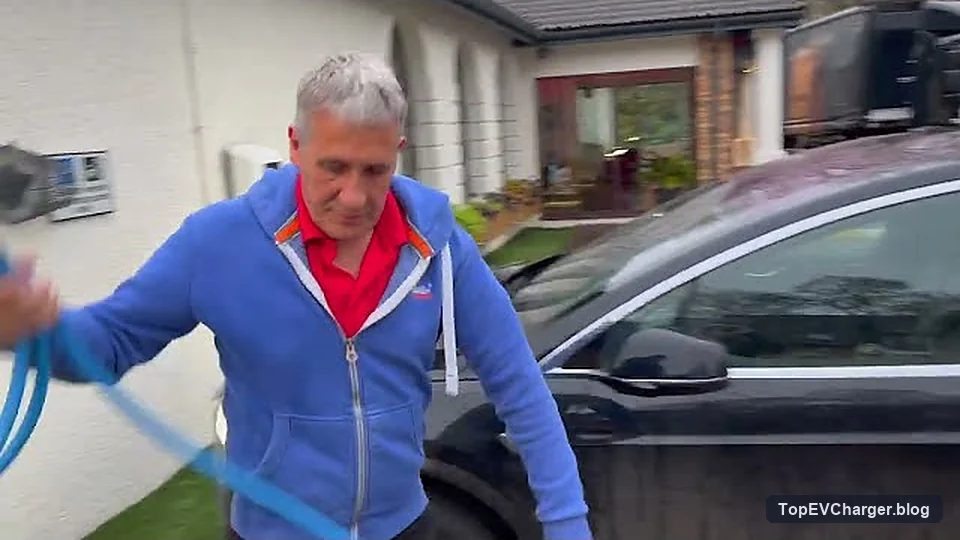
Conversely, socket-based units require a separate loose cable brought from your vehicle trunk. This design choice shifts mechanical wear away from the wall unit onto your portable cord assembly.
Internal contact resistance remains a critical factor when evaluating power delivery efficiency. Direct factory wiring reduces potential thermal bottlenecks found in standard plug-in connections.
Understanding these physical foundations helps technicians match equipment specifications to local electrical grid capacities. Every installation demands careful evaluation of daily plugging frequency and expected mechanical stress.
Tethered units integrate the output cable permanently into the main chassis via a strain relief gland, eliminating internal contact resistance points typically found at replaceable connector interfaces inside residential enclosures.
Untethered chargers expose a Type 2 socket or SAE J1772 receptacle on the front faceplate, requiring users to supply a separate umbilical cord equipped with compatible locking latches for power transfer.
Internal busbar routing differs significantly between these two architectural designs, as tethered models manage heavy copper conductors straight from the internal contactor directly to the permanently attached output line.
Conversely, socketed variants utilize heavy-duty silver-plated receiver pins inside the chassis to handle repeated insertion cycles, shifting potential wear points from the flexible external cordage to the physical enclosure socket.
- Permanent cord integration streamlines morning departure routines significantly.
- Socket units offer superior flexibility for multi-standard vehicle households.
- Factory-wired connections minimize high-amperage contact point resistance.
Internal Circuitry and Wiring Topologies
Heavy-gauge copper conductors inside tethered housings ensure minimal voltage drop across extended lengths. Thermal sensors monitor internal junction temperatures continuously during peak load cycles.
Socket-equipped stations utilize heavy-duty contactors designed for durable operation. Reviewing our best 240v ev charger selections helps you find models featuring protective shutters to prevent moisture ingress.
- Continuous copper leads prevent localized thermal degradation.
- Industrial contactors withstand high insertion force thresholds.
Evaluating Daily Ergonomics and Cable Management
Morning departure efficiency heavily depends on how easily you can uncoil and stow your power cable. Integrated holsters on fixed units keep operational areas exceptionally tidy and hazard-free.
Managing a loose cable requires manual coiling and storage inside your trunk or garage wall bracket. Exploring our best level 2 charger for jeep 4xe models highlights units with convenient integrated cable management systems.
Garage spatial constraints often dictate whether a fixed wand or a clean socket is preferable. Protruding leads might obstruct narrow walkways if proper wall mounting hooks are omitted.
Managing a 25-foot cable daily requires robust holster placement and proper looping technique to prevent kinks, especially during sub-zero winter temperatures when elastomer jackets lose their natural flexibility and stiffen noticeably.
Untethered configurations simplify storage by allowing owners to completely remove and stow the umbilical cord inside their trunk, leaving only a clean, flush-mounted electrical housing exposed on the exterior garage wall.
However, detaching cords daily increases handling friction and raises the statistical likelihood of dropping heavy connectors onto concrete flooring, which can eventually crack the protective polymers housing the internal pins.
- Integrated holsters prevent dangerous tripping hazards across garage floors.
- Loose cables demand dedicated wall storage brackets to prevent kinking.
- Ergonomic handle designs reduce wrist fatigue during repeated connections.
Weather Resistance and Handling in Extreme Climates
Sub-zero temperatures make rubberized insulation stiff and difficult to manipulate during winter charging sessions. Premium elastomeric compounds maintain flexibility down to minus forty degrees Celsius.
Socket interfaces isolate the vulnerable locking pin inside a sheltered wall enclosure. This prevents ice accumulation from locking the release mechanism prematurely.
- Low-temperature jacket compounds resist cracking under heavy bending loads.
- Protected wall sockets shield sensitive latch pins from freezing rain.
Installation Realities and Hardwired Electrical Demands
Professional electricians must evaluate panel capacity and conduit runs before mounting either unit type. Both configurations typically require a dedicated forty or fifty amp breaker feeding a 240V circuit.
Mounting a permanently attached assembly requires careful wall positioning relative to your vehicle charge port. Measuring exact reach distances prevents excessive cable tension during parking maneuvers.
Socket installations offer slightly faster initial bracket mounting because no heavy cable dangles during positioning. The technician simply secures the lightweight enclosure before terminating supply conductors.
Hardwired tethered configurations demand precise conduit alignment during wall mounting to accommodate stiff 6 AWG copper feeder cables entering the rear knockout without placing excessive mechanical stress on internal terminal blocks.
Untethered units often utilize identical physical mounting footprints but require careful torque calibration on internal lug screws to ensure zero resistance across incoming power lines during continuous 48-amp loads.
Electrical inspectors closely examine the grounding path continuity on both designs, verifying that the equipment ground conductor maintains a secure connection to the main service panel without any intermediate failures.
- Dedicated branch circuits are mandatory for safe continuous electrical loading.
- Accurate reach measurements prevent damaging strain on garage wall studs.
- Lightweight socket enclosures simplify single-person wall mounting tasks.
Conduit Sizing and Circuit Protection Standards
National Electrical Code requirements dictate specific wire gauges and conduit fill percentages for outdoor runs. Proper grounding continuity protects users against dangerous fault current surges.
Integrated residual current devices add vital protection against ground faults. Checking our best level 2 charger for tesla guide reveals units featuring automated safety checks before every session.
- Strict adherence to electrical codes ensures long-term operational safety.
- Automated ground fault checks prevent hazardous electrical shock risks.
Safety Compliance, Weatherproofing, and Thermal Performance
Outdoor installations demand robust ingress protection ratings to withstand driving rain and particulate contamination. Enclosures featuring robust rubber gaskets protect sensitive internal microprocessors from moisture damage.
Thermal management directly impacts long-term hardware reliability during maximum amperage output draws. Well-designed internal heat sinks dissipate thermal energy efficiently without requiring noisy cooling fans.
Tamper-resistant locking features prevent unauthorized use of your residential charging infrastructure overnight. Heavy-duty construction materials withstand accidental impacts from lawn equipment or vehicles.
Outdoor weatherproofing relies heavily on NEMA 4X or IP55 enclosure ratings, ensuring that wind-driven rain and airborne particulate matter cannot penetrate live electrical chambers over years of continuous exposure.
Thermal management during peak summer charging sessions involves monitoring internal ambient temperatures to prevent premature derating, particularly where the permanent cable entry point creates a localized heat concentration zone.
Socketed untethered receptacles incorporate integrated shutter mechanisms and proximity pilot sensors to completely de-energize the interface until a physical vehicle plug is fully seated and locked in place.
- High ingress protection ratings prevent moisture-induced circuit board failures.
- Passive heat dissipation eliminates mechanical fan noise and wear points.
- Robust housing materials resist impact damage in busy residential environments.
Thermal Monitoring and Overload Protection
Advanced firmware algorithms monitor plug temperature to prevent dangerous overheating conditions. Current output reduces automatically if excessive thermal resistance is detected at the terminals.
Surge suppression components safeguard sensitive vehicle computers against unexpected utility grid voltage spikes. This multi-layered defense strategy extends overall equipment operating lifespan significantly.
- Smart firmware prevents catastrophic thermal runaway during high loads.
- Internal surge suppressors protect vehicle electronics from grid spikes.
Multi-Vehicle Fleet Versatility and Connector Longevity
Households operating multiple electric vehicles with different plug standards face unique compatibility challenges. Socket units allow users to swap between North American charging standard cables effortlessly.
Dedicated single-standard hardware provides ultimate simplicity for owners who never switch vehicle brands. However, upgrading your vehicle later might require replacing the entire wall assembly.
Connector pins experience mechanical wear over thousands of daily plug insertion cycles. High-grade silver-plated contacts maintain low electrical resistance and prevent pitting over decades of use.
Mixed-fleet households benefit immensely from untethered systems because swapping between North American J1772 connectors and emerging North American Charging Standard plugs requires only a quick cable swap rather than a complete unit replacement.
Tethered chargers lock the hardware into a single plug standard, meaning that transitioning from legacy vehicles to newer automotive architectures necessitates aftermarket adapters or installing an entirely new charging station.
Connector longevity suffers when vehicle owners repeatedly drop tethered handles onto abrasive driveways, whereas untethered cables kept safely inside vehicle trunks experience vastly superior protection against mechanical drop damage.
- Socket units accommodate future vehicle plug standard transitions easily.
- Single-standard units eliminate the need to store separate connector cables.
- Silver-plated contact pins prevent corrosion and minimize resistive heating.
Adapter Safety and Connector Compatibility
Using third-party adapters on socket configurations requires careful adherence to safety certifications. Certified adapters prevent dangerous overheating when passing high continuous currents.
Locking mechanisms on modern connectors secure the plug firmly during active energy transfer phases. This prevents accidental disconnections caused by wind or cable tension.
- Certified adapters ensure safe power delivery across mixed interfaces.
- Secure locking pins stop accidental interruptions during active sessions.
Maintenance Protocols and Long-Term Component Wear
Routine maintenance keeps residential charging equipment operating safely for over a decade. Inspecting cable insulation for cracking prevents dangerous short-circuit hazards during wet weather.
Socket contacts should be checked annually for signs of oxidation or debris accumulation. Keeping terminal surfaces clean ensures optimal electrical conductivity and reduces thermal stress.
Replacing a damaged cable on a fixed unit requires specialized technician intervention. Conversely, socket users simply swap out a damaged portable cord without servicing the wall unit.
Routine maintenance schedules mandate regular visual inspections of the flexible cable jacket for abrasions, deep cuts, or exposed copper shielding caused by frequent vehicle tires rolling over misplaced lines.
Socketed interfaces require periodic contact cleaning using specialized electronic solvent sprays to remove microscopic oxidation layers that accumulate on brass mating pins over thousands of plug-in cycles.
Strain relief glands on tethered units must be checked annually with a calibrated torque wrench to prevent loosening from constant thermal expansion and contraction during heavy high-amperage power delivery sessions.
- Regular visual inspections catch cable insulation damage early.
- Annual socket cleaning prevents resistive heating and pitting.
- Modular cords simplify replacement procedures for standard users.
Troubleshooting Common Electrical Faults
Blinking diagnostic LED indicators provide immediate feedback when internal faults occur. Homeowners can quickly identify issues like ground faults or overvoltage conditions using manual guides.
Professional multimeter testing verifies proper input voltage before initiating warranty service claims. Qualified technicians ensure internal contactors operate within specified mechanical tolerances.
- Diagnostic LED lights simplify rapid troubleshooting procedures.
- Multimeter checks confirm proper circuit voltage parameters.
Total Cost of Ownership and Infrastructure Lifespan
Initial equipment purchase costs represent only one part of total ownership economics. Factoring in installation labor, potential cable replacements, and energy efficiency provides a clearer financial picture.
Durable construction materials minimize unexpected repair bills and extend operational lifespans beyond ten years. Investing in high-quality surge protection prevents costly premature hardware failures.
Evaluating long-term utility rate structures helps optimize overall charging expenditures across seasons. Smart scheduling features reduce monthly electricity bills by leveraging off-peak tariff hours.
Evaluating long-term infrastructure value involves factoring in the replacement cost of a damaged tethered line, which typically demands professional electrician service to open the chassis and rewire internal terminals safely.
Untethered systems minimize this specific financial risk because a frayed or damaged external umbilical cord can be discarded and replaced instantly by the homeowner without touching any high-voltage internal electrical components.
Overall infrastructure lifespan for both architectures easily exceeds a decade when installed correctly, provided that seasonal thermal cycling does not degrade the primary enclosure seals or internal mechanical spring contacts.
- Quality construction materials extend operating life beyond a decade.
- Smart scheduling features lower electricity bills via off-peak tariffs.
- Proper surge protection avoids expensive premature equipment replacements.
Return on Investment for Residential Infrastructure
Upgrading your home infrastructure with a reliable unit increases property value while eliminating public station dependency. Evaluating our top ev level 2 charger choices ensures fast and dependable daily charging performance.
Energy monitoring software tracks lifetime kilowatt-hour delivery accurately for household accounting. Detailed usage reports help homeowners manage their monthly transportation energy budgets.
- Reliable home charging eliminates costly public station fees.
- Energy monitoring software tracks accurate lifetime kilowatt delivery.
Frequently Asked Questions
Can I leave a tethered charging cable outside in heavy rain?
Yes, certified outdoor units feature weather-sealed enclosures designed to withstand heavy rain and snow safely. Proper ingress protection ensures internal components remain completely dry during severe storms.
Are socket-based chargers safer than permanently attached cords?
Both designs offer identical electrical safety when installed correctly by a licensed professional. High-grade circuit protection and automated ground fault monitoring safeguard your home in both scenarios.
What happens if my tethered cable gets damaged over time?
You will need a qualified electrician to replace the integrated cable assembly safely. Professional repair service ensures proper torque specifications and maintains your equipment warranty.
Do untethered chargers come with a charging cable included?
Most socket units ship without a cable, requiring you to use your vehicle portable cord. Supplied vehicle cables plug directly into the wall receptacle to initiate power transfer.
Which charger type is better for resale value and future upgrades?
Socket models offer superior future-proofing when vehicle plug standards inevitably change over time. Universal socket flexibility accommodates new automotive standards without replacing the wall unit.