Tesla Wall Connector vs. Chargepoint Flex: Which Fits Your Setup Better?
Choosing between these two elite Level 2 chargers requires balancing native vehicle integration against universal plug flexibility. Both units deliver massive amperage, but their underlying architectures serve distinctly different garage electrical profiles.


Choose the Tesla Wall Connector if you drive a Tesla and want native NACS convenience, or select the ChargePoint Home Flex if you need multi-vehicle plug-in versatility and advanced scheduling features.
Compare all top models in our Best Ev Level 2 Charger.
Side-by-Side Breakdown
| Criteria | Tesla Wall Connector | Chargepoint Flex | Edge |
|---|---|---|---|
| Peak Performance & Output | 48A / 11.5kW Hardwired | 50A / 12kW Hardwired | Chargepoint Flex |
| Duty Cycle & Consistency | Exceptional thermal regulation | Robust continuous duty design | Tie |
| Operating Noise & Vibration | Completely silent passive cooling | Silent solid-state internal relays | Tie |
| Portability & Footprint | Sleek, slim wall-mounted profile | Slightly bulkier with holster dock | Tesla Wall Connector |
| Maintenance & Service Life | Sealed commercial-grade chassis | Replaceable input whip assemblies | Chargepoint Flex |
| Power Requirements | Dedicated 60A breaker for 48A | Dedicated 60A or 50A breaker | Chargepoint Flex |
| Best Ideal Use-Case | Tesla-exclusive households | Multi-brand EV fleets | Chargepoint Flex |
Engineering Architecture and Core Power Delivery
Evaluating these two premier charging units starts with examining their internal power delivery topologies. Both devices convert AC residential current into vehicle-ready electricity with minimal thermal loss during extended sessions.
Our detailed Tesla Wall Connector review highlights how it draws up to 48 amperes on a sixty-amp breaker. Its internal busbars maintain stable thermal profiles under heavy continuous loads.
Evaluating internal power delivery requires examining solid-state relay designs and thermal dissipation pathways. The Tesla Wall Connector utilizes a 48-amp maximum continuous architecture housed in a sleek polycarbonate chassis designed for optimal thermal shedding.
Our thorough Chargepoint Home Flex review shows it delivers up to 50 amps of output via heavy-duty terminal blocks. Both units require precise engineering calculations to handle continuous electrical loads safely.
- Direct hardwired installation ensures maximum continuous current delivery without thermal throttling.
- Precision internal component layout minimizes parasitic power draw during standby mode.
- Robust terminal blocks accept heavy-gauge copper wiring safely.
Thermal Thresholds and Continuous Output
Sustaining high amperage demands rigorous thermal management to prevent premature relay degradation. Both manufacturers engineer their enclosures to dissipate heat efficiently without relying on noisy internal cooling fans.
The ChargePoint Home Flex pushes slightly further by delivering 50 amperes of continuous output when hardwired. This extra margin provides marginally faster replenishment rates for large battery packs.
- Passive convection cooling keeps operating noise completely silent.
- Internal temperature sensors dynamically throttle current if ambient heat spikes.
Electrical Installation Realities and Breaker Demands
Proper installation dictates the long-term safety and performance of your Level 2 charging equipment. Electricians must size supply conductors and circuit breakers according to the National Electrical Code specifications.
Our comprehensive Tesla Gen 3 Wall Connector review notes it requires a 60-amp breaker for 48-amp output. The unit can be configured dynamically for smaller circuits if needed.
National Electrical Code Article 625 mandates that EV supply equipment be treated as a continuous load. Consequently, installers must size branch circuit breakers to 125 percent of the maximum selected operating amperage to prevent thermal tripping.
Hardwired configurations eliminate failure points found in standard NEMA 14-50 receptacles, which frequently degrade under repetitive thermal expansion. Proper torque specifications on terminal screws ensure zero resistance and prevent hazardous hot spots during long charging sessions.
- Hardwiring remains the gold standard for permanent garage charging setups.
- Torque specifications on terminal screws must be verified with a calibration tool.
- Dynamic circuit configuration allows field adjustment for limited electrical panels.
Plug-In Versus Hardwired Flexibility
Homeowners evaluating installation options often debate between hardwiring and utilizing heavy-duty industrial plugs. The ChargePoint Flex stands out by offering interchangeable NEMA 14-50 or NEMA 6-50 input whips.
Choosing the plug-in version permits renters or frequent movers to disconnect the unit and relocate it easily. However, hardwiring always eliminates potential failure points at the physical wall receptacle.
- NEMA 14-50 receptacles require GFCI protection per modern residential electrical codes.
- Hardwired connections bypass mechanical plug wear over thousands of insertion cycles.
Cable Ergonomics, Cold-Weather Flexibility, and Chassis Durability
Daily usability depends heavily on how the charging cable behaves when temperatures drop below freezing. Stiff, unyielding cables transform a simple garage routine into an exhausting physical struggle.
The Tesla cable remains remarkably supple even in sub-zero winter conditions, winding effortlessly around the chassis. Its outer elastomer jacket resists abrasion, chemical splashes, and heavy vehicle tires.
Cable jacketing material dictates how easily you can coil the harness during freezing winter conditions. Both manufacturers use specialized thermoplastic elastomer compounds that resist cracking, oil intrusion, and UV radiation degradation over years of outdoor exposure.
Chassis ingress protection ratings determine defense against driving rain and solid particulate matter. An IP55 or higher environmental rating guarantees that internal printed circuit boards remain dry and operational despite extreme weather events pounding your exterior garage wall.
- Flexible jacketing prevents kinking and internal conductor fatigue over years of use.
- Weatherproof enclosures carry high NEMA ingress protection ratings for outdoor mounting.
- Ergonomic handle designs fit comfortably in various hand sizes during plugging.
Hose Reel Mechanics and Holster Design
Managing twenty-four feet of heavy copper cable requires thoughtful holster placement and wrapping geometry. Tesla utilizes a simple, minimalist wall hook that cradles the connector plug securely.
The ChargePoint Flex features a dedicated holster that locks the plug firmly into place, preventing accidental dislodgement. Its integrated cable management groove keeps the cord neat against the wall.
- Secure holster engagement prevents dust and moisture from entering connector pins.
- Wall-mounted brackets must be anchored securely into structural wood studs.
Smart Ecosystems, Wi-Fi Connectivity, and Load Management Protocols
Modern EV chargers act as connected IoT appliances designed to optimize utility pricing and energy consumption. Seamless Wi-Fi integration allows owners to monitor charging sessions directly from their smartphones.
The ChargePoint app dominates this category with comprehensive utility integration, cost tracking, and detailed session reporting. Users can sync their local electricity tariffs to automatically charge during off-peak hours.
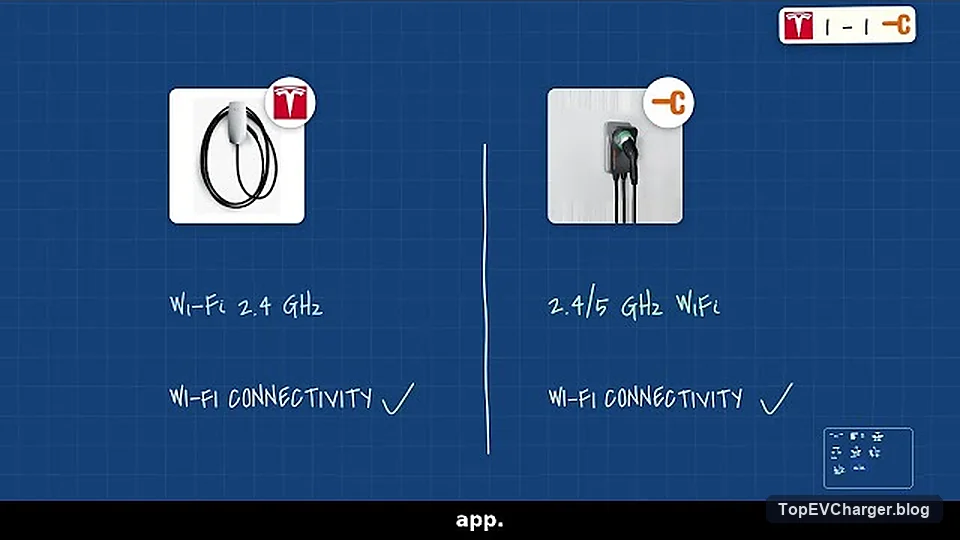
Smart charging firmware relies on stable local network connections to communicate scheduling parameters and power throttling commands. The ChargePoint platform utilizes robust 2.4 GHz Wi-Fi radios to integrate seamlessly with utility demand-response programs and home automation assistants.
Conversely, Tesla units deploy sophisticated local Wi-Fi access points for firmware updates and dynamic load sharing across multiple installed chargers without requiring an active cloud connection, ensuring continuous operation during broadband outages.
- Wi-Fi pairing enables over-the-air firmware updates for continuous feature enhancement.
- Detailed analytics track kilowatt-hours delivered and monetary savings over time.
- Cloud connectivity links charging data smoothly with smart home assistants.
Power Sharing and Multi-Unit Site Management
Households operating two electric vehicles from a single electrical panel require intelligent power-sharing capabilities. Tesla's built-in Wi-Fi mesh protocol allows multiple wall connectors to share available capacity seamlessly.
ChargePoint manages multi-car environments through its cloud-based platform, balancing loads across units without tripping breakers. This ensures safe power distribution without requiring complex physical master-slave wiring.
- Dynamic load balancing prevents overloads on residential electrical subpanels.
- Multiple chargers communicate wirelessly to divide current proportionally.
Universal Vehicle Compatibility and NACS Integration
Vehicle plug standards are undergoing a massive transition across the entire North American automotive market. Choosing a charger with the correct connector type ensures you will not require clumsy aftermarket adapters.
Our in-depth Tesla J1772 Wall Connector review details how the universal model solves connector dilemmas. A hidden Magic Dock adapter releases either a native NACS or J1772 plug instantly.
Vehicle plug standards dictate whether you need adapters to connect your charger to different brands. The universal model features an integrated SAE J1772 coupler, whereas native NACS units require certified mechanical adapters for legacy vehicles.
Maintaining low contact resistance across adapter pins is critical to prevent dangerous thermal runaway conditions during high-amperage sessions. Always verify that third-party hardware carries UL safety certification marks before mating it to your primary vehicle connector.
- Magic Dock technology future-proofs your garage for multi-brand EV ownership.
- Standard J1772 units require external adapters to charge Tesla vehicles.
- Native NACS handles plug directly into modern Ford, Rivian, and GM electric vehicles.
Adapter Fatigue and Mechanical Wear
Using daily third-party adapters introduces potential connection resistance and mechanical wear points over time. Permanent native connections always provide superior electrical safety and mechanical longevity.
Selecting a dedicated J1772 ChargePoint works wonderfully if your primary vehicle is non-Tesla. Conversely, dedicated Tesla owners benefit from sticking with the native North American Charging Standard plug.
- Direct plug connections eliminate transitional thermal resistance hot spots.
- Fixed connectors reduce the risk of leaving expensive adapters behind in public.
Long-Term Reliability, Thermal Management, and Maintenance Profiles
A residential EV charger represents a decade-long infrastructure investment demanding flawless daily reliability. Internal components must endure extreme seasonal temperature swings inside uninsulated garages.
Both manufacturers construct their units with heavy-duty polycarbonate enclosures rated for extreme outdoor exposure. Minimal internal moving parts ensure that solid-state electronics degrade slowly over time.
Advanced thermal sensors embedded near internal power semiconductors actively monitor operating temperatures to prevent catastrophic hardware failure. When internal heat thresholds spike, the unit automatically throttles current delivery to protect internal circuitry components from permanent thermal damage.
Routine maintenance involves inspecting the cable harness for micro-abrasions and clearing dust debris from the enclosure ventilation paths. Homeowners should perform a visual terminal inspection annually to ensure zero wire loosening has occurred within the junction box.
- Sealed internal electronics prevent dust and humidity from causing short circuits.
- Robust strain reliefs protect internal wiring from tension and pull forces.
- Comprehensive manufacturer warranties guarantee replacement units in rare failure events.
Troubleshooting and Diagnostics Protocols
When faults occur, clear diagnostic indicator lights prevent guesswork during troubleshooting procedures. The Tesla uses a subtle LED light bar sequence to communicate ground faults or over-temperature warnings.
The ChargePoint indicator ring shifts colors dynamically and sends immediate push notifications to your smartphone. This proactive alerting ensures you notice power interruptions before your morning commute.
- Multi-color LED codes pinpoint exact electrical fault triggers instantly.
- App-based diagnostic logs help customer support diagnose remote issues quickly.
Final Selection Criteria: Which Unit Solves Your Garage Setup?
Selecting the ideal charger ultimately depends on your specific vehicle fleet and utility monitoring preferences. Weighing hardware build quality against software ecosystem features clarifies the final purchasing decision.
Invest in the Tesla Wall Connector if you prioritize sleek design and native NACS compatibility. Alternatively, choose the ChargePoint Flex for unmatched software tracking and plug versatility.
Selecting ideal charging hardware requires matching electrical panel capacity with your daily driving mileage. Assessing your home's available amperage ensures you install a breaker size that avoids costly electrical service upgrades while maximizing overnight replenishment speeds.
Prioritize units offering seamless software integration if you plan to track energy usage metrics or participate in local utility rebate programs. Ultimately, balancing physical durability with smart connectivity features guarantees long-term satisfaction for your household EV fleet.
- Match your charger choice to your vehicle manufacturer's native charging port.
- Verify your home electrical panel capacity before purchasing high-amperage hardware.
- Prioritize smart app tracking if your electric utility offers time-of-use rebates.
Making Your Final Garage Infrastructure Choice
Take time to consult a licensed electrician to evaluate your service panel capacity before ordering equipment. Ensuring proper breaker sizing guarantees safe, rapid, and reliable vehicle charging for years ahead.
Both chargers represent the pinnacle of modern electrical engineering, meaning your choice comes down to personal software preferences and aesthetic garage integration.
- Professional electrical evaluations prevent costly mid-installation surprises.
- Investing in robust hardware protects your vehicle's onboard charging systems.
Frequently Asked Questions
Can the Tesla Wall Connector charge non-Tesla electric vehicles?
Yes, provided you purchase the Tesla Universal model featuring the integrated Magic Dock adapter. Standard Tesla wall units require a separate third-party J1772 adapter to charge other brands securely.
Does the ChargePoint Home Flex require an internet connection to operate?
No, the charger functions as a standard plug-and-charge unit without Wi-Fi. However, connecting to the network is required to access scheduling and utility cost-tracking features.
What size circuit breaker do I need for a 48-amp hardwired installation?
You must install a dedicated 60-amp circuit breaker to comply with electrical safety codes. Continuous load regulations require a twenty-five percent safety margin above the operating amperage.
Is the Chargepoint Flex completely safe for outdoor installation in heavy rain?
Yes, the enclosure is weather-rated with a rugged NEMA housing designed to withstand rain, snow, and extreme temperatures. Professional installation with weatherproof conduit ensures total protection.
Can I adjust the maximum amperage output of these chargers?
Yes, both units feature internal configuration settings that allow licensed electricians to dial down output. This adjustment accommodates smaller existing home electrical panels and breaker sizes.