Tesla Universal Wall Connector vs. Standard Tesla Wall Connector: Which Fits Your Setup Better?
Choosing the right EV charging hardware requires balancing dual-plug versatility against dedicated NACS integration. This technical breakdown evaluates internal engineering differences between both Tesla wall units.

The Tesla Universal Wall Connector wins for multi-brand households needing integrated NACS and J1772 flexibility. The Standard Tesla Wall Connector wins for dedicated Tesla owners seeking streamlined single-plug simplicity.
Compare all top models in our Best Ev Level 2 Charger.
Side-by-Side Breakdown
| Criteria | Tesla Universal Wall Connector | Standard Tesla Wall Connector | Edge |
|---|---|---|---|
| Peak Performance & Output | Up to 48A / 11.5kW continuous output | Up to 48A / 11.5kW continuous output | Tie |
| Duty Cycle & Consistency | Continuous duty rated for daily heavy cycling | Continuous duty rated for daily heavy cycling | Tie |
| Operating Noise & Vibration | Silent passive cooling with zero mechanical hum | Silent passive cooling with zero mechanical hum | Tie |
| Portability & Footprint | Slightly heavier due to the integrated Magic Dock mechanism | Lightweight, sleek wall-mounted enclosure profile | Standard Tesla Wall Connector |
| Maintenance & Service Life | Complex internal latching mechanism requires careful handling | Fewer moving parts ensure exceptional long-term reliability | Standard Tesla Wall Connector |
| Power Requirements | Requires dedicated 60-amp breaker for 48-amp output | Requires dedicated 60-amp breaker for 48-amp output | Tie |
| Best Ideal Use-Case | Mixed fleets containing both NACS and J1772 vehicles | Single or multi-EV households exclusively using NACS ports | Context Dependent |
Engineering Architecture and Internal Power Delivery
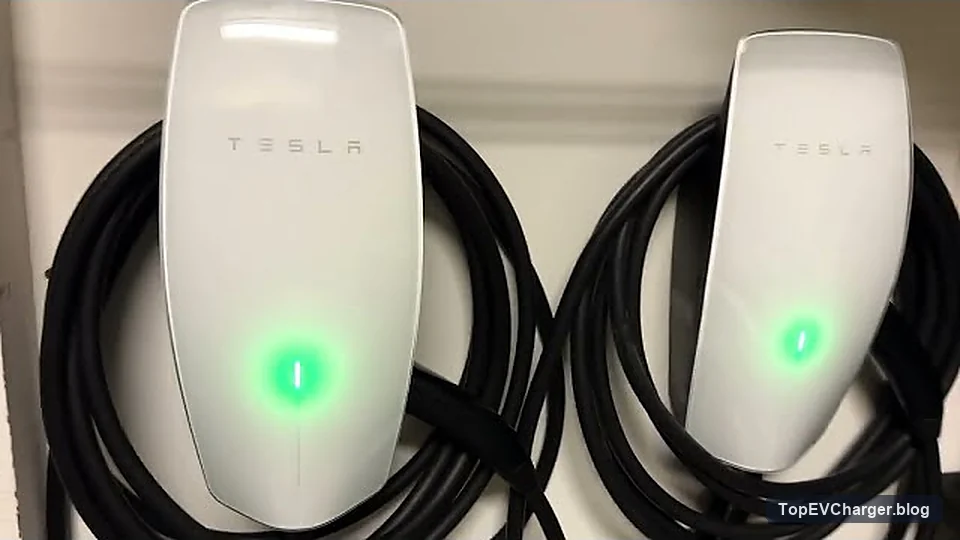
Both wall units share identical core power electronics capable of delivering 48 amps of continuous current. Internal relays and microprocessors manage thermal throttling and ground fault interrupter safety routines with identical precision.
Electrical efficiency ratings remain exceptionally high across both models. Power conversion loss is minimal, ensuring maximum grid electricity transfers directly into your vehicle battery pack without excessive waste heat.
As detailed in `our tesla wall connector review`, this standard model utilizes a direct NACS plug architecture engineered for proprietary vehicle inlets, safely handling up to 48 amperes of continuous current.
Conversely, the Universal Wall Connector integrates an internal Magic Dock electromechanical adapter mechanism. This sliding latch system automatically configures terminal pins to engage safely with standard SAE J1772 vehicle ports during insertion.
- Shared 11.5kW maximum power delivery capacity
- Identical internal surge suppression componentry
- Rigorous thermal monitoring sensors across circuit boards
Power Board Circuitry Comparison
The foundational printed circuit board layout is remarkably similar. Both chargers utilize industrial-grade components designed to withstand harsh garage environments and fluctuating utility grid voltages.
Firmware updates deploy seamlessly over Wi-Fi connections. This shared software ecosystem guarantees identical diagnostic reporting and scheduling features for both hardware variants.
- Over-the-air firmware update capability
- Wi-Fi enabled diagnostic logging
Connector Mechanics and Physical Interface Design
Discussed further in `our tesla gen 3 wall connector review`, the primary engineering divergence lies within the physical plug mechanism, featuring an innovative Magic Dock adapter built directly into the holster assembly.
Standard units feature a permanent, fixed North American Charging Standard plug. This simpler physical architecture removes potential mechanical wear points found in adapter-integrated designs.
Physical durability on the standard unit relies on a fixed thermoplastic housing designed to withstand daily strain. The latch lever uses a stainless steel spring to ensure secure mechanical locking against accidental unplugging events.
The universal variant introduces complex internal actuators that physically retain the J1772 adapter inside the holster when a NACS vehicle is detected. This prevents user error and protects the internal contact pins from environmental moisture ingress.
- Universal model features integrated J1772 latching
- Standard model utilizes a dedicated NACS handle
- Both hoses maintain flexibility in sub-zero temperatures
Evaluating Mechanical Wear Points
Mechanical complexity increases potential failure points over thousands of plug cycles. The internal locking solenoids within the universal dock demand routine inspection to prevent debris accumulation.
Standard NACS handles lack moving internal latches on the vehicle side, resulting in a simpler mechanical lifespan that resists heavy commercial or residential abuse effectively.
- Solenoid actuation testing on universal docks
- Simplified pin alignment on standard NACS plugs
Electrical Specifications and Circuit Requirements
Installing either charger requires identical electrical infrastructure standards. Certified electricians must run heavy-gauge copper wiring to a dedicated 60-amp double-pole breaker for maximum output.
Dynamic power sharing configurations work seamlessly when mixing units on a single circuit. You can group multiple chargers together to intelligently distribute available residential electrical capacity.
Both chargers require a dedicated 240-volt supply branch circuit protected by an appropriately sized heavy-duty breaker. Installers must run copper conductors rated for at least 60 amperes of ampacity to prevent thermal overload.
Ground fault circuit interrupter protection requirements depend heavily on local electrical codes and jurisdiction. While units feature internal DC protection, external GFCI breakers may be mandated depending on indoor versus outdoor installation parameters.
- Requires 240-volt dedicated circuit wiring
- Supports flexible amperage configurations from 12A to 48A
- Compatible with professional load-management gateway accessories
Circuit Protection and Breaker Sizing
Local National Electrical Code guidelines mandate strict ground fault protection. Both chargers feature internal circuit interrupters designed to trip instantly during abnormal electrical surges.
Professional installation guarantees compliance with local permitting offices. Proper torque applied to terminal blocks prevents dangerous thermal hotspots during peak delivery phases.
- Mandatory 125 percent continuous load sizing
- Integrated residual current device protection
Thermal Performance and Environmental Durability
NEMA 4 rated enclosures protect internal components from driving rain, snow, and dust intrusion. Both units perform reliably in extreme outdoor weather conditions without performance degradation.
Passive thermal management relies on cast aluminum chassis cooling fins. This design dissipates heat efficiently without requiring loud or failure-prone internal cooling fans.
Thermal management is handled via passive ambient convection through rugged aluminum faceplates. These enclosures boast an IP55 weather resistance rating, safeguarding internal circuit boards against windblown dust and water jets.
Operating temperature thresholds span from minus thirty to fifty degrees Celsius. Internal thermistors continuously monitor terminal block temperatures, automatically throttling charging current if excessive resistance or localized overheating conditions are detected.
- NEMA 4 outdoor weather resistance rating
- Operating temperature range from minus thirty to fifty Celsius
- Corrosion-resistant powder-coated exterior housing
Weatherproofing and Enclosure Seals
Gasket seals around the faceplate prevent moisture ingress during heavy storms. Inspecting these rubber seals annually ensures long-term protection for delicate internal microprocessors.
Noted within `our tesla j1772 wall connector review`, cable jackets remain exceptionally pliable during winter freezes. High-grade elastomer compounding prevents cracking when coiled tightly around the wall unit housing.
- Annual gasket integrity inspections
- UV-resistant cable outer sheathing
Smart Connectivity and Dynamic Load Balancing
Built-in Wi-Fi connectivity links your charger to smartphone companion applications. Users can monitor charging sessions, track energy consumption metrics, and schedule off-peak charging times.
Power-sharing networks allow up to six individual chargers to communicate locally. This ensures your main electrical service panel never overloads when multiple vehicles plug in simultaneously.
As explored in `our tesla mobile connector review`, integrated Wi-Fi radios enable remote diagnostics. Facility managers can configure Power Sharing networks across multiple units to prevent exceeding main service panel capacities.
Dynamic load balancing relies on external power meters communicating real-time household consumption data over local wireless channels. This prevents tripping main breakers by modulating output amperage based on active domestic electrical loads.
- Smartphone app integration for session tracking
- Local power-sharing network capabilities
- Password-protected access control settings
Network Configuration and Security
Initial setup requires connecting through local 2.4 GHz wireless networks. Security protocols protect your charger from unauthorized remote access attempts while maintaining stable connectivity.
Access control lists let owners restrict charging privileges to approved vehicles. This feature prevents unauthorized neighbors from utilizing your residential electricity supply.
- WPA2 wireless encryption standards
- Vehicle VIN restriction programming
Installation Ergonomics and Conduit Routing
Mounting brackets utilize standard wall stud spacing for secure structural attachment. Clear wiring access compartments simplify bottom or rear conduit entry during professional installation.
The universal charger features a slightly bulkier chassis depth to accommodate the internal adapter mechanism. Installers must account for this increased physical footprint in tight garage spaces.
Back and bottom entry ports accommodate rigid or flexible electrical conduit setups during wall mounting. Installers must utilize proper torque specifications on terminal block screws to ensure low-resistance connections and maintain UL compliance standards.
Cable management involves a wrap-around holster design that relieves mechanical strain on the twenty-four-foot cable. Proper mounting height ensures the connector plug remains secure while preventing the cord from dragging along concrete floors.
- Standard sixteen-inch wall mounting hole spacing
- Flexible bottom, top, or rear wiring knockouts
- Integrated cable management hook wrap design
Cable Management and Storage
Proper cable wrapping prevents kinks and physical damage to internal copper strands. The holster design locks the plug securely in place when not actively delivering current.
Hanging the twenty-four-foot cable correctly reduces strain on terminal connections. Maintaining slack near the wall mount protects internal strain relief bushings over time.
- Twenty-four-foot standard cable reach
- Secure holster locking retention tabs
Frequently Asked Questions
Can the standard wall connector charge non-Tesla electric vehicles?
The standard wall connector features a proprietary NACS plug that cannot connect directly to standard J1772 ports. You must purchase a separate aftermarket adapter to charge non-Tesla electric vehicles safely.
Does the universal wall connector require a different electrical installation?
Both models share identical electrical requirements and wiring specifications. An electrician can install either unit using the exact same dedicated sixty-amp circuit breaker and heavy copper wiring.
How does the magic dock adapter lock onto non-tesla cars?
The universal connector automatically releases the J1772 adapter when you press the handle button while docked. This clever mechanical latching system secures the correct plug profile for your specific vehicle.
Are both chargers rated for outdoor installation?
Both hardware options carry a robust NEMA four environmental rating. They withstand rain, snow, and extreme temperatures without requiring a protective shelter or garage overhang.
Can multiple units share a single household electrical circuit?
Up to six units can link together via local Wi-Fi power sharing. This advanced firmware feature automatically distributes available electrical amperage safely across all connected vehicles.