Rivian Wall Charger vs. Tesla Wall Connector: Which Fits Your Setup Better?
Rivian and Tesla engineer high-output residential hardware designed for rapid daily replenishment. Choosing the right unit requires analyzing your home electrical capacity and vehicle connector topology.

Select the Rivian Wall Charger for rugged adventure-ready utility and native J1772 flexibility. Opt for the Tesla Wall Connector if you manage a household prioritizing North American Charging Standard compatibility and seamless ecosystem integration.
Compare all top models in our Best Ev Level 2 Charger.
Side-by-Side Breakdown
| Criteria | Rivian Wall Charger | Tesla Wall Connector | Edge |
|---|---|---|---|
| Peak Performance & Output | Up to 11.5 kW (48 Amps) | Up to 11.5 kW (48 Amps) | Tie |
| Duty Cycle & Consistency | Heavy-duty commercial-grade thermal management | Optimized residential solid-state switching | Rivian Wall Charger |
| Operating Noise & Vibration | Near-silent passive convection cooling | Silent solid-state component operation | Tie |
| Portability & Footprint | Slightly bulkier weather-resistant chassis | Sleek, low-profile glass-face enclosure | Tesla Wall Connector |
| Maintenance & Service Life | Rigid strain reliefs and robust internal busbars | Modular wiring compartment with quick-release clips | Tesla Wall Connector |
| Power Requirements | Dedicated 60-Amp breaker feed required | Configurable 15-to-60 Amp breaker feed | Tesla Wall Connector |
| Best Ideal Use-Case | Mixed-fleet garages needing J1772 compatibility | Dedicated Tesla households wanting Wi-Fi pairing | Tesla Wall Connector |
Architecture and Electrical Engineering Standards
Modern residential charging hardware requires robust internal circuitry to handle continuous high-amperage loads. Both manufacturers implement strict safety protocols, but their internal component layouts reflect distinct engineering priorities for home garages.
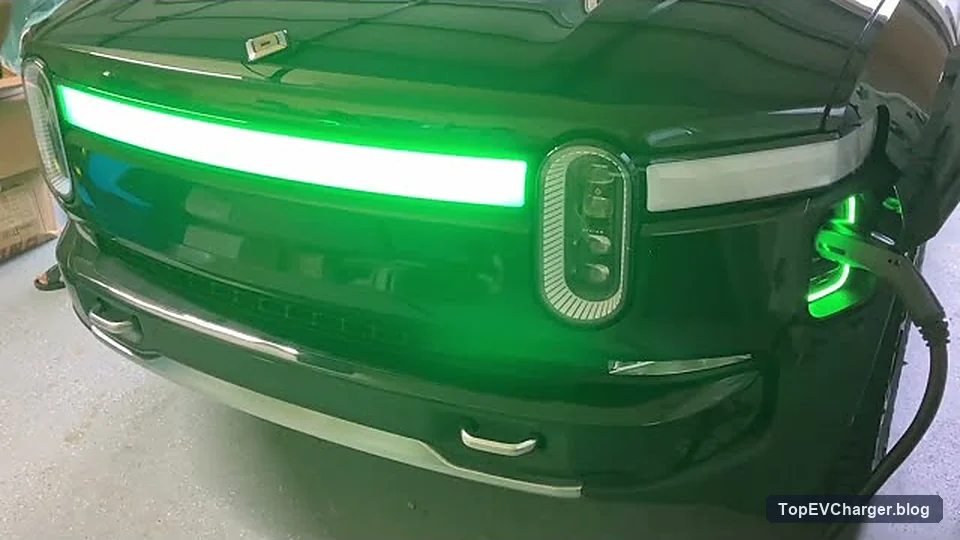
Circuit protection mechanisms safeguard against thermal overload and ground faults during extended sessions. Examining these terminal blocks reveals how each brand manages copper gauge tolerances and long-term connection stability under heavy stress.
Electrical infrastructure requires rigorous compliance with NEC Article 625 standards. Both units demand a dedicated 60-amp breaker and heavy-gauge copper wiring to safely sustain continuous maximum electrical output over long daily charging sessions.
Internal component architecture utilizes solid-state relay switching to isolate voltage. Proper grounding verification prevents ground-fault interruption faults, ensuring compliance with strict UL 2594 safety certifications required for residential hardwired garage installations.
- Heavy-duty internal busbars versus compact circuit boards
- Rigid terminal block sizing for secure copper wire insertion
- Integrated residual current monitoring for ground fault safety
Internal Component Layouts
Tesla prioritizes compact solid-state switching to reduce overall enclosure volume. Rivian favors oversized relays designed to endure harsh temperature fluctuations inside uninsulated residential garages.
Professional electricians appreciate spacious wiring compartments that accommodate thick copper conductors without requiring excessive bending force during installation.
- Ample clearance inside the backplate mounting assembly
- Clearly marked torque specifications printed near terminal screws
Performance and Real-World Output Dynamics
Delivering consistent electrical current to your vehicle battery demands high efficiency and minimal thermal throttling. Both units deliver up to forty-eight amps of continuous power when paired with appropriate supply lines.
Voltage drop over long cable runs can impact overall charging speed during peak summer heat waves. Evaluating how each system manages internal heat dissipation helps prevent unexpected mid-cycle charging slowdowns.
Delivering up to 11.5 kW of continuous power, the Rivian unit maximizes single-phase alternating current delivery. Thermal throttling algorithms automatically reduce amperage if internal enclosure temperatures exceed safe semiconductor operating thresholds during summer.
The competitive Tesla Wall Connector review highlights an identical 48-amp maximum output capability when correctly hardwired. Dynamic load balancing allows multiple connectors to share a single circuit breaker without tripping residential electrical panels during peak household hours.
- Consistent delivery of maximum forty-eight amp output currents
- Minimal thermal throttling under direct sunlight exposure
- Rapid battery replenishment across diverse ambient temperature ranges
Current Delivery Under Stress
Sustained high-output sessions push semiconductor junctions close to their maximum thermal thresholds. Rivian implements heavy aluminum heat sinks to disperse excess energy safely away from sensitive control boards.
Tesla utilizes dynamic current adjustment algorithms that subtly throttle output if internal sensors detect abnormal enclosure heating during extended multi-hour charging events.
- Active thermal monitoring across internal power semiconductors
- Automatic amperage scaling during extreme weather conditions
Build Quality, Maintenance, and Thermal Durability
Garage environments expose electronic equipment to airborne dust, moisture, and accidental physical impacts from tools or vehicles. Weatherproof ratings determine whether these units survive exposed outdoor exterior wall installations.
Selecting durable exterior plastics prevents UV degradation and discoloration over years of direct sunlight exposure in open driveway locations.
Enclosure construction relies on industrial-grade polycarbonate rated for extreme weather resistance. An IP55 ingress protection rating shields internal circuitry against windblown dust and driving rain when mounted on exterior garage walls.
Routine maintenance involves inspecting terminal torque specifications annually using calibrated tools. Thermal dissipation fins engineered into the rear chassis prevent localized hot spots, extending the operational lifespan of sensitive microprocessors and internal relays.
- Impact-resistant exterior enclosures rated for outdoor weather
- Sealed internal compartments preventing dust and humidity ingress
- UV-stabilized plastics resisting fading and structural brittleness
Enclosure Durability Metrics
The Rivian chassis features rugged industrial polymers designed to withstand heavy physical knocks in active workshops. Tesla opts for a tempered glass front plate that maintains a pristine aesthetic appeal.
Routine maintenance remains minimal for both devices, requiring only occasional visual inspections of the output cable insulation and connector pins.
- Scratch-resistant faceplates enduring daily handling
- Robust strain relief collars preventing internal wire fatigue
Operating Noise, Power Efficiency, and Physical Footprint
Homeowners installation locations often sit directly adjacent to residential bedrooms or living spaces. Keeping operating noise to absolute zero ensures uninterrupted household tranquility throughout the night.
Standby power consumption accounts for minor electricity usage when the charger remains idle between active vehicle replenishment sessions.
Solid-state power delivery ensures silent operation without humming cooling fans. Standby power consumption remains remarkably low at under 3 watts, minimizing parasitic energy draw on your residential utility bill throughout idle overnight periods.
Physical dimensions favor compact wall footprints despite robust internal engineering. As noted in the Tesla Gen 3 Wall Connector review, the sleek profile protrudes less than six inches from the mounting surface, maintaining adequate clearance.
- Completely silent operation without cooling fan noise
- Low standby power draw during idle periods
- Compact wall-mounting footprint saving valuable garage space
Acoustic Profiles and Standby Draw
Neither unit relies on noisy mechanical cooling fans, relying entirely on passive convective airflow. This silent operation prevents annoying hums from disturbing your household during late-night charging cycles.
Standby energy draw stays well below regulatory limits for both hardware platforms, ensuring minimal impact on your monthly utility bills.
- Passive thermal convection eliminating moving parts
- Negligible standby electrical consumption figures
Cable Management, Ergonomics, and Connector Mechanics
Daily usability hinges on how comfortably the flexible output cable wraps around the housing unit. Stiff cables become frustrating to handle during freezing winter mornings in cold climates.
Ergonomic handle designs must accommodate various hand sizes while ensuring secure latching mechanisms engage properly inside the vehicle charge port.
Flexible 24-foot cables remain pliable even in sub-freezing winter temperatures. Ergonomic handle geometry distributes weight evenly, reducing wrist strain while engaging the vehicle port latch mechanism during routine evening plug-in procedures.
Integrated holster designs secure the SAE J1772 or NACS connector safely against moisture. The Tesla J1772 Wall Connector review highlights strain relief collars preventing sharp cable bends near the base, mitigating internal copper fatigue.
- Flexible rubber-jacketed cables resisting cold-weather stiffening
- Ergonomic connector handles with positive locking latches
- Convenient holster placement preventing cable kinks on floors
Hose Flexibility and Latch Durability
Rivian provides an exceptionally flexible cable that coils smoothly around the main body housing without fighting your grip. Tesla utilizes a slightly thinner proprietary cable that coils effortlessly into tight loops.
Holster placement geometry influences whether your charging cable remains safely elevated off the concrete floor away from accidental vehicle roll-overs.
- Cold-weather pliability maintaining easy manual coiling
- Secure holster docking preventing accidental cable drops
Smart Connectivity, Software, and Load Management
Modern smart chargers offer companion smartphone applications for scheduling sessions during off-peak utility rate hours. Wi-Fi integration allows remote firmware updates and real-time charging status monitoring from anywhere.
Dynamic load balancing enables multiple chargers to share a single circuit breaker without tripping your main household electrical panel.
Wi-Fi connectivity enables over-the-air firmware updates and remote session monitoring via smartphone applications. Local mesh networking protocols allow seamless communication between multiple chargers for efficient power sharing across shared residential circuits.
Integration with home energy management systems helps schedule charging during off-peak utility rates. Advanced diagnostic logs transmit error codes directly to support technicians, accelerating troubleshooting for complex electrical anomalies or grid disruptions.
- Wi-Fi connectivity supporting remote schedule management
- Companion smartphone applications tracking energy consumption
- Firmware update capabilities via wireless cloud networks
App Ecosystems and Power Sharing
Tesla boasts a polished application interface with deep vehicle synchronization features for seamless scheduling. Details from our Rivian Wall Charger review show how the brand integrates charger controls directly into its mobile ecosystem.
Power sharing configuration allows households with two electric vehicles to balance available electrical current efficiently across both installed charging units.
- Intuitive mobile software for tracking kilowatt delivery
- Multi-unit power sharing balancing total panel load
Which Option Fits Your Specific Household Workload
Selecting the correct home charging hardware depends entirely on your current vehicle fleet and garage setup. Matching your electrical service capacity ensures safe, reliable operation for years ahead.
Consider future vehicle purchases before finalizing your permanent wall-mounting location and circuit breaker amperage sizing.
Selecting the right hardware depends heavily on your vehicle ecosystem and electrical panel capacity. Properties featuring mixed-brand fleets benefit from universal connector compatibility, whereas single-brand households maximize convenience using dedicated native ecosystem protocols.
Assess your daily commuting mileage against available off-peak charging windows before finalizing installation plans. Consulting a certified master electrician ensures your home service drop can support continuous maximum amperage draws safely without upgrades.
- Fleet compatibility matching your primary vehicle connector type
- Available electrical panel capacity supporting high amperage feeds
- Indoor versus outdoor installation environmental requirements
Tailoring Your Hardware Selection
Choose the Rivian charger if your household prioritizes universal J1772 connectivity and rugged garage aesthetics. Select the Tesla unit if you drive North American standard vehicles and want advanced power-sharing features.
Consult a licensed master electrician to verify your home wiring before committing to any high-amperage residential EV charging installation.
- Professional electrical audit ensuring safe continuous loads
- Future-proofing your garage for multiple electric vehicles
Frequently Asked Questions
Can the Rivian Wall Charger safely charge non-Rivian electric vehicles without adapters?
The Rivian unit features a dedicated J1772 plug interface that natively accommodates most standard battery electric vehicles available on the modern market without requiring any extra aftermarket adapters for daily use.
You will specifically need a specialized connector interface if you regularly park and charge legacy Tesla automobiles inside your personal residential garage space.
Does the Tesla Wall Connector require a professional electrician for proper installation?
Yes, hardwired residential EV charging stations demand expert electrical installation by a certified professional to comply strictly with local building codes and National Electrical Code standards.
Your licensed electrician will verify that your home service panel can safely handle continuous high-amperage loads without risking thermal overload.
Can I install either of these charging units outdoors exposed to direct weather elements?
Both the Rivian Wall Charger and the Tesla Wall Connector feature weather-resistant NEMA-rated enclosures engineered to withstand rain, snow, and direct sunlight when mounted securely on exterior walls.
However, positioning your charging hardware under a protective carport overhang will extend its service life by shielding it from severe weather extremes.
How does dynamic power sharing work when installing multiple chargers on one circuit?
Dynamic power sharing utilizes internal Wi-Fi communication networks to link multiple charging units together so they automatically divide available electrical current between connected vehicles.
This smart load management prevents your main residential circuit breaker from tripping when two electric cars plug in simultaneously.
What is the primary difference in cable flexibility during cold winter weather conditions?
The Rivian Wall Charger utilizes a heavier rubber-jacketed cable engineered to maintain exceptional manual flexibility even when temperatures drop well below freezing in northern climates.
The Tesla Wall Connector features a slightly thinner proprietary cable profile that coils easily into tight loops but may require a firmer grip during icy mornings.