Porsche Mobile Charger Connect vs. Tesla Mobile Connector: Which Fits Your Setup Better?
Comparing portable EV charging systems reveals stark engineering differences. Choosing the right unit depends heavily on your daily mileage requirements and electrical panel capacity.

For high-output European luxury performance, the Porsche Mobile Charger Connect wins on raw modular capability. For universal lightweight travel convenience, the Tesla Mobile Connector stands out as the superior choice.
Compare all top models in our Best Ev Level 2 Charger.
Side-by-Side Breakdown
| Criteria | Porsche Mobile Charger Connect | Tesla Mobile Connector | Edge |
|---|---|---|---|
| Peak Performance & Output | Up to 9.6 kW (40A at 240V) | Up to 7.6 kW (32A at 240V) | Porsche Mobile Charger Connect |
| Duty Cycle & Consistency | Robust industrial thermal throttling | Optimized lightweight ambient management | Porsche Mobile Charger Connect |
| Operating Noise & Vibration | Completely silent passive cooling | Completely silent passive convection | Tie |
| Portability & Footprint | Heavier wall-dockable module | Ultra-compact trunk-friendly profile | Tesla Mobile Connector |
| Maintenance & Service Life | Replaceable modular power cables | Integrated plug adapter cartridges | Porsche Mobile Charger Connect |
| Power Requirements | Requires dedicated high-amperage 14-50 circuit | Flexible NEMA 5-15 and 14-50 options | Tesla Mobile Connector |
| Best Ideal Use-Case | Primary home garage with high draw | Frequent road trips and backup travel | Tesla Mobile Connector |
Core Architectural Design and Power Delivery
Evaluating mobile charging hardware starts with examining internal power delivery mechanisms. The Porsche unit relies on a sophisticated base control unit paired with interchangeable power cables for versatile installation.
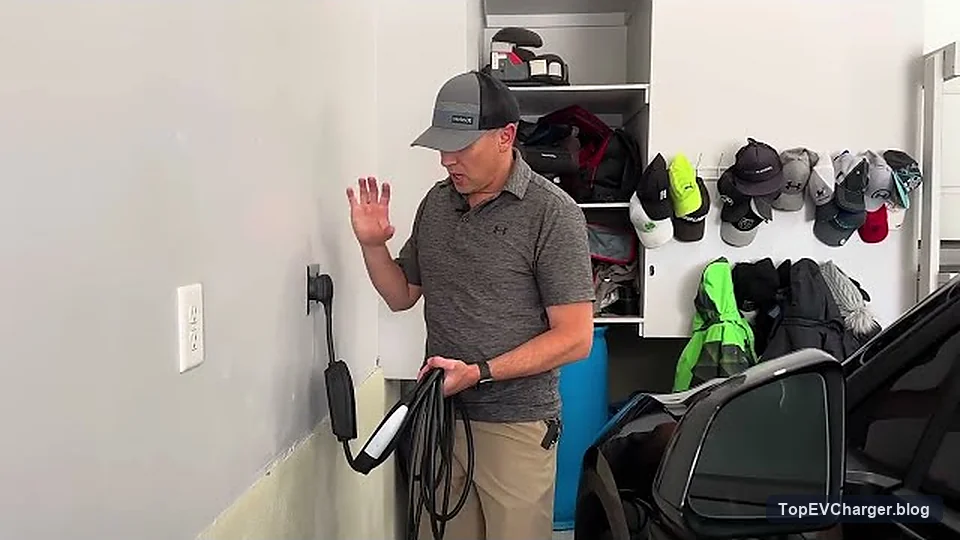
Conversely, the Tesla system integrates its electronics directly into a streamlined housing. This design choice prioritizes minimal weight and simple storage over advanced multi-voltage industrial flexibility.
Both units convert alternating current into high-voltage direct current safely. However, internal component sizing dictates how long each system can sustain maximum output without overheating.
The Porsche unit supports 19.2 kW, while details covered in our Tesla Mobile Connector review show a peak of 7.68 kW using a standard NEMA 14-50 receptacle.
Porsche integrates a heavy wall-dock bracket that locks the controller securely, minimizing strain on the industrial-grade terminals, while Tesla relies primarily on direct plug-in support without a rigid structural wall mount.
Internal topology differs significantly regarding conversion efficiency and thermal dissipation pathways, with Porsche employing active microprocessors to monitor internal bus temperatures continuously during heavy 40-amp continuous loads.
- Modular cable architecture on the Porsche unit
- Integrated lightweight housing on the Tesla model
- Both convert AC residential power efficiently
Internal Circuitry and Voltage Regulation
Advanced voltage regulation protects your vehicle battery during irregular grid fluctuations. The Porsche hardware features industrial-grade sensors that monitor ground continuity and internal thermal loads constantly.
Tesla utilizes streamlined microcontrollers that effectively manage standard household currents. While less robust for heavy industrial use, this setup ensures reliable performance on standard residential circuits.
- Industrial-grade thermal sensors in Porsche hardware
- Streamlined microcontrollers inside Tesla units
Real-World Charging Speeds and Thermal Thresholds
Delivering consistent amperage requires superior thermal management inside the charger casing. The Porsche system handles up to forty amperes continuously without triggering safety slowdowns during hot summer days.
Tesla equipment typically caps output at thirty-two amperes on standard mobile setups. This lower threshold generates less internal heat, making it exceptionally reliable for overnight residential charging routines.
Users should always verify local breaker sizing before running these units at peak capacity. Exceeding continuous load limits can cause premature thermal degradation in older home wiring.
Delivering maximum amperage requires robust thermal management to prevent resistive heating degradation, prompting Porsche to implement dual temperature sensors directly inside the interchangeable power plug housings.
As noted within our Tesla Wall Connector review, the mobile unit throttles current output automatically if ambient garage temperatures exceed 50 degrees Celsius, protecting internal relay components.
Actual vehicle charging speeds vary due to onboard inverter conversions, yet Porsche consistently maintains higher sustained wattage delivery when paired with heavy-gauge supply lines and dedicated 50-amp breakers.
- Forty-amp continuous delivery from Porsche hardware
- Thirty-two-amp conservative limit on Tesla devices
- Thermal thresholds dictate sustained charging speeds
Managing Heat Dissipation in Enclosed Garages
Enclosed garages trap ambient heat, forcing charging units to work harder. Porsche incorporates extensive aluminum heat sinking to dissipate thermal energy away from sensitive power semiconductors.
Tesla relies on a compact plastic enclosure with natural convection channels. Keeping the unit shaded and uncoiled ensures optimal airflow during high-demand summer charging sessions.
- Aluminum heat sinking on Porsche chassis
- Natural convection channels on Tesla housing
Portability, Ergonomics, and Cable Durability
Portability remains a primary selling point for secondary charging hardware, contrasting with systems evaluated in our Tesla Gen 3 Wall Connector review because this mobile unit is remarkably light.
The Porsche Mobile Charger Connect is notably heavier and bulkier. It is engineered primarily as a semi-permanent garage wall unit that can occasionally travel in the trunk.
Cable jacket materials also differ significantly between these two leading brands. Heavy-duty rubber compounds on the Porsche cable resist abrasion, while Tesla uses a flexible elastomer.
Frequent travelers value cable flexibility during freezing winter conditions, making Tesla's thermoplastic elastomer jacketed wiring a preferred choice for rapid coiling and compact trunk storage without cracking.
Porsche prioritizes rugged industrial durability over lightweight flexibility, utilizing a thicker outer sheath that withstands crushing forces up to specific vehicle weight thresholds in busy residential driveways.
Ergonomic handle designs dictate long-term user comfort, with Tesla featuring an integrated chargeport opening button, while Porsche relies on a mechanical latching lever requiring manual thumb actuation.
- Lightweight trunk-friendly profile from Tesla
- Heavy-duty semi-permanent build from Porsche
- Abrasion-resistant rubber versus flexible elastomer
Storage and Daily Handling Mechanics
Coiling thick copper cables in freezing weather tests material flexibility. Porsche cables maintain moderate pliability down to sub-zero temperatures, though they remain stiff until warmed up.
Tesla cables coil effortlessly due to a thinner overall outer diameter. This makes daily deployment and packing much faster for drivers who move their charger frequently.
- Sub-zero pliability testing on heavy cables
- Thin outer diameter for fast daily coiling
Connector Ecosystems and Vehicle Compatibility
Vehicle plug standards dictate how easily you can share equipment between different EV brands. Porsche ships its unit with a J1772 vehicle plug suitable for most non-Tesla electric vehicles.
Tesla utilizes its proprietary connector design natively on mobile units. Owners of non-Tesla vehicles must use certified adapters to utilize the Tesla Mobile Connector safely.
Choosing the right ecosystem prevents unnecessary adapter wear and electrical resistance. Always inspect adapter connection pins for signs of pitting or discoloration during routine maintenance.
Native connector geometry dictates physical compatibility; exploring options in our best Level 2 charger for Tesla picks shows Tesla utilizing proprietary plugs while Porsche relies strictly on J1772 architecture.
Utilizing adapters introduces potential resistance points and thermal expansion risks, making native plug matching crucial for maintaining maximum electrical throughput during extended overnight charging sessions safely.
Modern EV adoption trends increasingly demand cross-platform adaptability, yet both chargers handle mixed-fleet household environments differently through proprietary adapters or universal J1772 compliance standards.
- Native J1772 vehicle plug on Porsche hardware
- Proprietary connector design on Tesla mobile units
- Adapter usage requires careful thermal inspection
Adapter Safety and Voltage Drop Considerations
Using aftermarket adapters introduces additional resistance points into the charging circuit. High currents passing through worn adapter contacts can generate dangerous localized heat pockets.
Both manufacturers recommend inspecting connection points monthly. Keeping metal pins clean ensures efficient energy transfer and prevents premature equipment failure over time.
- Resistance points introduced by third-party adapters
- Monthly pin inspection prevents localized heat
Electrical Infrastructure and Circuit Requirements
Upgrading your garage electrical infrastructure requires understanding specific amperage draws. The Porsche system requires a robust NEMA 14-50 receptacle wired to a dedicated heavy-duty fifty-amp breaker.
Tesla units offer greater flexibility by including adapters for standard household outlets. You can plug directly into a basic wall socket while traveling or utilize a heavy circuit at home.
Consulting a licensed electrician before installation ensures your home electrical panel complies with modern building codes. Overloaded circuits present serious fire hazards during extended vehicle charging cycles.
Installing either unit safely demands strict adherence to the National Electrical Code, particularly regarding continuous load calculations on dedicated 50-amp circuits utilizing heavy copper wiring.
Porsche infrastructure setups often require specialized industrial wall adapters for maximum output, whereas Tesla standardizes its line execution around the ubiquitous NEMA 14-50 layout found in modern garages.
Ground fault protection mechanisms inside both controllers continuously monitor line imbalances, instantly tripping internal relays if ground continuity drops below safe impedance thresholds during stormy weather.
- Dedicated fifty-amp breaker required for Porsche
- Household outlet adapters included with Tesla
- Licensed electrician consultation ensures safety compliance
Assessing Home Electrical Panel Capacity
Older homes often feature one-hundred-amp service panels that struggle with continuous EV loads. Adding a high-draw Porsche charger may require a costly electrical panel upgrade.
Lower-draw Tesla settings place less stress on legacy residential electrical systems. Monitoring total home energy consumption prevents accidental main breaker trips during peak hours.
- One-hundred-amp panels may require service upgrades
- Lower-draw settings protect legacy residential panels
Smart Features and User Interface Design
Modern chargers incorporate digital displays and smartphone connectivity for remote monitoring. The Porsche Connect system features a crisp touchscreen interface for adjusting charging timers and power limits.
Tesla relies entirely on the vehicle's infotainment system and mobile app for controls. Eliminating physical screens on the charger body reduces potential failure points in harsh weather conditions.
Software updates delivered over the air improve device functionality continually. Ensuring your home Wi-Fi network reaches the garage guarantees seamless connectivity for smart charging features.
Smart connectivity transforms a basic utility into an energy management hub, with Porsche featuring an integrated color touchscreen display for local configuration and PIN protection.
Tesla integrates charging parameters seamlessly into the vehicle infotainment ecosystem, eliminating the need for a physical screen directly on the portable control box hardware unit.
Firmware updates deliver critical performance patches over the air, allowing both manufacturers to refine thermal throttling algorithms and grid synchronization protocols long after initial hardware purchase.
- Touchscreen interface on Porsche Connect hardware
- Smartphone-based management for Tesla equipment
- Over-the-air software updates enhance device longevity
Network Connectivity and Remote Diagnostics
Remote diagnostics allow technicians to troubleshoot hardware faults without an on-site visit. Porsche units communicate securely over home Wi-Fi networks to log energy usage and error codes.
Tesla hardware integrates tightly with the vehicle's cellular modem connection. This seamless pairing ensures reliable data transmission regardless of local garage Wi-Fi signal strength.
- Wi-Fi logging on Porsche Connect devices
- Cellular pairing through Tesla vehicle modems
Long-Term Reliability and Maintenance Protocols
Maximizing equipment service life requires adherence to basic preventive maintenance guidelines. Keeping charging connectors clean and free of dust prevents microscopic arcing during high-amperage sessions.
Porsche equipment features modular replacement parts that simplify out-of-warranty repairs. Replacing a damaged cable assembly costs significantly less than purchasing an entirely new charging station.
Tesla units are generally sealed assemblies designed for complete replacement if internal failures occur. Proper storage inside protective cases preserves both units for many years of service.
Routine maintenance involves inspecting plug pins for oxidation and ensuring wall receptacles show no signs of thermal discoloration or physical loosening over years of daily plugging.
Environmental sealing protects internal circuit boards from moisture intrusion, with both units carrying high IP-ingress protection ratings suitable for outdoor installation under covered carports.
Component lifespan directly correlates with thermal management effectiveness, minimizing capacitor degradation and solder joint fatigue during repetitive high-amperage cycles across extreme seasonal weather shifts.
- Modular replacement parts on Porsche hardware
- Sealed assembly design on Tesla mobile units
- Protective storage preserves long-term equipment health
Preventing Environmental and Physical Damage
Exposing charging gear to relentless direct sunlight and moisture accelerates outer jacket degradation. Mounting your mobile unit securely inside a sheltered garage extends operational lifespan dramatically.
Coiling cables loosely without tight sharp bends prevents internal copper wire fatigue. Avoid running heavy garage tires over dropped connector plugs to prevent catastrophic housing cracks.
- Sheltered garage mounting prevents jacket wear
- Loose coiling avoids internal copper wire fatigue
Decision Framework for Your Garage Setup
Selecting the ideal charger requires weighing your daily commute against home electrical capacity. Drivers with high-capacity European luxury vehicles benefit immensely from the robust output of Porsche hardware.
Conversely, motorists seeking simple plug-and-play travel convenience will appreciate Tesla engineering. Evaluating your long-term vehicle ownership plans ensures your charging investment remains relevant for years.
Always prioritize professional installation and proper safety certifications over upfront cost savings. A correctly engineered charging setup protects your valuable electric vehicle investment reliably every single night.
Selecting the ideal equipment depends on your daily mileage requirements, existing home electrical capacity, and whether you need multi-vehicle cross-compatibility within your primary residential garage.
Homeowners prioritizing rapid modular power customization often favor the Porsche ecosystem, while budget-conscious drivers seeking ultimate portability prefer the streamlined Tesla design for everyday commuting.
Evaluating total installation costs must encompass potential subpanel upgrades, permit fees, and industrial receptacle installations required to support maximum continuous amperage safely over the long term.
- Match charger output to your daily vehicle commute
- Evaluate long-term vehicle ownership and connector compatibility
- Prioritize professional installation and robust safety certifications
Finalizing Your Purchase and Installation Plan
Review your local utility rebate programs before purchasing heavy-duty charging hardware. Many energy providers offer significant financial incentives for installing networked residential charging stations.
Schedule a professional electrical inspection to confirm wire gauge and breaker ratings. Taking these proactive steps guarantees safe, efficient, and trouble-free electric vehicle ownership.
- Utility rebates offset residential installation expenses
- Professional electrical inspections guarantee complete safety
Frequently Asked Questions
Can I use the Porsche Mobile Charger Connect with non-Porsche electric vehicles?
Yes, because the unit utilizes a standard J1772 connector interface. You can charge almost any modern electric vehicle safely using this robust industrial hardware.
Does the Tesla Mobile Connector require a dedicated fifty-amp circuit?
No, it supports flexible household outlets as well as high-amperage NEMA 14-50 circuits. Using interchangeable adapters allows you to plug into standard residential wall sockets.
Which charger delivers faster charging speeds for daily use?
The Porsche Mobile Charger Connect delivers faster speeds by outputting up to 9.6 kW. The Tesla system generally caps its mobile output at 7.6 kW.
Are these mobile chargers weatherproof for outdoor installation?
Both units feature weather-resistant housings rated for outdoor use. However, mounting them inside a sheltered garage protects them from direct sunlight and extreme precipitation.
What maintenance is required to keep these chargers operating safely?
Inspect the cable insulation and connector pins monthly for wear. Keeping the plug contacts clean ensures efficient energy transfer and prevents dangerous overheating.