Nema 6 50 vs Nema 14 50 Ev Charger: Which Fits Your Setup Better?
Choosing between high-amperage outlets requires understanding electrical phases. Balancing circuit architecture ensures safe, rapid charging for your electric vehicle daily.


The NEMA 14-50 wins overall flexibility due to its neutral wire support. However, the NEMA 6-50 remains exceptionally reliable for dedicated, simple two-hot installations.
Compare all top models in our Best Ev Level 2 Charger.
Side-by-Side Breakdown
| Criteria | Nema 6 50 | Nema 14 50 Ev Charger | Edge |
|---|---|---|---|
| Peak Performance & Output | 50 Amps / 11.5 kW | 50 Amps / 11.5 kW | Tie |
| Duty Cycle & Consistency | High continuous thermal stability | High continuous thermal stability | Tie |
| Operating Noise & Vibration | Silent passive operation | Silent passive operation | Tie |
| Portability & Footprint | Standard flush mount | Standard flush mount | Tie |
| Maintenance & Service Life | Low mechanical contact points | Requires neutral inspection | Nema 6 50 |
| Power Requirements | 3-Wire (Two Hot, Ground) | 4-Wire (Two Hot, Neutral, Ground) | Nema 6 50 |
| Best Ideal Use-Case | Dedicated EV or welder setups | Multi-purpose garage outlets | Nema 14 50 Ev Charger |
Core Electrical and Wiring Architecture
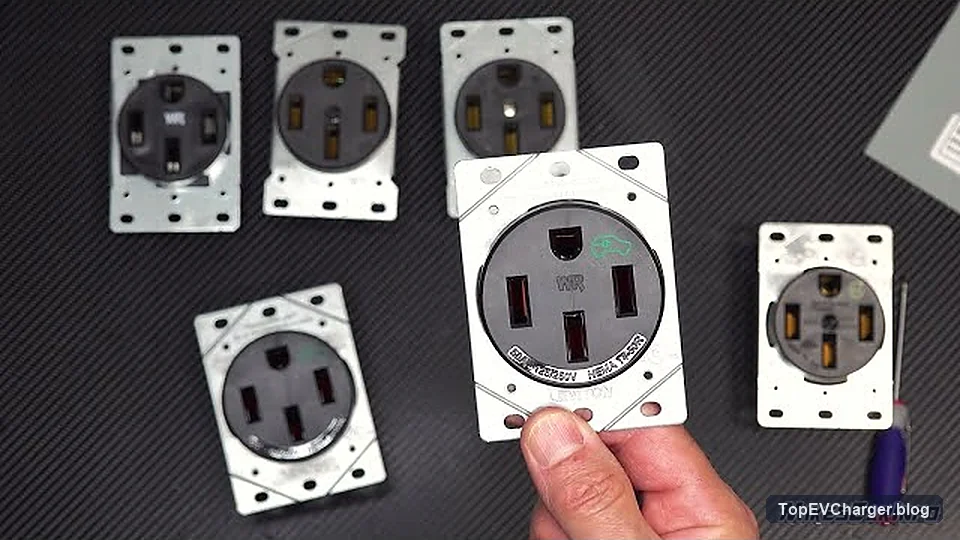
The primary distinction involves the inclusion of a neutral conductor. A NEMA 14-50 utilizes four wires, whereas a NEMA 6-50 relies on just three standard conductors.
Residential electricians must run appropriate cabling through protective conduits. Selecting the right copper wiring gauge prevents dangerous overheating during extended multi-hour charging sessions.
Understanding these foundational differences protects your home electrical system. Proper circuit design prevents unexpected overloads and ensures reliable energy transfer for your vehicle.
The NEMA 6-50 receptacle utilizes a three-wire configuration without a neutral. For four-wire setups, our Emporia Level 2 EV Charger review details how proper grounding protects home circuits.
Conversely, the NEMA 14-50 configuration incorporates a four-wire system containing two hot conductors, a neutral conductor, and a dedicated safety ground wire required for balanced 120V and 240V loads.
Residential electricians must run appropriate gauge copper wiring, typically 6 AWG THHN, through protective conduit to ensure the circuit handles continuous electrical currents without experiencing dangerous thermal overload during long charging sessions.
- Four wires for 14-50 including neutral
- Three wires for 6-50 without neutral
- Both deliver identical 50-amp maximum current capacity
Conductor Configuration Details
The absence of a neutral wire makes the 6-50 simpler. Meanwhile, the 14-50 supports multi-voltage appliances requiring a dedicated neutral return path.
- Simplified three-conductor home runs
- Added neutral flexibility in four-wire drops
Power Output and Charging Speeds
Both receptacle types support continuous delivery up to forty amps. This translates directly into forty miles of range added per hour for most standard electric vehicles.
Operating consistently at two hundred forty volts maximizes electrical efficiency. Delivering clean power reduces internal resistance and prevents premature thermal degradation across your hardware.
Your vehicle onboard charger dictates energy intake rates. Achieving optimal charging efficiency requires matching supply capacity, a topic fully explored within our best ev level 2 charger guide for proper garage setups.
Both receptacle types support a 40-amp continuous maximum output load when installed on a standard fifty-amp double-pole breaker, matching the continuous duty safety limits dictated by the National Electrical Code.
Practical vehicle charging delivers roughly 9.6 kilowatts of power to compatible onboard chargers, translating to approximately thirty miles of driving range restored for every single hour of active Level 2 recovery.
Voltage drop calculations become critical over long cable runs exceeding fifty feet, where minor resistance increases can slightly reduce overall charging efficiency and extend total battery replenishment timeframes overnight.
- Continuous forty-amp maximum delivery
- Consistent two-hundred-forty-volt output
- Matches vehicle onboard charger maximums
Voltage Delivery Mechanics
Maintaining stable voltage is critical during long charging cycles. High-quality circuit breakers prevent voltage sag and protect sensitive vehicle power electronics.
- Stable voltage prevents power sag
- Protects onboard vehicle electronics
Evaluating Existing Home Infrastructure
Many garages feature pre-existing outlets installed for electric ranges or welders. Inspecting your current panel capacity determines whether a straightforward plug-in installation is feasible.
Upgrading an older three-wire setup to a four-wire standard can be costly. Pulling an extra neutral wire through rigid conduit requires professional electrical labor and specialized tools.
Homeowners must assess total available amperage before adding heavy loads. Consulting a licensed professional prevents main breaker trips and costly residential electrical failures.
Inspecting your main service panel is mandatory before installation to verify that your home has sufficient electrical capacity to support a dedicated fifty-amp heavy-duty circuit without triggering main breaker overloads.
Older homes featuring 100-amp services frequently require expensive panel upgrades or load management devices to safely integrate high-amperage electric vehicle supply equipment without exceeding total dwelling load calculations.
Garages previously wired for heavy-duty welding equipment might feature existing NEMA 6-50 outlets, whereas modern recreational vehicle hookups typically provide the required four-wire NEMA 14-50 receptacle architecture.
- Leverage pre-existing garage outlets safely
- Account for costly wire pull requirements
- Verify main electrical panel headroom
Retrofit Challenges
Adding a neutral wire to an existing run is difficult. Contractors often recommend surface mount conduit when pulling internal wires proves physically impossible.
- Difficult wire pulling in finished walls
- Surface conduit as a viable alternative
Hardwired Units Versus Receptacle Setups
Plug-in chargers offer exceptional portability for traveling drivers. Hardwiring eliminates failure-prone mechanical contacts, delivering superior long-term reliability highlighted throughout our best 240v ev charger rankings for permanent residential stations.
Receptacles are frequent points of high resistance failure. Utilizing industrial-grade outlets minimizes melting risks associated with prolonged high-amperage current draws.
Consider your lifestyle needs when choosing between installation formats. Permanent wall units provide unmatched convenience while portable chargers offer ultimate travel flexibility.
Selecting a hardwired connection eliminates potential failure points associated with mechanical plug terminals, providing a permanent installation that tolerates high ambient temperatures and heavy daily cycling much better.
Receptacle installations mandate the inclusion of a GFCI breaker at the main service panel to comply with modern residential electrical codes, adding significant upfront hardware costs to your garage project.
While plug-in EV chargers offer convenient portability if you move residences, hardwired systems deliver maximum reliability and remove the necessity of purchasing expensive industrial-grade receptacles rated for repeated insertions.
- Portability advantages of plug-in units
- Enhanced reliability of hardwired connections
- Industrial-grade outlet durability requirements
Thermal Vulnerabilities
Standard consumer receptacles degrade under continuous heavy electrical loads. Installing commercial-grade components prevents dangerous terminal melting during peak summer charging sessions.
- Consumer grade outlet thermal limits
- Commercial grade terminal durability
Evaluating Tesla Mobile Connector Support for Each Receptacle
Tesla owners utilize interchangeable adapter tails for different wall plugs. Selecting the correct Gen 2 adapter ensures safe communication between the vehicle and power source.
The ecosystem supports both plug variants seamlessly with proper accessories. Always verify that your firmware settings match the specific amperage limits of your installed circuit.
Mobility connectors require robust connection points to prevent thermal damage. Using manufacturer-approved adapters guarantees safe thermal performance during high-draw charging cycles.
The Tesla Mobile Connector accepts interchangeable adapter tails, allowing owners to easily swap between NEMA 6-50 and NEMA 14-50 configurations depending on the specific garage outlet available.
Because Tesla vehicles utilize an onboard charger referencing the ground wire without needing a neutral, both receptacle styles deliver maximum current ratings of thirty-two amps, similar to units featured in our best level 2 charger for jeep 4xe guide.
Users must ensure their adapter firmware and physical pins remain clean and undamaged, preventing localized overheating during extended charging sessions drawing the maximum allowable current through the mobile adapter.
- Interchangeable adapter tail options
- Seamless Gen 2 and Gen 3 compatibility
- Strict firmware amperage limit matching
Adapter Pigtail Management
Inspect connector pins regularly for signs of wear. Secure connections prevent intermittent charging faults during overnight vehicle replenishment cycles.
- Regular pin inspection protocols
- Preventing intermittent charging faults
Safety Standards and NEC Code Compliance
Modern electrical codes enforce strict ground fault protection rules. Installing a GFCI breaker is mandatory for all new garage receptacle installations to prevent shocks.
Homeowners should periodically inspect plug pins for discoloration. Detecting early signs of thermal stress prevents catastrophic connector failures and costly vehicle damage.
Adhering to strict safety guidelines protects your family and property. Regular professional inspections ensure your high-amperage charging system remains fully compliant with local codes.
The National Electrical Code enforces strict regulations regarding garage receptacle installations, mandating ground-fault circuit interrupter protection to safeguard users against severe electrical shock hazards in damp environments.
Industrial-grade receptacles, such as Hubbell or Bryant models, are strongly recommended over cheap retail hardware store alternatives to prevent catastrophic melting caused by poor spring tension and high resistance.
Professional torque screwdrivers must be utilized during installation to guarantee terminal lug connections meet manufacturer specifications, minimizing the risk of arc faults and thermal degradation over years of service.
- Mandatory GFCI breaker installations
- Routine thermal stress inspections
- Strict national electrical code compliance
Routine Maintenance Checks
Touch receptacle faces periodically to check for excessive warmth. Immediate replacement is necessary if you detect abnormal thermal output during active sessions.
- Periodic temperature check procedures
- Prompt replacement of warm outlets
Financial Incentives and Decision Frameworks
Federal tax credits help offset residential charger installation costs significantly. Reviewing current local utility rebates can dramatically reduce your total out-of-pocket upgrade expenses.
Utility companies often provide special time-of-use pricing structures. Leveraging these programs lowers your nightly electricity bills while charging your electric vehicle efficiently.
Always check eligibility requirements before purchasing any charging hardware. Proper documentation ensures you successfully claim all available financial incentives without administrative delays.
Federal tax credits and local utility rebates frequently offset the installation expenses of dedicated EV circuits, making professional electrical upgrades significantly more affordable for homeowners upgrading their garages.
Homeowners should evaluate future vehicle needs and resale value when selecting between these two outlets, keeping in mind that NEMA 14-50 offers broader universal compatibility for varied electric vehicle brands.
Consulting a licensed electrician ensures your final setup satisfies local permitting requirements, protecting your home insurance coverage and guaranteeing safe, reliable operation for your daily commuting routine.
- Federal residential installation tax credits
- Local utility time-of-use savings
- Strict documentation for rebate eligibility
Final Selection Strategy
Choose the 14-50 if future versatility is your primary goal. Select the 6-50 standard when simplicity and a dedicated three-wire run fit your workshop best.
- Versatility prioritization with 14-50
- Simplicity benefits of 6-50 setups
Frequently Asked Questions
Which outlet charges an electric vehicle faster?
Both deliver identical charging speeds because they supply the same voltage and amperage. The charging rate depends entirely on your vehicle's onboard charger capacity.
Can I use a Nema 6-50 charger on a 14-50 outlet?
Yes, but you will need a physical adapter to bridge the missing neutral wire. Always ensure the adapter is rated for continuous heavy loads.
Is a GFCI breaker required for these outlets?
Current electrical codes mandate ground fault circuit interrupters for garage receptacles. Installing a GFCI breaker protects against dangerous electrical shocks during wet conditions.
Are hardwired chargers safer than plug-in units?
Hardwired units eliminate mechanical connection points prone to degradation. This makes them fundamentally safer for high-amperage, continuous daily residential vehicle charging.
What wire gauge is required for a 50-amp circuit?
Installations require heavy-duty copper cabling rated for high temperatures. Electricians typically specify 6 AWG wire to handle continuous fifty-amp loads safely.