Nema 14 50 vs. Hardwired Ev Charger: Which Fits Your Setup Better?
Choosing how to power your electric vehicle at home requires evaluating electrical connections carefully. This guide compares plug-in NEMA 14-50 receptacles with permanent hardwired EV charging hardware.

Hardwired EV chargers offer superior continuous power delivery and eliminate thermal risks associated with mechanical plugs. However, NEMA 14-50 outlets provide unmatched flexibility if you relocate frequently.
Compare all top models in our Best Ev Level 2 Charger.
Side-by-Side Breakdown
| Criteria | Nema 14 50 | Hardwired Ev Charger | Edge |
|---|---|---|---|
| Peak Performance & Output | Up to 40 amps continuous | Up to 48+ amps continuous | Hardwired Ev Charger |
| Duty Cycle & Consistency | Moderate thermal resistance | Superior direct thermal flow | Hardwired Ev Charger |
| Operating Noise & Vibration | Standard quiet operation | Completely silent operation | Tie |
| Portability & Footprint | High portability and flexibility | Permanent fixed installation | Nema 14 50 |
| Maintenance & Service Life | Requires periodic blade checks | Minimal long-term maintenance | Hardwired Ev Charger |
| Power Requirements | Requires 50-amp breaker and GFCI | Configurable 50 or 60-amp circuit | Hardwired Ev Charger |
| Best Ideal Use-Case | Renters and frequent movers | Homeowners seeking maximum speed | Hardwired Ev Charger |
Electrical Architecture and Delivery Speed
Hardwired units bypass standard outlet limitations, permitting continuous delivery up to 48 amps safely. NEMA 14-50 receptacles typically cap continuous indoor loads at 40 amps due to rigorous National Electrical Code restrictions.
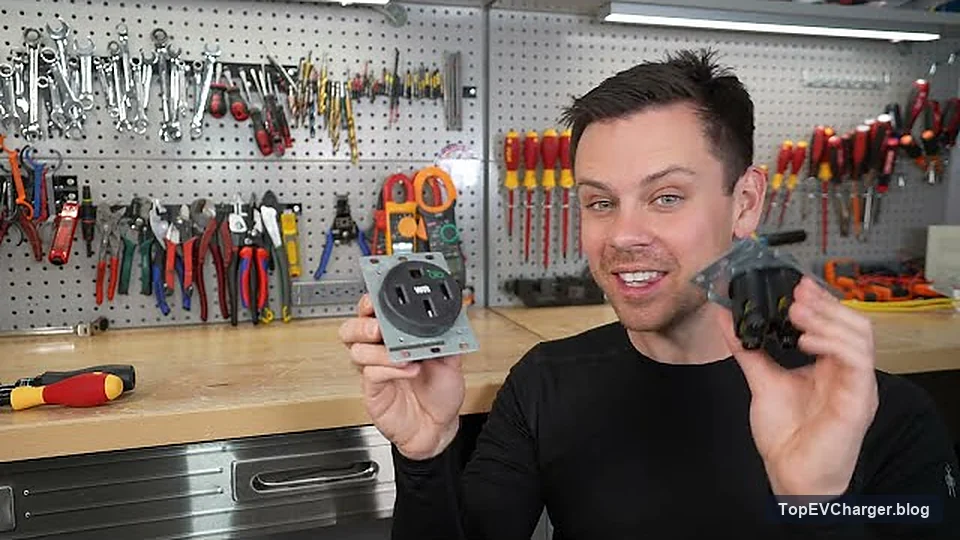
Permanent connections eliminate vulnerable mechanical interface points inside the garage wall enclosure. Reduced resistance prevents destructive micro-arcing over extended daily charging cycles under heavy electrical current loads.
Hardwired chargers connect directly to the circuit breaker, eliminating resistance points found in standard plugs. This continuous connection supports a steady 48-amp continuous load without thermal throttling or voltage drop issues.
Conversely, NEMA 14-50 receptacles introduce mechanical spring tension interfaces. Under high electrical demand, these terminal blades can experience localized resistance, requiring a heavy-duty industrial-grade outlet to prevent dangerous melting.
- Hardwired systems deliver up to 11.5 kW safely.
- NEMA 14-50 circuits require mandatory ground fault protection.
- Permanent wiring lowers overall thermal resistance values.
Circuit Breaker Demands and Sizing
Installing either system demands strict adherence to local electrical safety codes and correct wire sizing. A dedicated 60-amp breaker suits 48-amp hardwired installations, while 50-amp breakers protect standard 14-50 setups.
Conductors must utilize copper cabling rated for at least 75 degrees Celsius. Aluminum wiring requires specialized anti-oxidant paste and careful torque specifications to prevent terminal loosening over time.
- Copper conductors prevent oxidation issues.
- Torque specifications ensure secure terminal connections.
Thermal Dynamics and Long-Term Durability
Sustained high-amperage electrical flow generates substantial heat within any residential charging infrastructure. Hardwired terminals distribute this thermal energy directly into heavy-duty distribution blocks designed for longevity.
Receptacles feature spring-loaded contacts that degrade after hundreds of insertion cycles. This mechanical fatigue increases electrical resistance, accelerating thermal breakdown and creating a severe localized fire hazard.
Electrical current passing through a mechanical plug interface naturally generates heat cycles. Over thousands of charging sessions, expansion and contraction loosen terminal connections, increasing resistance and accelerating thermal degradation risks across time.
Hardwired units bypass removable prongs entirely by using compression terminal blocks. These secure bolted connections maintain uniform pressure, effectively mitigating hot spots and ensuring safe operation through decade-long service intervals without manual torque checks.
- Spring contacts lose tension over years of use.
- Direct lugs maintain stable contact pressure permanently.
- Thermal imaging reveals hotspots at outlet blade interfaces.
Environmental Sealing and Garage Placement
Garages experience extreme seasonal temperature fluctuations and elevated humidity levels that impact electrical components. Hardwired chassis often feature superior ingress protection ratings against dust and airborne moisture intrusion.
Outdoor installations demand weather-resistant enclosures regardless of your connection choice. A hardwired unit mounted outside removes the vulnerable plug interface from direct rain and snow exposure entirely.
- Dust seals protect internal circuit boards.
- Weather ratings prevent moisture-induced faults.
Installation Complexity and Upfront Labor
Setting up a NEMA 14-50 receptacle involves running heavy cable to a standard heavy-duty box. Electricians complete this task quickly using off-the-shelf components available at any local hardware distributor.
Hardwired installations require mounting the EVSE enclosure directly to wall studs and hard-landing service wires. This method eliminates material costs for expensive industrial-grade plugs and weather covers.
Installing a NEMA 14-50 setup requires a licensed electrician to run heavy gauge wire, mount a weatherproof box, and install a GFCI breaker. This NEC requirement adds significant upfront labor costs to your project estimate.
Hardwiring eliminates the costly GFCI breaker requirement at the main panel because internal safety monitors handle fault protection. Consequently, your technician spends less time wiring, balancing the total installation investment between both connection methods.
- Plug setups require expensive industrial-grade receptacle boxes.
- Hardwired connections bypass plug acquisition expenses completely.
- Professional labor times vary by wall construction type.
Code Compliance and Breaker Mandates
Modern electrical standards mandate GFCI circuit breakers for all garage-installed 240-volt receptacles. These specialized breakers frequently experience nuisance tripping when paired with EV chargers that feature internal monitoring.
Hardwired units bypass external GFCI breaker requirements because compliant internal safety interrupters handle fault protection. This architectural distinction saves homeowners significant upfront equipment expenses during initial installation.
- GFCI breakers add substantial equipment cost.
- Internal monitors satisfy modern safety standards.
Portability, Relocation, and Future Flexibility
Renters and frequent movers strongly favor NEMA 14-50 receptacles for logistical flexibility. You can learn more details inside our Emporia NEMA 14-50 review before choosing your portable charging setup.
Hardwired units are permanently anchored to a single residential location by code and physical installation. Dismantling a hardwired EVSE requires an electrician and leaves behind capped service wires inside a junction box.
Choosing a plug-in EV charger allows you to easily unplug the unit during a home relocation. You can pack your advanced charging hardware into a moving truck and retain your portable power asset.
Hardwired systems are permanently affixed to the garage wall, making relocation labor-intensive. Uninstalling the device requires shutting off grid power, unscrewing internal lugs, and patching conduits to preserve your electrical panel integrity.
- NEMA plugs travel easily between residential properties.
- Hardwired units demand professional decommissioning during home sales.
- Portable EVSE units offer dual-voltage travel adapter options.
Upgrading Charging Speeds Later
Transitioning from a 40-amp plug setup to a faster 48-amp hardwired unit requires significant rewiring. Planning your electrical capacity correctly during the initial construction phase prevents costly secondary modifications.
Evaluate your vehicle's onboard charger capacity before selecting your infrastructure footprint. Many commuter cars cannot accept more than 32 amps, rendering higher-amperage installations unnecessary for daily routine charging.
- Vehicle limits dictate maximum charging speed.
- Initial planning avoids future electrical upgrades.
Maintenance Protocols and Component Lifespan
Routine maintenance for NEMA 14-50 outlets involves inspecting the faceplate for discoloration and checking plug tension. Homeowners must replace worn receptacles immediately upon detecting any signs of thermal degradation.
Hardwired EV chargers demand minimal ongoing maintenance beyond periodic visual inspections of the output cable insulation. The absence of mechanical plug interfaces drastically reduces potential failure points over decades of service.
Receptacle-based charging stations demand periodic physical inspections to detect discoloration, warping, or loose terminal screws. You can compare safe alternatives within our best 240V EV charger roundup to find robust hardware designs.
Hardwired charging units operate virtually maintenance-free once installed by a licensed professional. Without exposed pins or external plug interfaces, internal components experience less oxidation and enjoy a significantly extended operating lifespan.
- Inspect outlet blades monthly for heat discoloration.
- Verify terminal torque settings during annual service checks.
- Protect charging cables from garage vehicle tire crush.
Troubleshooting Common Connection Faults
Loose terminal screws cause high resistance faults that trip circuit breakers or melt plastic housings. Professional electricians use calibrated torque screwdrivers to secure every wire connection properly during setup.
Modern smart chargers log internal temperature metrics and warn users of thermal anomalies. Monitoring these software diagnostics helps prevent catastrophic equipment failure before physical damage occurs to your electrical panel.
- Torque screwdrivers ensure reliable terminal security.
- Software logs track internal operating temperatures.
Efficiency, Footprint, and Garage Ergonomics
Both installation methods deliver high electrical efficiency exceeding 95 percent under normal operating conditions. This reliable performance closely matches recommendations found throughout our Jeep 4xe charger guide.
Hardwired chargers provide a cleaner aesthetic profile on your garage wall without dangling cables or bulky plugs. This streamlined footprint improves everyday ergonomics when wrapping heavy charging cords after use.
Wall space in busy residential garages is always at a premium. Hardwired chargers offer a streamlined physical footprint because they omit the bulky plastic housing required for heavy-duty receptacle boxes and safety covers.
Plug-in models require rigid feeder cables running down to a low outlet box, which can interfere with nearby shelving or vehicle bumpers. This arrangement creates unnecessary ergonomic clearance hazards in tight parking stalls.
- Hardwired units integrate docking holsters cleanly.
- Receptacle cords hang lower and stretch further.
- Wall space utilization favors permanent compact mountings.
Managing Cable Strain and Daily Wear
Heavy gauge copper cables exert constant downward mechanical pull on whatever fixture supports them. Hardwired chassis anchor this weight securely, protecting internal circuit boards from damaging mechanical vibration stress.
Unsecured plug-in cables place leverage force directly onto the outlet blades and wall box. Over time, this constant physical strain weakens electrical connections and compromises overall residential safety margins significantly.
- Chassis mounts absorb cable weight safely.
- Plug blades endure constant downward mechanical leverage.
Decision Framework for Your Specific Workload
Select a hardwired unit if you own a home and prioritize maximum safety. Many top options are featured in our best EV level 2 charger guide for reliable daily performance.
Choose a NEMA 14-50 receptacle if you lease your residence or anticipate moving within a few years. This flexible approach preserves your investment by letting you pack up your charging hardware effortlessly.
Select a hardwired configuration if you own a long-range electric vehicle requiring maximum amperage for overnight replenishment. This choice guarantees optimal power delivery, zero thermal throttles, and robust daily charging reliability.
Choose a NEMA 14-50 receptacle if you plan to move residences within a few years or want the freedom to swap charging units easily. This flexible approach protects your initial hardware investment.
- Permanent homes benefit most from hardwired infrastructure.
- Rental properties require removable plug-based charging solutions.
- High-mileage commuters need reliable uninterrupted 48-amp delivery.
Balancing Upfront Costs and Long-Term Value
While NEMA outlets save money on initial hardware and breaker selection, replacement costs accumulate. Hardwired units represent a higher upfront investment that pays dividends through exceptional reliability and extended operational longevity.
Consult a licensed local electrician to evaluate your existing home panel capacity before purchasing equipment. Professional load calculations ensure your electrical service can support your chosen charging speeds without overloading.
- Panel capacity dictates maximum possible amperage.
- Long-term reliability outweighs minor initial savings.
Frequently Asked Questions
Can I plug a portable EV charger into an existing NEMA 14-50 outlet safely?
Yes, you can safely utilize any standard 240-volt receptacle provided the branch circuit features proper heavy-gauge copper wiring and a dedicated breaker rated specifically for continuous electrical loads.
Always inspect the outlet monthly for any signs of thermal discoloration to guarantee safe daily operation over extended periods.
What makes hardwired EV chargers more reliable than plug-in alternatives?
Hardwired chargers connect directly to your home electrical service panel using rigid conduit or armored cable without intermediate mechanical plugs.
This permanent configuration eliminates high-resistance failure points that typically cause thermal breakdown and premature equipment failure during heavy vehicle charging sessions.
Do hardwired installations require expensive ground fault circuit interrupter protection?
Modern electrical building codes frequently require expensive ground fault circuit interrupter breakers for all residential garage-installed 240-volt receptacles. Choosing a permanent hardwired installation successfully bypasses external GFCI breaker mandates because compliant internal safety interrupters handle all necessary fault protection seamlessly.
Which charging setup works best for renters or frequent property movers?
Renters and frequent property movers should prioritize plug-in NEMA 14-50 charging setups to maintain equipment portability. You can easily disconnect your portable EVSE unit and take your hardware investment with you when relocating to a different residential property.
What is the maximum amperage difference between these two connection types?
Hardwired units support maximum continuous output up to 48 amps safely, while standard NEMA receptacles are restricted to 40 amps by electrical code. Selecting a permanent hardwired connection maximizes your charging speed and provides superior long-term thermal reliability.