Load Management vs. Dedicated Panel EV Charger: Which Fits Your Setup Better?
Choosing between software-driven power throttling and physical electrical service expansion requires analyzing your home's total electrical footprint. Load management protects existing infrastructure while dedicated panels maximize raw charging speed.

Dedicated panels offer unmatched speed for high-mileage drivers with available utility headroom. Conversely, load management serves as the optimal choice for constrained residential panels needing EV integration without costly service upgrades.
Compare all top models in our Best Ev Level 2 Charger.
Side-by-Side Breakdown
| Criteria | Load Management | Dedicated Panel EV Charger | Edge |
|---|---|---|---|
| Peak Performance & Output | Throttled dynamically (16A to 32A) | Unthrottled maximum continuous (40A to 48A) | Dedicated Panel Ev Charger |
| Duty Cycle & Consistency | Modulates based on home draw | Sustains peak output indefinitely | Dedicated Panel Ev Charger |
| Operating Noise & Vibration | Silent electronic monitoring | Standard breaker hum under load | Load Management |
| Portability & Footprint | Compact CT clamps and controller | Substantial sub-panel or box expansion | Load Management |
| Maintenance & Service Life | Relies on firmware and sensors | Direct physical copper connections | Dedicated Panel Ev Charger |
| Power Requirements | Works within existing service limits | Requires available amperage headroom | Load Management |
| Best Ideal Use-Case | Older homes with 100A or 200A limits | New construction or high-mileage commuters | Depends on Home Capacity |
Understanding Your Home Electrical Service Capacity
Residential electrical systems operate under strict amperage limits dictated by main service panels. Older homes frequently feature 100-amp or 200-amp services that struggle to support continuous heavy loads from modern electric vehicles.
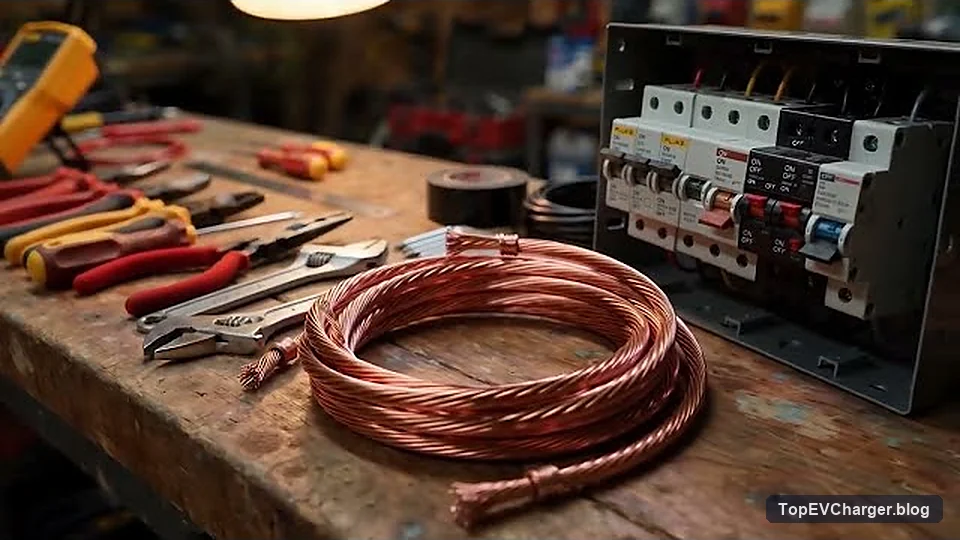
Before purchasing Level 2 hardware, electricians must perform a standard load calculation. This diagnostic process evaluates all major household appliances to determine your home's true available electrical capacity during peak usage hours.
Ignoring these calculations risks tripping main breakers or damaging service entrance cables. Safety standards mandate that continuous residential loads never exceed eighty percent of panel capacity without proper engineering mitigations installed.
Before installing any Level 2 EV charging system, licensed electricians must perform an official NEC 220 load calculation on your existing home infrastructure to determine true available service capacity under real conditions.
Choosing level 2 chargers for 200-amp panels ensures your home safely powers continuous HVAC loads, kitchen appliances, and daily driving needs without overloading legacy residential service infrastructure.
Failing to account for concurrent household demand risks tripping main utility breakers or accelerating thermal degradation inside aging busbars, making accurate baseline power audits an absolute safety prerequisite for every single residential garage installation.
- Main breaker current limitations
- Utility service drop capacities
- Standard NEC residential calculations
Assessing Main Breaker Thresholds
Main breaker ratings dictate the absolute maximum current your entire house can draw simultaneously. When simultaneous appliance usage spikes, available headroom for EV charging drops precipitously below standard Level 2 requirements.
Upgrading this threshold requires coordinated utility disconnects and meter socket replacements. Many homeowners prefer avoiding this disruptive process by adopting smart circuit monitoring equipment instead of heavy utility overhauls.
- Simultaneous household draw spikes
- Utility disconnect coordination needs
How Dynamic Load Management Solves Capacity Limits
Dynamic load management systems utilize current transformers clamped onto service lines to monitor real-time electrical draw. These devices modulate EV charging current dynamically as household power consumption fluctuates throughout the evening.
By throttling amperage down during peak cooking or HVAC cycles, the system prevents overloads. This software-driven approach maintains compliance with the National Electrical Code without requiring expensive main service upgrades.
Installation requires mounting communication modules near the main breaker panel and pairing them via Wi-Fi or hardwired cables. Proper calibration ensures rapid response times when heavy household appliances suddenly activate.
Dynamic load management systems utilize smart current sensors clipped directly around your main service entrance conductors to monitor real-time household electrical consumption and prevent overloads without requiring expensive main service upgrades.
By properly connecting ct clamps around service wires, the system automatically reduces output current down to a safe minimum threshold whenever major household appliances activate.
This continuous hardware-level communication relies on hardwired RS-485 data cables or encrypted wireless mesh protocols to ensure lightning-fast modulation responses that strictly comply with all national electrical code requirements for automated power reduction.
- Real-time CT clamp monitoring
- Automatic current throttling features
- NEC compliance via smart software
Software Throttle Mechanics
Smart controllers measure incoming current continuously to calculate remaining household capacity. When total draw nears the threshold, the unit reduces EV pilot signals instantly.
This automated adjustment prevents nuisance tripping while keeping your vehicle safely charging at lower speeds.
- Continuous current measurement
- Automated EV pilot signal reduction
The Engineering Reality of Dedicated Panel Upgrades
Reviewing your home electrical panel capacity requirements helps determine if installing a dedicated sub-panel or upgrading your service entrance can deliver unthrottled 48-amp continuous power.
Contractors replace existing breaker boxes with heavy-duty panels featuring extra spaces and higher amperage ratings. This physical expansion eliminates bottlenecks, ensuring your vehicle charges at peak efficiency every single night.
However, this physical intervention involves substantial labor costs and prolonged power outages. Local utility companies must often disconnect service drops while electricians perform the complex wiring changeovers.
Upgrading to a dedicated subpanel or boosting your main service entrance to 400 amperes provides uncompromised electrical headroom, allowing continuous 48-amp EV charging alongside heavy residential loads without ever throttling vehicle replenishment speeds.
This physical infrastructure overhaul involves pulling heavy copper feeder cables through rigid conduit, mounting robust steel enclosures, and coordinating extensive utility shutoffs alongside municipal inspection scheduling to satisfy strict local building codes.
While panel expansions eliminate software complexity and reliance on Wi-Fi stability, they demand significant physical wall space, major structural alterations, and substantial capital investment for copper materials and certified electrician labor hours.
- Unthrottled 48-amp charging speeds
- Sub-panel and service upgrades
- Physical infrastructure expansion projects
Evaluating Physical Panel Space
Adding a dual-pole breaker requires physical slots inside your existing distribution panel. Cramming circuits into overcrowded boxes violates safety standards and increases thermal degradation risks across neighboring breakers.
Installing a dedicated sub-panel resolves physical space shortages while establishing a clean foundation for future high-draw equipment.
- Dual-pole breaker slot requirements
- Thermal degradation prevention
Practical Hardware Paths and Installation Methods
When evaluating hardware paths, homeowners often choose dynamic load balancing chargers to safely maximize available electrical capacity without triggering costly main service upgrades.
Alternatively, listed EV load management devices offer automated modulation for maximum convenience. These systems dynamically utilize every available amp safely without risking thermal overload on your main service feeds.
When neither software throttling nor lower speeds suffice, a full panel upgrade remains unavoidable. Choosing the right path depends on your daily driving mileage and existing home electrical headroom.
Selecting the right installation path requires matching physical garage constraints with your vehicle's onboard charger capacity, keeping cable runs short to minimize voltage drop over extended distances from the main distribution board.
For load management deployments, technicians must configure current transformer orientation accurately to prevent phase imbalance errors that could otherwise trigger erratic throttling behaviors or false overcurrent fault shutdowns during peak usage periods.
Dedicated subpanel installations necessitate proper torque application using calibrated screwdrivers on all terminal lugs, ensuring every mechanical screw meets manufacturer torque specifications to eliminate high-resistance joints and dangerous localized overheating.
- Fixed lower amperage settings
- Listed automated load managers
- Complete electrical service upgrades
Evaluating Thermal Limits and Safety Standards
High-amperage continuous loads place immense thermal stress on circuit breakers and wire terminations. Proper thermal management requires using temperature-rated copper conductors and torque-verified mechanical connections during installation.
Dedicated panels isolate EV circuits cleanly, reducing heat concentration inside overcrowded main breaker enclosures. Meanwhile, load management systems incorporate fail-safe hardware defaults that drop charging current to zero if sensor communication fails.
Continuous high-amperage loads test the thermal endurance of circuit breakers, requiring UL 2565 certification and robust thermal-magnetic trip curves to prevent nuisance tripping while safely managing prolonged heat accumulation in enclosed spaces.
Infrared thermography inspections often reveal that subpanels and load management controllers must maintain adequate ambient ventilation clearances to prevent degradation of internal plastic components and maintain long-term operational safety margins.
- Thermal stress on conductors
- Torque-verified mechanical connections
- Fail-safe communication defaults
A Step-by-Step Decision Workflow for Homeowners
Making the final decision starts with calculating your exact overnight charging window requirements. High-mileage commuters needing rapid turnaround times will strongly benefit from investing in dedicated panel upgrades.
Conversely, standard commuters driving moderate daily distances can easily rely on load management solutions. Reviewing your utility rate structures and consulting certified master electricians will finalize your ideal installation strategy.
Begin your evaluation by auditing past utility bills and consulting a qualified electrician to map your total peak demand against your current service drop ampacity before committing to either an expensive panel upgrade or a smart controller.
If your physical space and budget permit, a dedicated panel delivers ultimate reliability, whereas dynamic load management offers an efficient engineering workaround for constrained properties unable to support additional continuous loads without costly utility service alterations.
- Overnight charging window analysis
- Daily commuting distance review
- Master electrician consultations
Frequently Asked Questions
Does load management reduce EV charging speed?
Yes, dynamic load management systems actively throttle your charging amperage whenever heavy household appliances like HVAC units or electric ovens spike simultaneously during peak evening hours.
This intelligent software adjustment completely prevents dangerous main breaker overloads while still maintaining safe continuous power delivery throughout your standard overnight charging window.
When is a dedicated panel upgrade strictly necessary?
A dedicated panel upgrade becomes strictly necessary when your main service entrance lacks physical breaker spaces and your daily mileage demands unthrottled 48-amp charging speeds.
Professional electricians evaluate your utility drop capacity to confirm whether heavy physical infrastructure expansion is the only viable path forward.
Are load management systems compliant with the National Electrical Code?
Certified load management systems are fully compliant with National Electrical Code standards when properly installed by licensed professionals. These UL-listed devices automatically monitor service loads to ensure continuous currents never exceed legal threshold limits established by local building authorities.
Can I install a load management device myself?
Installing load management equipment involves working inside live electrical panels with high-voltage service lines present. Due to severe electrocution and arc-flash hazards, safety standards mandate that certified electrical contractors perform all hardware installations and CT clamp integrations.
Which option is more cost-effective in the long run?
Load management systems generally prove more cost-effective because they eliminate expensive utility service upgrades and extensive drywall repairs. However, high-mileage drivers may ultimately find that investing in dedicated panel capacity provides better long-term charging efficiency and operational reliability.