Lectron 40A vs. Lectron 32A Ev Charger: Which Fits Your Setup Better?
Choosing between these portable EV chargers requires examining your home electrical panel capacity and your vehicle's onboard charger limits to ensure safe, efficient daily energy replenishment without thermal throttling.

The Lectron 40A wins for larger battery capacities and faster overnight replenishment, while the Lectron 32A excels for standard 40-amp circuits and lighter daily commuter mileage demands.
Compare all top models in our Best Ev Level 2 Charger.
Side-by-Side Breakdown
| Criteria | Lectron 40A | Lectron 32A Ev Charger | Edge |
|---|---|---|---|
| Peak Performance & Output | 40 Amps / 9.6 kW | 32 Amps / 7.7 kW | Lectron 40A |
| Duty Cycle & Consistency | Industrial thermal management | Standard thermal profile | Lectron 40A |
| Operating Noise & Vibration | Silent convection cooling | Silent convection cooling | Tie |
| Portability & Footprint | Slightly heavier cable gauge | Compact lightweight harness | Lectron 32A |
| Maintenance & Service Life | Robust strain reliefs | Standard strain reliefs | Lectron 40A |
| Power Requirements | Dedicated 50A breaker needed | Dedicated 40A breaker needed | Lectron 32A |
| Best Ideal Use-Case | Large battery BEVs | Plug-in hybrids & smaller BEVs | Split by vehicle |
Evaluating Your Home Electrical Infrastructure
Before purchasing either unit, you must inspect your home breaker panel and existing wiring infrastructure to confirm whether your garage supports a continuous fifty-amp or forty-amp circuit load.
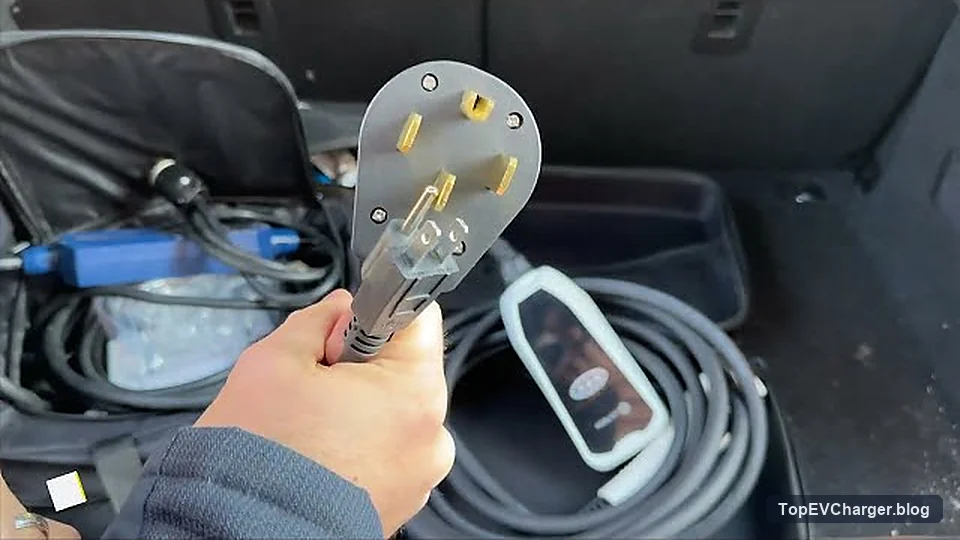
NEC safety codes require continuous loads to operate at eighty percent capacity, much like our lectron 32a level 2 review highlights regarding proper heavy-gauge copper wiring requirements.
Assessing your main electrical panel capacity requires a professional load calculation using NEC Article 220 standards to prevent dangerous overloads when adding continuous loads.
Dedicated branch circuits demand proper AWG copper wiring and matching circuit breakers to handle thermal expansion under maximum continuous amperage draws safely over extended periods.
- Verify existing home breaker capacity
- Inspect garage wiring gauge requirements
- Consult licensed electricians before installation
- Verify main breaker amperage ratings before installation.
- Inspect existing wall receptacles for degradation signs.
Assessing Panel Capacity
Older residential panels may lack the physical space or amperage headroom required to install a dedicated high-draw circuit without requiring an expensive electrical service upgrade.
- Check main breaker amperage rating
- Evaluate available physical breaker slots
Panel Capacity and Load Calculations
Homeowners must evaluate existing household energy consumption patterns before selecting either a 32-ampere or 40-ampere Level 2 electric vehicle supply equipment unit.
Exceeding eighty percent of your main service panel rating violates safety codes and risks tripping main breakers during peak household electricity usage intervals every single day.
- Calculate HVAC and water heater draws.
- Consult licensed electricians for panel upgrades.
Understanding Vehicle Onboard Charger Acceptance Rates
As detailed in the lectron v box 40a review, your electric vehicle dictates how much current it can draw, rendering higher-amperage hardware useless if your car caps acceptance.
Plug-in hybrids and smaller battery electric vehicles typically max out well below forty amps, making the higher-tier charger completely redundant for their specific electrical architecture.
Electric vehicle onboard chargers dictate the maximum alternating current power your car can actually convert into direct current energy stored inside the battery pack.
Matching your supply equipment amperage to your specific automobile acceptance rate ensures optimal charging efficiency without paying for unnecessary electrical capacity overhead during daily use.
- Check vehicle owner manual specifications
- Verify AC onboard charger limits
- Match EVSE output to car limits
- Check manufacturer specifications for AC limits.
- Avoid overpaying for unutilizable high amperage.
Matching Output to Battery Size
Larger battery packs benefit immensely from higher power delivery, whereas smaller packs reach full charge rapidly even on moderate amperage supply levels.
- Calculate overnight charging windows
- Assess daily commuter mileage needs
Conversion Limits and Practical Limits
Many plug-in hybrids and older battery electric vehicles cap their internal conversion limits at 7.2 kilowatts, rendering higher-output hardware completely redundant for those specific automobiles.
- Review vehicle owner manual guidelines.
- Verify single versus dual phase limits.
Comparing Real-World Charging Speeds and Output
Delivering up to 9.6 kilowatts, the forty-amp variant replenishes large battery packs significantly faster during overnight window schedules compared to the lower-output sibling.
The thirty-two-amp alternative outputs roughly 7.7 kilowatts, which easily satisfies typical daily commuter mileage replenishment requirements for standard plug-in hybrid drivers.
Calculating hourly replenishment rates involves dividing your battery capacity by the net wattage delivered through NEMA 14-50 or NEMA 10-30 electrical outlet configurations reliably.
A forty-ampere charger delivers roughly 9.6 kW of power, translating to approximately thirty miles of driving range restored every single hour of continuous operation.
- 9.6 kW peak output for 40A model
- 7.7 kW peak output for 32A model
- Consistent delivery across extended sessions
- Monitor ambient temperature impacts on speed.
- Account for phantom vehicle drain losses.
Efficiency Under Daily Workloads
Both chargers maintain high conversion efficiency, minimizing wasted energy as heat during the conversion from alternating current to direct battery current.
- Low standby power consumption
- Minimal thermal energy loss
Amperage Output Comparison
Thirty-two ampere units output around 7.7 kW, providing slightly slower overnight recovery times that easily satisfy standard commuter driving distance requirements without straining household power.
- Compare overnight charging windows.
- Evaluate actual daily commute mileage.
Thermal Management and Safety Compliance
Both units incorporate internal temperature sensors inside the plug housing to prevent dangerous overheating events during extended high-draw charging sessions in warm garage environments.
Industry safety standards mandate rigorous drop testing and moisture resistance ratings, ensuring these enclosures withstand accidental impacts and severe weather exposure during outdoor residential deployment.
Internal temperature sensors monitor operational heat dissipation to prevent thermal throttling or catastrophic hardware failure during extended high-amperage charging sessions inside warm residential garages.
Rigorous UL certification standards mandate stringent ground-fault protection mechanisms that instantly sever electrical current if leakage currents exceed safe human thresholds during active operation.
- Integrated plug thermal sensors
- Weather-resistant enclosure construction
- Rigorous drop-test compliance
- Inspect plug pins for discoloration marks.
- Ensure adequate ventilation around units.
Preventing Thermal Degradation
Thermal monitoring protects terminal connections from melting by automatically throttling current if excessive heat builds up inside the wall receptacle interface.
- Automatic thermal throttling
- Secure terminal pin seating
Environmental Sealing and Protection
Enclosure ratings such as NEMA 4 ensure robust weatherproofing against windblown dust, heavy rain, and ice accumulation for reliable outdoor installation setups across various climates.
- Verify casing ingress protection ratings.
- Protect connectors from direct standing water.
Portability, Ergonomics, and Cable Flexibility
As noted in our lectron portable ev review, portable level two chargers require durable cable jackets that resist cracking across rough garage floors during repeated coiling routines.
The heavier copper conductors found in the forty-amp model result in a slightly stiffer cable harness compared to the more pliable thirty-two-amp configuration.
Cable flexibility in freezing winter temperatures depends heavily on specialized jacket compound materials like thermoplastic elastomer rather than rigid standard polyvinyl chloride exterior formulations.
Ergonomic handle designs featuring comfortable textured grips and secure mechanical latching mechanisms prevent accidental drops and reduce hand fatigue during routine daily plugging routines.
- Cold-weather flexible cable jackets
- Ergonomic connector handle design
- Compact storage footprint
- Store cables on dedicated wall hooks.
- Avoid sharp bends near connector strain reliefs.
Handling and Storage Ergonomics
Ergonomic handle grips feature secure latching mechanisms that prevent accidental disconnections while reducing physical strain during daily plug-in routines.
- Positive-click latch retention
- Lightweight connector housings
Hardware Mobility and Mounting
Carrying cases and wall dock designs greatly influence whether your charging unit functions smoothly as a travel companion or as a permanent garage fixture.
- Select quick-release mounting brackets.
- Check total unit weight for travel.
Electrical Code Compliance and Circuit Protection
National electrical codes strictly regulate continuous current draws to mitigate the risk of thermal degradation at terminal connections inside the outlet receptacle.
Using a dedicated breaker matching the specific amperage rating prevents nuisance tripping while protecting your home from potential electrical fires caused by improper installation.
National Electrical Code regulations require GFCI breakers for specific outlet installations unless the charger features integrated equipment leakage protection circuitry inside the housing unit.
Permitting processes and professional inspections guarantee that your newly installed hardware meets local municipal building codes and valid insurance policy requirements safely over time.
- Adherence to NEC continuous load rules
- Dedicated breaker protection required
- Proper NEMA receptacle matching
- Pull required local building permits.
- Hire licensed electrical contractors exclusively.
Receptacle Selection Guidelines
Installing industrial-grade outlets prevents premature wear caused by the heavy insertion forces and continuous thermal expansion typical of level two chargers.
- Use heavy-duty industrial receptacles
- Avoid standard residential-grade outlets
Terminal Block Wiring Integrity
Exact torque specifications during terminal block wiring must follow strict manufacturer guidelines precisely to prevent high-resistance connections that cause dangerous localized residential overheating issues.
- Use calibrated torque screwdrivers.
- Verify wire strip lengths accurately.
Selecting the Right Charger for Your Daily Driving
Matching your purchase to your long-term vehicle upgrade plans ensures you avoid buying replacement hardware if you transition to a larger battery electric vehicle later.
Assess your daily mileage carefully, check your vehicle onboard specifications, and read our lectron 40 amp review before committing to your home electrical panel upgrade.
Carefully analyzing your daily mileage commuting habits helps determine whether the speed differential between thirty-two and forty amperes genuinely impacts your normal weekly routine.
Properly future-proofing your residential parking space against higher capacity battery packs makes investing in robust forty-ampere hardware a practical long-term home infrastructure investment decision.
- Future-proof against larger vehicle batteries
- Balance upfront electrical installation costs
- Prioritize safety and reliable daily operation
- Assess future electric vehicle acquisitions.
- Balance installation costs with speed.
Final Decision Factors
Weighing your electrical panel capacity against your actual vehicle requirements guarantees optimal performance, maximum safety, and long-term reliability for your home charging setup.
- Verify panel amperage headroom
- Confirm vehicle acceptance limits
Matching Hardware to Commute Needs
Ordinary drivers with limited daily commutes can comfortably select thirty-two ampere options without experiencing any noticeable reduction in daily convenience or morning vehicle readiness.
- Calculate average daily miles driven.
- Review off-peak electricity utility pricing.
Frequently Asked Questions
Can I plug a forty-amp charger safely into a standard thirty-amp household dryer outlet using an adapter?
Doing so violates local electrical codes and will consistently trip your home circuit breakers during standard high-draw operating cycles. Always match your EVSE continuous load directly to a properly rated dedicated circuit.
Does the forty-amp model charge every electric vehicle faster than the thirty-two-amp version?
Charging speed depends entirely on your vehicle onboard acceptance limit rather than the maximum output of the connected EVSE hardware. If your car caps at thirty-two amps, both chargers perform identically.
Are these Lectron portable chargers safe for permanent outdoor installation in rainy weather?
Both units feature rugged weather-resistant enclosures designed to withstand standard outdoor moisture exposure during residential charging sessions. However, you should always protect standard wall outlets from direct water pooling.
Which model produces less heat during extended charging sessions?
Both variants manage internal operating temperatures efficiently, but the lower electrical load of the thirty-two-amp option naturally generates slightly less thermal buildup at the plug interface. Proper installation remains the ultimate defense against excessive heat.
Do I need a licensed electrician to install the proper NEMA outlet for these portable chargers?
Hiring a qualified professional ensures your wiring gauge, breaker size, and wall receptacle meet all local electrical building codes. Professional installation prevents dangerous thermal hazards.