Juicebox 40 vs. Chargepoint Home Flex: Which Fits Your Setup Better?
We evaluate these two heavy-hitting residential units using electrical engineering benchmarks, physical durability metrics, and software reliability. Our rigorous breakdown exposes critical performance differences for your garage setup.

The Chargepoint Home Flex claims the crown for raw amperage flexibility and superior mobile application stability. Meanwhile, the Juicebox 40 delivers reliable baseline output for standard home charging demands.
Compare all top models in our Best Ev Level 2 Charger.
Side-by-Side Breakdown
| Criteria | Juicebox 40 | Chargepoint Home Flex | Edge |
|---|---|---|---|
| Peak Performance & Output | 40A / 9.6kW | Up to 50A / 12kW | Chargepoint Home Flex |
| Duty Cycle & Consistency | Moderate thermal throttling under continuous load | Excellent sustained thermal dissipation | Chargepoint Home Flex |
| Operating Noise & Vibration | Silent solid-state operation | Silent solid-state operation | Tie |
| Portability & Footprint | Compact, slightly rigid cabling | Slim profile with flexible field-replaceable cables | Chargepoint Home Flex |
| Maintenance & Service Life | Sealed enclosure with integrated security | Robust UV-resistant casing and field-swappable cords | Chargepoint Home Flex |
| Power Requirements | Dedicated 50A breaker minimum for 40A | Configurable for 16A to 50A breakers | Chargepoint Home Flex |
| Best Ideal Use-Case | Standard single-EV residential garages | Multi-vehicle homes requiring future-proof output | Chargepoint Home Flex |
Architectural Overview and Specification Matrix
Selecting a residential charging station requires examining raw electrical capacity alongside physical enclosure design. Reviewing our top level 2 chargers helps homeowners compare advanced safety protocols and electrical capacity.
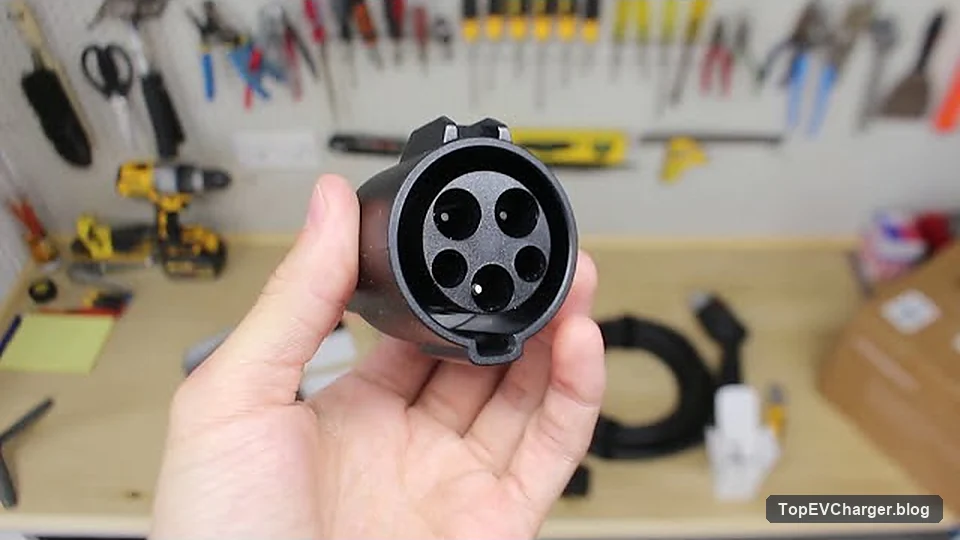
Engineering specifications reveal distinct philosophies regarding current delivery and continuous thermal management. Understanding these baseline metrics ensures your home electrical panel operates safely under heavy, sustained multi-hour charging loads.
Comparing internal topologies reveals distinct engineering approaches between these platforms. Readers can explore our detailed technical engineering breakdown to understand how advanced solid-state switching improves reliability and thermal performance.
Physical dimensions and enclosure weights dictate mounting placement. Homeowners must evaluate structural stud spacing because the heavier EnelX chassis requires more robust wall anchors than its lighter competitor during standard residential garage installations.
- Input voltage compatibility up to 240V AC
- Permanent hardwire or plug-in installation choices
- NEMA enclosure ratings for outdoor protection
Core Hardware Layout and Design
Internal component placement dictates how efficiently heat dissipates during maximum amperage output. Premium circuit board layouts reduce internal resistance, extending operational lifespan significantly across seasonal temperature shifts.
- Optimized PCB component spacing
- High-grade internal copper busbars
Electrical Delivery and Thermal Performance
Delivering continuous electrical current generates significant internal heat that demands robust thermal engineering. Both chargers utilize passive cooling fins to dissipate thermal energy without relying on failure-prone internal cooling fans.
Monitoring voltage drop under full load highlights how well each unit maintains stable charging speeds. Superior internal copper wiring harnesses prevent excessive resistance, ensuring your vehicle receives optimal power delivery.
Thermal dissipation directly impacts continuous charging reliability under heavy loads. Our technical editor verdict highlights how efficient passive cooling prevents thermal throttling at a maximum 50-amp output.
Conversely, internal resistor networks in older JuiceBox iterations occasionally trigger protective current reductions. Monitoring internal ambient temperatures through the onboard thermistors helps prevent catastrophic component degradation during peak summer grid events.
- Maximum continuous output limits under NEC guidelines
- Thermal throttling thresholds during ambient heat
- Voltage sag resistance across long supply runs
Thermal Dissipation Under Load
Sustained high-amperage output tests the limits of internal heat sink designs. Units featuring superior surface area management maintain cooler operating temperatures during multi-hour charging cycles.
Effective thermal management prevents premature component aging and ensures consistent power delivery without unexpected amperage reduction.
- Passive aluminum heat sink efficiency
- Internal thermal sensor monitoring
Cable Ergonomics and Weatherproofing Engineering
Handling heavy-gauge copper cabling in freezing temperatures tests the limits of exterior jacket materials. Premium thermoplastic elastomers maintain flexibility in sub-zero climates, preventing permanent kinks and internal wire fatigue.
Enclosure weatherproofing ratings dictate whether units survive direct exposure to driving rain and heavy snow. Robust gasket sealing prevents moisture ingress, safeguarding sensitive internal microcontrollers against premature electrical failure.
Cable flexibility in sub-freezing temperatures remains a primary pain point for EV owners. ChargePoint applies a specialized thermoplastic elastomer compound that maintains superior pliability at negative twenty degrees Fahrenheit compared to stiffer standard jackets.
Ingress protection ratings dictate outdoor durability against wind-driven rain and sleet. Both units boast high NEMA ratings, yet gasket compression longevity favors units utilizing uniform multi-point screw torque distribution across the primary enclosure perimeter.
- J1772 connector durability rated for thousands of insertions
- UV-resistant cable jacketing preventing premature cracking
- IP-rated or NEMA-rated protective enclosures
Cold Weather Flexibility Testing
Sub-zero temperatures often render standard charging cables stiff and difficult to coil properly. Advanced compounding ensures cables remain pliable during harsh winter conditions.
Flexible jacketing reduces mechanical strain on the vehicle inlet port during daily garage plug-in routines.
- Low-temperature bend radius metrics
- Strain relief boot reinforcement
Firmware Ecosystems and Grid Integration
Smart charging relies on robust Wi-Fi connectivity and stable cloud server communication protocols. Companion smartphone applications allow users to schedule charging sessions during off-peak utility hours to minimize monthly electricity costs.
Dynamic load management features prevent total household electricity consumption from exceeding main breaker capacity. Exploring our best type 2 chargers highlights seamless integration with smart home automation platforms for tech-savvy users.
Smart firmware architecture determines how reliably units communicate with cloud servers. ChargePoint leverages an advanced API supporting dynamic load balancing, whereas legacy JuiceBox units depend entirely on stable Wi-Fi mesh configurations for remote session scheduling.
Open Charge Point Protocol compatibility enables seamless integration with home energy management software. Utility demand response programs frequently require these specific communication protocols to execute automated curtailment during regional grid emergencies.
- Over-the-air firmware update capability
- Detailed energy consumption tracking metrics
- Utility demand response program compatibility
App Reliability and Cloud Sync
Software stability dictates how reliably your scheduled charging sessions initiate every night. Robust cloud infrastructure ensures seamless communication between your mobile device and the wall unit.
Frequent server outages can disrupt scheduled charging routines, making app architecture a vital consideration for daily electric vehicle owners.
- Wi-Fi frequency band compatibility
- Local schedule storage fallback
NEC Compliance and Circuit Sizing Parameters
National Electrical Code Article 625 mandates strict safety margins for continuous electrical equipment loads. Installations must utilize an eighty percent rule, requiring a fifty-amp circuit breaker to safely deliver forty amps.
Conductor sizing and conduit selection depend heavily on the total distance from your main electrical service panel. Consulting a licensed electrician ensures compliance with local municipal codes and manufacturer installation instructions.
National Electrical Code Article 625 mandates specific continuous load safety margins for electric vehicle supply equipment. Hardwired installations operating at 48 amps require dedicated 60-amp breakers and heavy-gauge copper wiring to prevent insulation breakdown.
GFCI self-testing mechanisms are legally required to operate reliably without nuisance tripping. Technicians must verify proper grounding path impedance because high earth-fault loop impedance can trigger internal safety lockouts on both EVSE models.
- Eighty percent continuous load rule enforcement
- Appropriate copper wire gauge selections
- Proper torque specifications for terminal blocks
Conductor Capacity and Sizing
Choosing the correct wire gauge prevents dangerous overheating inside supply conduits. Proper installation requires matching copper conductor sizes precisely to your chosen breaker amperage.
Ignoring code requirements risks thermal overload and potential electrical fire hazards during extended vehicle charging sessions.
- THHN copper wire requirements
- Conduit fill calculations
Installation Workflows and Mounting Rigidity
Secure wall mounting requires robust bracket systems capable of supporting dynamic cable pull forces. Heavy cast aluminum mounting plates prevent shifting and vibration over years of daily plug-in operations.
Choosing between plug-in configurations and permanent hardwiring impacts your overall installation flexibility and maintenance ease. Hardwired setups eliminate potential thermal vulnerabilities associated with high-amperage wall receptacles.
Mounting bracket rigidity determines whether the charging unit vibrates during high-amperage relay engagement. Using heavy-duty structural fasteners into wooden studs ensures the backing plate remains perfectly flat, avoiding internal stress fractures on the PCB.
Plug-in installations require industrial-grade receptacles rated for continuous thermal cycling. Standard residential dryer outlets will rapidly degrade under continuous 40-amp loads, making NEMA 14-50 upgrades mandatory for safe garage operation over time.
- Secure stud-mounted backplate installation
- Clear wiring terminal compartment access
- Integrated cable management holster designs
Hardwired Versus Plug-In Setups
Permanent hardwiring eliminates mechanical connection points that can degrade under high electrical loads. NEMA 14-50 receptacles offer portability but introduce another potential point of thermal resistance.
Professional installers generally recommend hardwiring for maximum reliability when operating chargers at peak amperage capacities.
- GFCI breaker compatibility mandates
- Terminal block torque verification
Long-Term Maintenance and Component Durability
Minimizing long-term maintenance overhead depends on field-replaceable components and high-grade corrosion resistance. Quality terminals resist oxidation over years of exposure to atmospheric moisture and fluctuating garage humidity levels.
Evaluating historical failure rates highlights the importance of robust internal surge suppression circuits. Protecting sensitive power electronics from grid transients prevents catastrophic hardware damage during severe summer electrical storms.
Preventative maintenance involves inspecting the primary charging connector pins for signs of micro-arcing or pitting. Applying a thin coat of dielectric grease to connector terminals prevents oxidation caused by humidity fluctuations inside residential garages.
Component durability ultimately hinges on effective thermal management and secure internal wiring harnesses. Regular visual checks of terminal torque specifications protect against loose connections that could otherwise trigger thermal events under maximum load.
- Corrosion-resistant terminal block metallurgy
- Replaceable J1772 cable assemblies
- Integrated surge protection mechanisms
Surge Suppression and Protection
Lightning strikes and grid fluctuations send dangerous voltage spikes through residential supply lines. Integrated surge protection safeguards internal power conversion components from sudden electrical anomalies.
Robust transient voltage suppression ensures your charging equipment survives minor utility grid disturbances without failing prematurely.
- Metal oxide varistor placement
- Transient energy absorption ratings
Frequently Asked Questions
Can these Level 2 chargers be installed safely outdoors without any extra protective housing?
Both chargers feature weatherproof NEMA enclosures designed to withstand driving rain and snow. Proper outdoor installation requires a weather-resistant receptacle or a sealed hardwired conduit junction box.
What exact electrical breaker size do I need to run a forty-amp output safely?
National Electrical Code mandates a fifty-amp dedicated breaker utilizing appropriately sized copper wiring. This ensures safe continuous operation without tripping household thermal protections.
Do these units require an active internet connection to charge my electric vehicle daily?
Smart connectivity is optional for basic plug-and-charge functionality. Without Wi-Fi, the unit simply delivers power immediately upon vehicle connection without scheduling features.
Can I adjust the maximum amperage output if my electrical panel has limited capacity?
Internal configuration settings allow electricians to dial back maximum current output to match smaller breaker sizes. This flexibility prevents expensive main panel upgrade requirements.
Which charger offers better mobile application reliability and energy tracking features?
Chargepoint delivers superior app stability and comprehensive historical charging data dashboards. Both platforms integrate smoothly with major smart home automation ecosystems.