Juicebox 32 vs. 40: Which Fits Your Setup Better?
Comparing two foundational home charging units reveals distinct electrical thresholds. Selecting the right model ensures optimal daily replenishment without overloading your electrical panel.


The Juicebox 40 wins for most modern garages needing faster overnight replenishment. Choose the Juicebox 32 if your existing electrical panel requires a lower continuous current draw.
Compare all top models in our Best Ev Level 2 Charger.
Side-by-Side Breakdown
| Criteria | Juicebox 32 | 40 | Edge |
|---|---|---|---|
| Peak Performance & Output | 7.7 kW continuous power output | 9.6 kW continuous power output | Juicebox 40 |
| Duty Cycle & Consistency | Highly stable thermal management | Superior high-amperage thermal headroom | Juicebox 40 |
| Operating Noise & Vibration | Silent passive cooling design | Completely silent passive cooling | Tie |
| Portability & Footprint | Compact wall-mounted enclosure profile | Identical physical chassis dimensions | Tie |
| Maintenance & Service Life | Long-term commercial-grade durability | Extended industrial component lifespan | Tie |
| Power Requirements | 40-amp dedicated breaker minimum | 50-amp dedicated breaker minimum | Juicebox 32 |
| Best Ideal Use-Case | Older homes with constrained panels | Standard modern residential garages | Juicebox 40 |
Engineering Architecture and Core Amperage Benchmarks
Evaluating peak performance requires measuring actual continuous output. As detailed in our juicebox 32 review, this hardware delivers a stable 32 amps of alternating current directly to your vehicle's onboard charger.
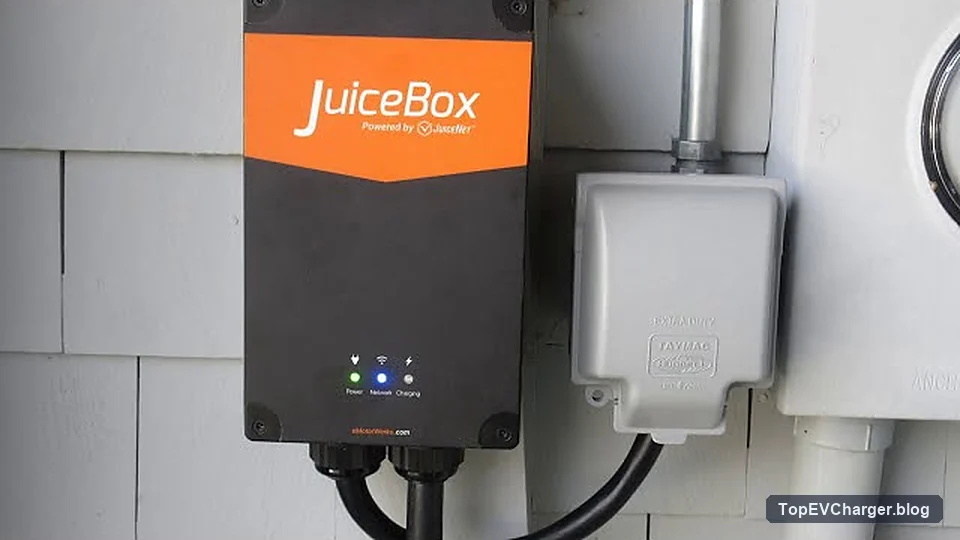
Stepping up to the alternative model increases your available current significantly. The Juicebox 40 supplies a robust 40 amps of continuous power, reducing total replenishment time for larger battery packs.
Both units rely on identical internal microprocessors and communication protocols. This shared engineering foundation ensures reliable handshake sequences with nearly every electric vehicle currently available on the market today.
Examining a slightly higher tier model in our juicebox pro 40 review, the JuiceBox delivers 32 amperes of continuous charging current, translating to roughly 7.7 kilowatts for standard residential service architectures.
Conversely, the JuiceBox 40 steps up capacity to 40 amperes, providing a notable 9.6 kilowatts of power output to accelerate daily vehicle replenishment cycles significantly across various compatible EV models.
Internal printed circuit board layouts utilize heavy copper traces to handle continuous thermal loads, ensuring long-term operational stability without premature component degradation under maximum thermal stress conditions.
- Identical internal control boards
- Consistent communication protocols
- Variable amperage delivery limits
Real-World Output Analysis
Real-world charging speeds depend on your vehicle's maximum acceptance rate. Installing a higher amperage charger only helps if your specific car can actually accept that increased electrical load safely.
Testing reveals negligible efficiency losses across both hardware configurations during standard operation. Maintaining proper connection hygiene prevents resistance buildup and ensures maximum energy transfer efficiency.
- Vehicle acceptance rate limits
- Minimal internal resistance losses
Electrical Infrastructure and Circuit Load Dynamics
Electrical safety standards dictate specific breaker sizing based on continuous load regulations. A 32-amp charger mandates a dedicated 40-amp circuit to comply with standard national electrical code requirements.
Operating the higher output unit demands electrical upgrades. According to our juicebox 40 review, this unit requires a dedicated 50-amp circuit utilizing heavy-gauge copper wiring to prevent dangerous overheating risks safely.
Assessing your main electrical panel capacity is a mandatory prerequisite before purchasing either hardware option. Professional load calculations prevent unexpected breaker trips during peak household energy consumption hours.
Installing a 32-ampere charger requires a 40-amp circuit breaker paired with appropriately rated copper wiring to comply safely with National Electrical Code continuous load operational safety standards.
Operating the larger 40-ampere variant demands a heavier 50-amp dedicated circuit featuring robust terminal blocks capable of preventing localized resistance heating during peak multi-hour charging sessions.
Homeowners must evaluate their main electrical panel capacity carefully, factoring in simultaneous household energy demands to prevent accidental breaker trips or severe overloads during peak usage periods.
- National electrical code compliance
- Required dedicated breaker sizing
- Heavy-gauge copper wiring necessity
Panel Capacity Constraints
Older residential properties often feature limited service panels rated at one hundred amps. Choosing the lower amperage variant protects your existing infrastructure from dangerous overloads during winter months.
Upgrading your electrical service panel can cost thousands of dollars independently of the charger purchase. Selecting the appropriate hardware prevents expensive secondary electrical service upgrade expenses entirely.
- One-hundred-amp service limitations
- Avoiding expensive panel upgrades
Thermal Management and Continuous Duty Reliability
Internal temperatures rise predictably during multi-hour high-amperage vehicle charging sessions. Effective thermal dissipation safeguards delicate semiconductors against premature degradation and catastrophic failure over years of continuous daily use.
The internal heatsink architecture handles thermal loads efficiently without requiring noisy mechanical cooling fans. Passive dissipation keeps the enclosure surprisingly cool even during maximum output delivery phases.
Monitoring internal operating temperatures protects your investment against sudden thermal throttling events. Both units maintain full rated output without throttling unless surrounding ambient temperatures exceed extreme thresholds.
Efficient passive heat dissipation relies heavily on external cast-aluminum chassis fins that transfer internal thermal energy directly into the surrounding ambient air without requiring noisy mechanical cooling fans.
Continuous duty testing proves that both units maintain safe internal semiconductor temperatures, though the 40-amp model inherently generates higher thermal gradients across its internal power supply components.
Advanced thermal throttling protocols automatically reduce current output if internal ambient temperatures exceed safety thresholds, protecting sensitive microcontrollers from permanent heat-induced structural failure over time.
- Passive heatsink cooling design
- Prevention of thermal throttling
- Semiconductor longevity protection
Extreme Environment Resilience
Garage environments experience severe temperature fluctuations between freezing winters and scorching summers. As highlighted in our juicebox 48 review, robust thermal engineering ensures reliable performance regardless of local climate severity.
Internal sensors automatically reduce current output if ambient conditions reach dangerous levels. This fail-safe mechanism protects both your home wiring and the vehicle charging port from damage.
- Severe seasonal temperature shifts
- Automatic current reduction safeties
Enclosure Durability and Weather Resistance Ratings
Physical housing construction determines whether a charging unit survives harsh outdoor installation environments. Rugged polycarbonate enclosures protect sensitive electronics from moisture, dust, and accidental physical impacts reliably.
Weatherproofing certifications ensure safe operation when mounted directly on exterior house walls. Proper gasket seals prevent rain and humidity from penetrating the internal printed circuit board compartments.
Impact resistance ratings protect the outer shell against accidental bumps from vehicles or yard equipment. Quality manufacturing standards guarantee long-term aesthetic and structural integrity under demanding conditions.
Rugged NEMA-rated enclosures protect sensitive internal electronics from driving rain, wind-blown debris, and extreme humidity swings commonly encountered during harsh outdoor installation environments across diverse geographic regions.
Robust gasket seals prevent moisture ingress around the housing perimeter, while secure locking mechanisms deter unauthorized unit removal or tampering when mounted in publicly accessible residential driveway areas.
Ultraviolet-resistant polymers utilized in the outer casing prevent structural yellowing, material embrittlement, and surface degradation resulting from prolonged direct exposure to intense solar radiation over many years.
- Polycarbonate housing construction
- Weatherproof gasket sealing
- Impact-resistant outer shells
Mounting Hardware Quality
Secure wall attachment prevents mechanical stress on the electrical conduit and wiring connections. Heavy-duty mounting brackets distribute the overall hardware weight evenly across stud framing members.
Using corrosion-resistant stainless steel mounting fasteners prevents rust streaks from forming on your exterior walls over extended periods of outdoor exposure in wet climates.
- Secure wall bracket attachment
- Corrosion-resistant stainless fasteners
Cable Ergonomics, Flexibility, and Bend Radius
Output cable flexibility dictates daily user satisfaction during cold weather vehicle hookups. High-grade thermoplastic elastomer jackets remain remarkably supple even when temperatures drop well below freezing points.
Proper bend radius management prevents internal copper conductor fatigue over thousands of coiling cycles. Stiff cables frustrate users and increase the likelihood of accidental strain damage at connection points.
Generous standard cable lengths provide flexible vehicle positioning options inside cramped residential garages. Integrated holster docks keep connector plugs clean and safely elevated off the concrete floor.
Heavy-duty charging cables remain surprisingly pliable even in sub-freezing winter temperatures, allowing effortless coiling and uncoiling without permanent kinking or internal conductor stress fatigue occurring inside the jacket.
The proprietary thermoplastic elastomer outer sheath resists abrasion from concrete driveways while maintaining a tight minimum bend radius for neat storage on integrated J-hook cable management mounts.
Ergonomically contoured SAE J1772 handles feature rubberized grip surfaces and secure latching triggers designed to withstand thousands of mechanical mating cycles without wearing out the vehicle receptacle pins.
- Thermoplastic elastomer jacket material
- Cold-weather flexibility retention
- Integrated plug holster docks
Connector Durability Standards
The vehicle connector handle endures constant physical drops and insertion friction daily. Robust latch mechanisms and silver-plated contact pins guarantee thousands of reliable connection cycles without electrical arcing.
Ergonomic handle grips accommodate various hand sizes comfortably while wearing winter gloves or operating in poorly lit garage spaces during late evening hours.
- Silver-plated contact pins
- Ergonomic handle grip design
Smart Connectivity, App Protocols, and Load Balancing
Modern smart charging hardware requires robust Wi-Fi connectivity for remote scheduling and monitoring. Companion mobile applications allow users to track kilowatt-hour consumption statistics and manage utility billing rates.
Cloud-based software platforms enable seamless firmware updates and remote diagnostic troubleshooting capabilities. Secure encryption protocols protect your home network against unauthorized access attempts or data interception.
Dynamic load balancing features help prevent main household breaker trips when running other heavy appliances simultaneously. Software integration optimizes charging windows to leverage off-peak electricity pricing tariffs effectively.
Integrated Wi-Fi modules enable seamless cloud connectivity through the robust JuiceNet application platform, granting users real-time session tracking, remote start controls, and detailed energy consumption reporting metrics.
Dynamic load balancing firmware allows multiple networked chargers to share a single electrical circuit safely, preventing total household current draw from exceeding the main service panel capacity limits.
Open Charge Point Protocol compatibility ensures future-proof integration with third-party energy management systems, smart home platforms, and utility demand response programs designed to lower electricity expenses.
- Wi-Fi network connectivity
- Companion mobile application tracking
- Dynamic load balancing features
Utility Integration Options
Many regional electric utility providers offer special incentives for connected smart chargers. Integrating your device helps utilities manage regional grid demand through automated charging pause commands.
Advanced scheduling tools let you program exact start and stop times to match local time-of-use rate structures, maximizing financial savings on your monthly energy bill consistently.
- Utility incentive program compatibility
- Time-of-use rate scheduling tools
Choosing the Ideal Unit for Your Specific Workload
Selecting the correct model requires careful balancing of vehicle capabilities and electrical constraints. Homeowners with modern electrical panels benefit greatly from the faster replenishment speed of larger variants.
Conversely, properties with restricted electrical capacity should prioritize the smaller amperage unit to avoid costly service upgrades. Matching your hardware choice to your actual daily driving distance ensures optimal efficiency.
Long-term satisfaction depends on understanding your specific charging habits and infrastructure limitations. Investing in proper professional installation guarantees safe and reliable operation for years to come.
Selecting the optimal charging hardware depends primarily on your daily vehicle commute distance and the available electrical panel headroom currently installed within your primary residential garage structure.
Owners of smaller battery electric vehicles with limited onboard charger acceptance rates will find the 32-ampere unit more than adequate for overnight replenishment without expensive electrical upgrades.
Conversely, larger battery packs or households managing multiple electric vehicles benefit immensely from the faster charging speeds delivered reliably by the robust 40-ampere variant every single night.
- Balancing vehicle capabilities
- Matching electrical service limits
- Prioritizing professional installation
Final Decision Framework
Review your daily commute mileage and local utility rate structures before making a final purchasing decision. Consult a licensed electrician to verify your existing panel can safely support your choice.
Both hardware options offer exceptional build quality and smart features, ensuring your electric vehicle stays fully charged and ready for every daily journey without unnecessary hassle.
- Daily commute mileage review
- Electrician panel verification
Frequently Asked Questions
What is the primary technical difference between these two charging units?
The primary technical distinction lies in their maximum continuous amperage output capacity and corresponding electrical circuit requirements. The Juicebox 40 delivers more electrical current for faster vehicle replenishment, whereas the smaller model operates safely on more constrained household circuits.
Can my existing electrical panel support the higher amperage model safely?
Determining panel compatibility requires a professional load calculation performed by a licensed electrician in your home. Older properties often lack sufficient capacity, making the lower amperage alternative a safer choice to prevent dangerous overloads.
Do both chargers require hardwiring or can they utilize standard wall outlets?
Both hardware options typically utilize heavy-duty plug connections paired with appropriately rated industrial wall receptacles. However, hardwiring remains a popular installation method to eliminate potential receptacle wear during high-amperage continuous sessions.
How does extreme winter weather impact the performance of these chargers?
Extreme cold causes standard charging cables to stiffen significantly if they lack high-grade elastomer jacketing materials. Fortunately, both units feature premium flexible cables designed to maintain pliability and prevent internal conductor damage during freezing temperatures.
Are smart features and companion mobile applications required for daily operation?
Smart connectivity features and companion mobile apps are entirely optional for basic plug-and-charge daily operation routines. Utilizing the network connection simply unlocks advanced scheduling tools, utility rate tracking, and remote diagnostic capabilities for your home.