Grizzl E Mini vs Grizzl E Classic: Which Fits Your Setup Better
Weighing the travel-friendly flexibility of the Grizzl-E Mini against the rugged stationary reliability of the Classic helps determine your ideal EV charging hardware.


Choose the Grizzl-E Classic for permanent residential installations, or select the Grizzl-E Mini if you require adjustable amperage output and multi-plug travel versatility.
Compare all top models in our Best Ev Level 2 Charger.
Side-by-Side Breakdown
| Criteria | Grizzl E Mini | Grizzl E Classic | Edge |
|---|---|---|---|
| Peak Performance & Output | 40A (9.6 kW) max output | 40A / 48A options available | Grizzl-E Classic |
| Duty Cycle & Consistency | Robust internal aluminum chassis | Heavy steel enclosure with high thermal mass | Tie |
| Operating Noise & Vibration | Completely silent passive cooling | Completely silent passive cooling | Tie |
| Portability & Footprint | Compact travel design with interchangeable plugs | Heavy stationary wall-mounted housing | Grizzl-E Mini |
| Maintenance & Service Life | Modular internal components, IP67 rating | NEMA 4 enclosure, fully repairable build | Grizzl-E Classic |
| Power Requirements | Requires NEMA 14-50 or adapter setups | Hardwired or NEMA 14-50 input feed | Grizzl-E Classic |
| Best Ideal Use-Case | Frequent road trips and multi-location charging | Dedicated home garage charging station | Grizzl-E Classic |
Physical Architecture and Enclosure Engineering
Evaluating the physical design reveals stark differences in how each unit handles daily wear. The Classic utilizes a heavy-duty cast aluminum enclosure built to withstand severe environmental impacts.
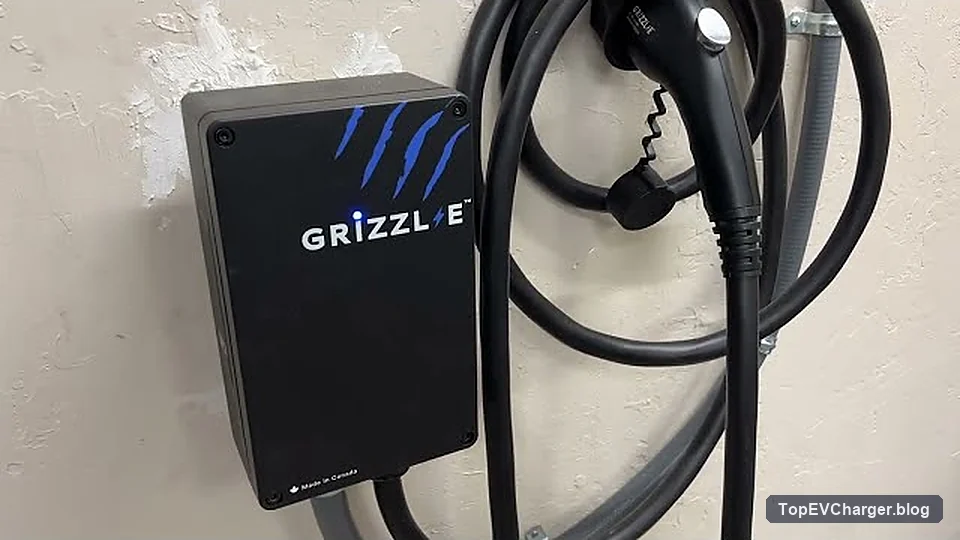
Conversely, the Mini adopts a smaller, more travel-oriented footprint without sacrificing structural integrity. Both units employ powder-coated metals designed to resist rust and severe outdoor weathering.
Internal potting compounds protect sensitive printed circuit boards from moisture and heavy vibration. This robust build quality ensures longevity across diverse residential and commercial deployment environments.
- Cast aluminum and steel construction resists severe mechanical impacts.
- IP67 ingress protection guards against heavy rain and dust intrusion.
- Interchangeable plug options on the Mini provide unmatched travel versatility.
Material Specifications and Weather Resistance
Outdoor placement demands strict adherence to NEMA standards for moisture and particulate defense. The Classic features a permanent wall-mounting bracket that secures the heavy chassis firmly.
The Mini relies on a lighter mounting plate designed for quick detachment and portable use. Both systems maintain operational integrity in sub-zero temperatures and high heat waves.
- NEMA 4 rating ensures protection against windblown dust and splashing water.
- Stainless steel hardware prevents corrosion in coastal marine environments.
Physical Architecture and Enclosure Engineering
As detailed in our grizzl-e classic review, the robust unit utilizes a heavy-duty cast aluminum enclosure rated for extreme impact resistance, while the Mini employs a compact chassis for portability.
Both units achieve an IP67 rating, ensuring total protection against heavy rainfall, dust ingress, and temporary immersion. However, the Classic features permanent wall-mounting brackets, while the Mini utilizes a detachable wall dock.
Internal components within the Classic are potted in premium thermal compound to dissipate heat uniformly. The Mini relies on passive airflow around its smaller footprint, demanding careful clearance during continuous high-amperage sessions.
Electrical Output Specifications and Current Limiting
Power delivery is fundamental to replenishing your vehicle battery efficiently overnight. The Classic offers configurations reaching up to 48 amperes, providing rapid charging speeds for large packs.
The Mini caps its maximum continuous output at 40 amperes to maintain compatibility with portable circuits. Both units utilize internal rotary switches for manual amperage adjustment during installation.
Accurate current limiting protects older home electrical panels from thermal overload conditions. Selecting the appropriate amperage requires verifying your upstream breaker and supply wiring capacity.
- Classic models support up to 48A delivery with hardwired configurations.
- Mini limits output to 40A to accommodate diverse portable receptacle ratings.
- Internal rotary switches allow simple manual amperage adjustments.
Amperage Selection and Circuit Protection
Matching the charger output to your electrical service prevents nuisance breaker trips. National Electrical Code guidelines mandate an 80 percent continuous load limit on all circuits.
Configuring a 40-amp charger requires a dedicated 50-amp branch circuit breaker. Always consult a licensed electrician before altering internal configuration switch positions.
- NEC compliance mandates proper breaker sizing for continuous loads.
- Incorrect jumper settings can cause premature thermal breaker fatigue.
Electrical Output Specifications and Current Limiting
The standard Grizzl-E Classic delivers a continuous output of 40 amperes on a dedicated 50-amp circuit. Internal DIP switches allow manual current adjustment down to 16 amps for older electrical panels.
As highlighted in our grizzl-e mini review, the device introduces versatile modularity through interchangeable input cables supporting NEMA 14-50 outlets. Its maximum output adjusts dynamically to prevent circuit overloads.
Both chargers maintain strict adherence to National Electrical Code guidelines regarding continuous load demands. Circuit breakers must be sized at 125 percent of the maximum selected amperage configuration.
Thermal Management and Duty Cycle Resilience
Managing internal heat buildup is critical for maintaining safe continuous high-amperage charging sessions. Neither unit incorporates noisy cooling fans, relying entirely on passive thermal dissipation through the metal housing.
The massive surface area of the Classic casing acts as a giant heatsink. This design prevents thermal throttling even during extended summer charging cycles at maximum output.
Internal thermistors monitor component temperatures and automatically reduce current if overheating occurs. Such passive cooling mechanisms eliminate moving parts that could eventually fail mechanically.
- Passive cooling designs eliminate mechanical fan failure points entirely.
- Large metal housings act as efficient thermal dissipation heatsinks.
- Internal thermistors safeguard circuitry against excessive ambient heat.
Continuous Load Performance Under Stress
Extended multi-hour charging sessions test the thermal limits of power electronics. The Classic maintains stable internal temperatures due to its superior mass and surface area.
The Mini handles continuous loads effectively despite its smaller physical envelope. Proper wall clearance ensures unimpeded airflow around the chassis for optimal cooling.
- Stable thermal management prevents unexpected charging session interruptions.
- Adequate wall spacing optimizes natural convective cooling airflow.
Thermal Management and Duty Cycle Resilience
According to our grizzl-e smart charger review, operating under heavy loads generates heat at internal relay contacts. The Classic manages this through its massive heatsink housing, acting as a thermal radiator.
The Mini utilizes internal thermal sensors that actively monitor circuit board temperatures. If internal thresholds exceed safe operating limits, the device automatically throttles current delivery to prevent catastrophic hardware failure.
Neither unit incorporates active cooling fans, eliminating mechanical failure points in dusty or wet garages. This passive design relies entirely on convective cooling across the outer metallic and polymer surfaces.
Cable Flexibility and Cold-Weather Handling
Handling thick charging cables in freezing winter temperatures requires specialized insulation materials. Both chargers utilize premium output cables designed to remain flexible below freezing without cracking.
The standard output cable length measures twenty-five feet to ensure effortless vehicle reach. Storing the cable properly on the integrated holster prevents kinks and internal conductor damage.
As evaluated in our grizzl-e duo review, coiling the heavy cable around the enclosure keeps your garage clean. High-strand-count copper conductors inside the jacket minimize electrical resistance and power loss.
- High-grade insulation prevents stiffening in sub-zero winter weather.
- Twenty-five-foot reach accommodates awkward garage parking configurations.
- Integrated holsters prevent mechanical strain on the output cable.
Conductor Construction and Strain Relief
Robust strain relief boots protect the cable entry points from repeated bending stress. Fine copper strands ensure optimal conductivity and prevent localized hot spots along the run.
Routine inspection of the outer jacket identifies cuts or abrasions early. Replacing damaged cables promptly prevents safety hazards and electrical short circuits.
- Flexible strain relief boots prevent internal wire fatigue.
- High-strand copper maximizes electrical transfer efficiency.
Cable Flexibility and Cold-Weather Handling
Premium megaflex cables come standard on both charging units, engineered to remain pliable in sub-zero temperatures. Traditional rubber jackets often stiffen significantly, but these specialized thermoplastic elastomers resist winter cracking.
The Classic typically features a longer 24-foot cable configuration, accommodating awkward parking alignments in multi-vehicle residential garages. Managing this length in freezing weather requires proper coiling around wall-mounted hangers.
Conversely, the Mini often pairs with a shorter 18-foot cable to reduce total travel weight. This reduction minimizes strain on portable hanging brackets and facilitates rapid storage inside trunk travel bags.
Installation Requirements and Hardwiring Protocols
Installing Level 2 charging equipment demands careful planning and adherence to safety codes. The Classic supports both plug-in installation via a NEMA receptacle and permanent hardwired connections.
The Mini typically relies on interchangeable plug pigtails for versatile temporary deployments. Permanent installations eliminate plug connection resistance and potential thermal failure points over time.
Torque screwdrivers must be used on all terminal block connections during setup. Proper terminal torque prevents loose connections that cause dangerous arcing under heavy loads.
- Classic supports both plug-in receptacles and hardwired setups.
- Mini emphasizes interchangeable plug options for travel convenience.
- Terminal torque specifications must be strictly followed during setup.
Power Supply Connections and Torque Specs
Securing supply wires into the terminal block requires precise mechanical force. Using calibrated torque tools ensures your electrical connections meet manufacturer engineering standards.
Improperly tightened lugs generate localized heat during high-amperage sessions. Always verify breaker panel compatibility before initiating any residential electrical installation.
- Calibrated torque drivers ensure secure electrical lug termination.
- Proper wire stripping lengths prevent exposed conductor hazards.
Installation Requirements and Hardwiring Protocols
Permanent hardwiring of the Classic demands a qualified electrician to route appropriately sized copper conductors through liquid-tight conduit. Torque specifications on internal terminal blocks must be strictly verified using calibrated tools.
The Mini offers plug-and-play simplicity via robust industrial plugs, though wall-mounting the dock requires secure anchoring screws into structural wall studs. Proper mechanical support prevents excessive fatigue on the electrical outlet.
Ground fault protection is integrated directly into the input line of both units, satisfying strict UL safety mandates for residential electric vehicle supply equipment installations without nuisance tripping issues.
Safety Certifications and Compliance Standards
Independent safety testing guarantees that residential equipment meets rigorous electrical standards. Both chargers carry recognized ETL certifications proving compliance with strict UL safety guidelines.
Ground fault circuit interruption mechanisms protect users from dangerous electrical shock hazards. The internal monitoring system automatically tests fault circuitry before initiating every charging session.
Compliance documentation is essential for securing local utility rebates and incentives. Always verify that your chosen model meets regional electrical code requirements prior to purchase.
- ETL safety certification ensures compliance with strict UL standards.
- Integrated GFCI protection prevents dangerous electrical shock events.
- Pre-charge self-testing routines verify fault circuit operational readiness.
Utility Rebates and Incentive Eligibility
Many electrical utility providers offer substantial cash-back rebates for certified hardware. Hardwired stationary units like the Classic often qualify for broader incentive programs.
Portable units may face stricter utility qualification rules depending on your region. Submitting proper installation receipts ensures timely processing of your rebate application.
- Certified safety listings unlock valuable regional energy rebates.
- Hardwired installations frequently qualify for specialized utility tariffs.
Safety Certifications and Compliance Standards
Independent laboratory testing by ETL certification ensures both charging platforms meet rigorous North American electrical standards. This compliance verifies robust protection against electrical shock and fire hazards during operation.
Integrated GFCI self-testing routines execute automatically before every charging session begins. If internal monitoring detects any leakage current anomalies, the primary contactors immediately open to isolate the vehicle safely.
Both enclosures maintain strict NEMA 4 equivalent ingress protection levels, guaranteeing reliable functionality even when subjected to direct hose-down cleaning or extreme wind-driven moisture conditions outdoors.
Maintenance Protocols and Long-Term Durability
Routine maintenance ensures your charging equipment delivers safe, reliable performance for years. Inspecting the input plug and output connector periodically prevents unexpected service interruptions.
Cleaning the metal enclosure with mild soap removes accumulated road grime and debris. Avoid using harsh chemical solvents that can degrade weather-sealing gaskets over time.
The modular internal design allows technicians to service components if repairs become necessary. Proper upkeep preserves the resale value and operational safety of your charging station.
- Periodic inspections prevent unexpected charging hardware downtime.
- Mild cleaning agents protect weather-sealing gaskets from degradation.
- Modular internal engineering facilitates straightforward out-of-warranty repairs.
Connector Care and Diagnostic Indicators
J1772 connector pins require occasional checks for corrosion or foreign debris. Keeping the protective dust cap closed when idle prevents internal moisture accumulation.
LED indicator lights on the chassis communicate real-time diagnostic status codes. Troubleshooting minor operational faults is simple by referencing the manufacturer user manual.
- Dust caps protect connector pins from moisture and dirt.
- LED status codes provide rapid troubleshooting diagnostic feedback.
Maintenance Protocols and Long-Term Durability
Routine inspections should focus on the J1772 connector pins for signs of oxidation or wear. Applying a light dielectric grease periodically prevents moisture accumulation and ensures optimal electrical contact resistance.
Terminal screw connections inside hardwired Classic units require annual torque verification to counteract thermal expansion cycles. Loose connections can generate localized hot spots and trigger internal thermal protection shutdowns.
Storing portable input cables away from direct sunlight preserves the outer polymer jacket integrity over years of travel. Proper coiling avoids sharp bends that stress internal copper strands prematurely.
Frequently Asked Questions
Can the Grizzl-E Mini replace a standard home charging station?
Yes, the Mini functions exceptionally well as a permanent home charger while offering the flexibility to unplug and travel. Its robust build quality ensures reliable daily performance across varied residential locations.
What is the primary difference in maximum amperage output?
The Classic delivers up to forty-eight amperes when hardwired, whereas the Mini caps its output at forty amperes. This difference impacts overall vehicle replenishment speed during extended overnight charging sessions.
Are both chargers rated for outdoor weather exposure?
Both units feature heavy-duty enclosures with high ingress protection ratings designed to withstand heavy rain and snow. Proper mounting ensures long-term outdoor durability without compromising internal electrical components.
Do I need a professional electrician to install these units?
Hardwiring the Classic or installing a dedicated NEMA receptacle requires professional electrical expertise. Hiring a licensed technician guarantees compliance with local building codes and safety regulations.
How do these chargers handle extreme cold weather conditions?
Both models utilize specialized cable insulation that remains flexible and pliable in sub-zero temperatures. Their robust passive cooling designs also prevent thermal cracking issues during winter use.