Ford Mobile Charger vs. Tesla Mobile Connector: Which Fits Your Setup Better?
Choosing between these OEM mobile EV chargers requires evaluating amperage limits, plug adapters, and daily thermal performance. This technical guide breaks down their exact engineering specs.

The Tesla Mobile Connector wins for versatile adapter flexibility, while the Ford Mobile Charger delivers robust heavy-duty continuous output for larger battery packs.
Compare all top models in our Best Ev Level 2 Charger.
Side-by-Side Breakdown
| Criteria | Ford Mobile Charger | Tesla Mobile Connector | Edge |
|---|---|---|---|
| Peak Performance & Output | 32 Amps at 240V (7.6 kW) | 32 Amps at 240V (7.6 kW) | Tie |
| Duty Cycle & Consistency | Optimized for continuous thermal cycling | Advanced onboard temperature monitoring | Tesla Mobile Connector |
| Operating Noise & Vibration | Completely silent passive cooling | Silent solid-state power delivery | Tie |
| Portability & Footprint | Slightly bulkier enclosure and storage bag | Compact modular plug adapter system | Tesla Mobile Connector |
| Maintenance & Service Life | Rugged strain-relief boots and thick jacket | Sealed weatherproof polycarbonate housing | Ford Mobile Charger |
| Power Requirements | NEMA 14-50 and 5-15 standard adapters | NEMA 14-50, 5-15, and specialty adapters | Tesla Mobile Connector |
| Best Ideal Use-Case | F-150 Lightning and Mustang Mach-E owners | Multi-vehicle households requiring adapter swapping | Tesla Mobile Connector |
Core Hardware Architecture and Engineering Specifications
Evaluating OEM portable charging equipment starts with understanding internal power electronics and thermal management. Both units convert standard household or workshop current into stable alternating current for your vehicle's onboard charger.
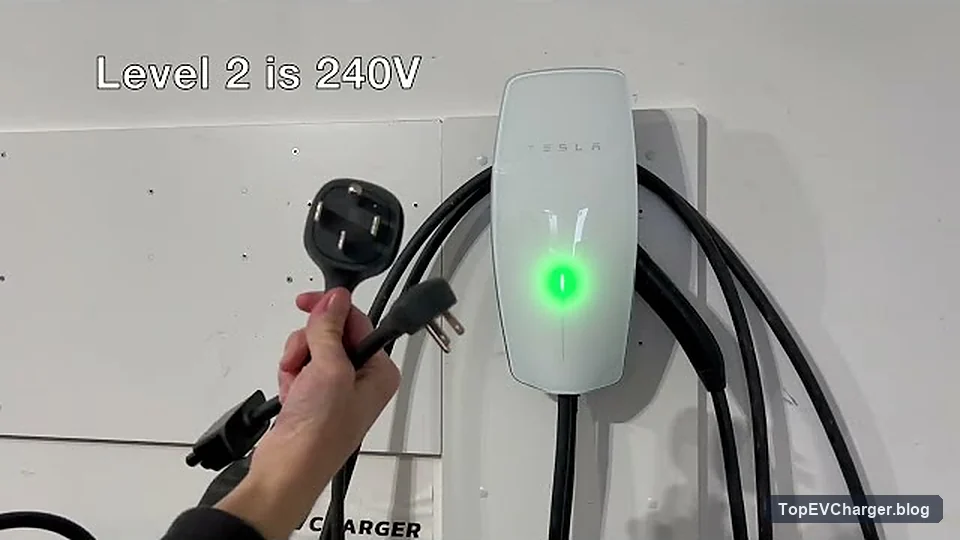
The Ford Mobile Charger utilizes a heavy-duty enclosure designed to withstand demanding garage environments. Its internal circuitry features robust overcurrent protection and thick copper traces to handle continuous high-amperage sessions safely.
Conversely, our tesla mobile connector review details how the unit relies on an ultra-compact footprint with advanced solid-state switching. Engineers minimized internal air gaps to maximize passive heat dissipation without requiring fans.
- Both units deliver a maximum output of 32 Amps when connected to dedicated 240-volt circuits.
- Enclosure materials feature high-impact polymers rated for outdoor moisture and dust resistance.
- Internal thermistors actively throttle current if plug-head temperatures exceed safe operational thresholds.
Internal Circuitry and Thermal Design
Sustaining maximum electrical output generates substantial internal heat within portable charging bricks. Ford incorporates thick aluminum heatsinks directly bonded to the main switching transistors for reliable thermal transfer.
Tesla employs a distributed sensor layout that monitors pin temperatures inside the interchangeable adapter plugs. This prevents localized melting if an older wall receptacle experiences high electrical resistance.
- Thermal throttling engages automatically to protect residential wiring during hot summer months.
- Epoxy-potted internal components protect sensitive microcontrollers from persistent garage humidity.
Real-World Charging Speeds and Electrical Output
Actual charging speed depends heavily on your home electrical supply and the capacity of your vehicle's onboard converter. Operating on a standard 120-volt household outlet yields roughly one mile of range per hour.
Upgrading to a 240-volt NEMA 14-50 outlet unlocks the full 7.6 kW output capacity of both units. This configuration replenishes large battery packs overnight, adding roughly twenty to thirty miles of range per hour.
Voltage sag under heavy load can slightly reduce effective charging speeds on longer circuit runs. Proper wire gauge sizing in your garage subpanel remains essential for maintaining optimal power delivery.
- Standard Level 1 charging provides roughly 1.4 kW of continuous power input.
- Level 2 operation on a 40-amp breaker safely delivers 32 Amps of continuous current.
- Voltage drop should never exceed three percent across standard residential copper branch circuits.
Performance Under Heavy Daily Utilization
Daily commuting places repetitive thermal stress on portable EV charging hardware and building wiring. The Ford unit maintains steady power delivery through long overnight cycles without unexpected shutdowns.
Our comprehensive tesla wall connector review highlights how Tesla hardware demonstrates exceptional efficiency retention, minimizing energy lost as heat during prolonged high-amperage charging sessions in unconditioned garage spaces.
- Continuous duty ratings allow seamless day-and-night vehicle replenishment schedules.
- Minimal standby power consumption ensures efficiency when plugged in without a car attached.
Portability, Ergonomics, and Cable Management
Mobile chargers are engineered to travel easily inside your trunk for destination charging emergencies. The Ford unit features a slightly heavier cable assembly with robust strain-relief boots at critical stress points.
Tesla's design focuses on minimalist space utilization, featuring a lighter cable bundle that coils smoothly in cold weather. Stiff winter cables often frustrate users, but both manufacturers use flexible thermoplastic elastomers.
Ergonomic handle designs ensure comfortable grip angles while inserting or releasing the vehicle connector latch. Weatherproof trigger mechanisms prevent accidental disconnection during outdoor storms.
- Cable lengths average approximately twenty feet, offering flexible parking alignment inside garages.
- Integrated mounting slots allow temporary wall hanging without permanent bracket installation.
- Flexible outer jackets resist abrasion from rough concrete garage floors and driveway gravel.
Storage and Field Deployment Considerations
Storing your mobile connector properly prevents internal wire strand breakage over years of frequent coiling. Always avoid tight radius bends near the plug housing to protect copper conductors.
Included storage bags protect the electronics from trunk debris and moisture accumulation during transit across dusty or muddy rural roads.
- Proper loop coiling preserves internal copper conductor integrity over thousands of cycles.
- Waterproof zipper enclosures safeguard spare adapter pigtails from environmental contamination.
Safety Certification and Thermal Performance Standards
Strict adherence to electrical safety standards protects your home from catastrophic electrical fires and equipment damage. Both chargers carry rigorous third-party certifications from recognized testing laboratories like UL or ETL.
Ground fault circuit interrupter protection is built directly into the main supply cable housing. If current leakage is detected, internal relays trip within milliseconds to prevent dangerous electrical shock.
Overvoltage and undervoltage protection safeguard your vehicle's expensive battery management system from unstable grid conditions during severe summer electrical storms.
- Mandatory UL 2594 compliance ensures rugged construction and reliable electrical isolation.
- Integrated self-test routines verify internal safety relay functionality before every charging session begins.
- Automatic fault recovery attempts restore power once temporary grid anomalies clear safely.
Plug Head Temperature Monitoring Systems
As noted in our tesla gen 3 wall connector review, loose wall receptacles frequently cause dangerous overheating. Tesla integrates a dedicated temperature sensor directly into the interchangeable plug housing.
If the outlet terminal exceeds safe thermal limits, the unit automatically reduces current or shuts down entirely. This vital safety feature prevents residential electrical fires caused by degraded infrastructure.
- Smart plug detection communicates exact adapter parameters to the main charging brick.
- Thermal runaway prevention protects older home electrical infrastructure from excessive heat stress.
Adapter Flexibility and Vehicle Compatibility
Interchangeable adapter pigtails dictate how easily your mobile charger adapts to various residential outlets. The Tesla ecosystem offers an extensive catalog of adapters for everything from standard RV plugs to dryer outlets.
Ford provides essential adapters covering standard 120-volt household connections and 240-volt NEMA 14-50 circuits. This covers the vast majority of residential charging requirements without unnecessary accessory clutter.
Using third-party adapters is strongly discouraged by manufacturers due to potential contact resistance and overheating risks. Always verify that your chosen adapter matches the circuit breaker capacity.
- NEMA 14-50 plugs deliver maximum Level 2 charging speeds for daily commuter vehicles.
- Standard 5-15 household adapters provide convenient trickle charging during weekend trips.
- Secure locking mechanisms prevent accidental separation of interchangeable adapter pigtails.
Cross-Brand Utilization and J1772 Standards
Vehicle plug standards determine physical compatibility between the charging cable and your specific EV port. Ford units utilize the standard J1772 connector compatible with nearly all non-Tesla electric vehicles.
Tesla mobile connectors feature their proprietary North American Charging Standard plug head natively. Owners of non-Tesla vehicles must use a reliable adapter to bridge the physical connection.
- Native J1772 handles eliminate adapter wear during routine daily charging sessions.
- Robust locking pins secure the vehicle inlet while high-voltage power transfers active.
Decision Framework for Your Garage Setup
When exploring our best level 2 charger for tesla guide, remember that selection depends on your daily driving distance and electrical panel capacity. Homeowners with NEMA 14-50 outlets utilize full speeds.
If you frequently travel and encounter diverse electrical outlet types, the modular adapter ecosystem shines. Evaluate whether permanent hardwiring or mobile plug-in flexibility better suits your lifestyle.
Consulting a licensed electrician ensures your home electrical service safely supports continuous 32-amp loads without tripping main breakers or damaging older service entrance panels.
- Assess your daily mileage requirements to determine if Level 1 or Level 2 is necessary.
- Verify existing garage outlet amperage ratings before plugging in high-output mobile chargers.
- Consider future vehicle purchases to ensure long-term connector and adapter compatibility.
Evaluating Permanent Hardwiring Versus Mobile Plug Units
While mobile chargers offer incredible travel convenience, dedicated wall units provide superior long-term weather resistance. Leaving a mobile charger plugged in outdoors exposes it to constant elements.
Many owners mount their mobile charger permanently in the garage while keeping a second unit stowed safely in the trunk for road trip emergencies.
- Permanent wall mounting reduces wear on fragile residential outlet receptacles.
- Dual-unit strategies eliminate the hassle of coiling cables for daily commutes.
Essential Maintenance and Installation Best Practices
Maximizing the service life of your mobile EV charger requires periodic visual inspection of cables and plugs. Check the outer insulation jacket regularly for cuts, abrasions, or cracking caused by sunlight.
Inspect the metal contact pins inside the wall plug for signs of oxidation, pitting, or discoloration. Corroded pins increase electrical resistance, generating dangerous heat during high-amperage power delivery.
Keep the enclosure clean by wiping down exterior surfaces with a damp microfiber cloth. Never use harsh chemical solvents or high-pressure power washers directly on the electronic housing.
- Unplug the unit from the wall before performing any routine cleaning or maintenance tasks.
- Store cables loosely in temperature-controlled environments during extended periods of non-use.
- Have an electrician inspect your heavy-duty 240-volt outlet annually for secure wire terminal connections.
Identifying Early Warning Signs of Hardware Failure
Recognizing early hardware degradation prevents unexpected charging failures when you need your vehicle most. A burning plastic odor near the wall plug indicates severe terminal overheating and requires immediate replacement.
Frequent fault code blinking lights on the charging brick often signal internal relay wear or grounding issues within your home branch circuit wiring.
- Discoloration on plug prongs signifies high electrical resistance and potential arching.
- Unusual humming noises from the internal transformer warrant immediate professional technical evaluation.
Frequently Asked Questions
Can I leave my mobile charger plugged into the wall 24/7?
Leaving your mobile charger plugged in continuously is completely safe because intelligent standby modes minimize power draw. However, protecting the unit from direct weather exposure and physical vehicle traffic extends its overall operating lifespan significantly.
Do both chargers require a dedicated 50-amp electrical circuit?
Both units draw a maximum of 32 amps, which requires a dedicated 40-amp or 50-amp breaker paired with heavy-duty copper wiring. Consulting a licensed electrician ensures your residential electrical panel meets all local building safety codes.
Can I use these mobile chargers outdoors during heavy rain?
Weatherproof enclosures allow safe outdoor operation in rain and snow when connected securely to a proper outdoor outlet. Always ensure your wall receptacle features a weather-resistant bubble cover to prevent moisture ingress at the connection.
What is the primary difference in plug adapter flexibility?
The Tesla ecosystem provides an extensive catalog of specialty adapters for diverse residential and industrial plug types. Ford focuses on essential standard household and RV outlets, covering most typical daily commuter charging requirements effectively.
How do I know if my garage outlet is overheating during charging?
Overheating outlets typically exhibit a distinct burning plastic odor, discolored faceplates, or noticeably warm plastic housings. Upgrading to a commercial-grade industrial receptacle eliminates high-resistance connections and prevents dangerous residential electrical fires.