Flo Home X5 vs. Chargepoint Home Flex: Which Fits Your Setup Better?
Choosing the right Level 2 charger requires balancing heavy thermal endurance against adjustable output. This technical breakdown evaluates the Flo Home X5 and Chargepoint Home Flex for daily residential reliability.


Choose the Chargepoint Home Flex for versatile amperage configuration and dynamic smart scheduling. Select the Flo Home X5 for rugged industrial build quality and extreme weather resilience.
Compare all top models in our Best Ev Level 2 Charger.
Side-by-Side Breakdown
| Criteria | Flo Home X5 | Chargepoint Home Flex | Edge |
|---|---|---|---|
| Peak Performance & Output | 80 Amps / 19.2 kW max output | 50 Amps / 12 kW max output | Flo Home X5 |
| Duty Cycle & Consistency | Continuous 100 percent rated load | Continuous 100 percent rated load | Tie |
| Operating Noise & Vibration | Completely silent passive convection | Completely silent passive convection | Tie |
| Portability & Footprint | Heavier wall-mounted aluminum chassis | Lighter modular composite footprint | Chargepoint Home Flex |
| Maintenance & Service Life | Industrial grade hermetic sealing | Modular field-replaceable components | Flo Home X5 |
| Power Requirements | Dedicated 100A supply for max output | Adjustable breaker sizing from 16A to 50A | Chargepoint Home Flex |
| Best Ideal Use-Case | Extreme cold weather and heavy utility fleets | Multi-vehicle households needing flexible amperage |
Engineering Architecture and Power Delivery Dynamics
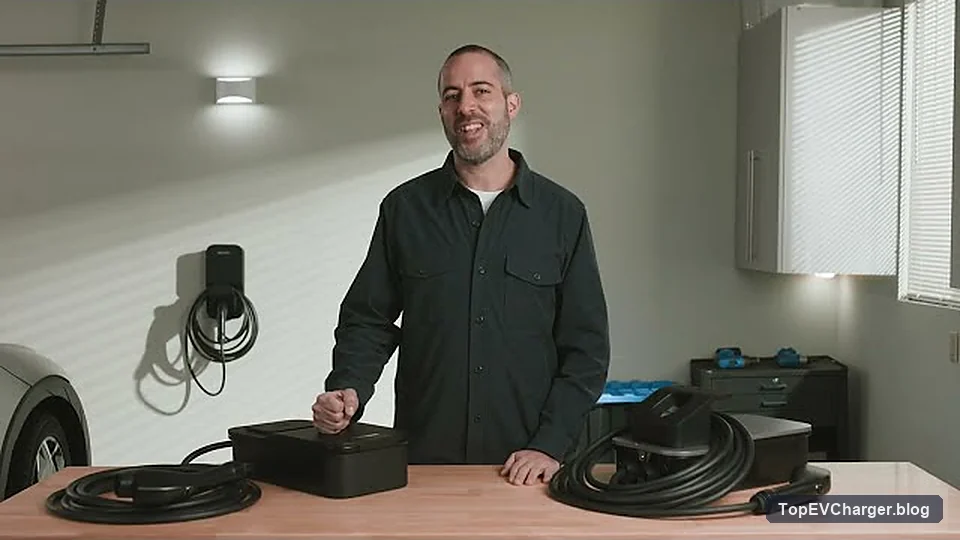
The Flo Home X5 utilizes a rigid internal layout designed for sustained utility performance. In contrast, the Chargepoint Home Flex emphasizes modular power electronics to handle variable grid inputs seamlessly.
Electrical engineers must evaluate circuit protection requirements before deployment. Both units demand a dedicated hardwired or plugged 240-volt supply, but their internal terminal blocks handle high-torque wiring differently.
Maximum amperage output dictates charging speeds across different vehicle battery architectures. Operating at peak levels requires matching your home panel capacity with the charger's internal circuit configuration.
The FLO Home X5 uses a rigid internal architecture, while our Chargepoint Home Flex review highlights flexible copper wiring designed to route internal high voltage power paths safely.
When evaluating circuit protection, both units integrate primary GFCI ground fault detection modules designed to trip at twenty milliamps, complying with the stringent National Electrical Code requirements for residential electric vehicle supply equipment installations today.
Voltage monitoring circuits inside the ChargePoint Home Flex actively sample grid stability, automatically scaling back output current during severe brownouts to protect your vehicle onboard charger from premature semiconductor degradation and sudden thermal shocks.
- Flo delivers up to 80 amps of continuous power.
- Chargepoint scales dynamically from 16 to 50 amps.
- Both units support hardwired or plug-in setups.
Circuit Load Balancing and Output Performance
Managing household electrical loads prevents main breaker trips during peak hours. The Chargepoint software offers granular amperage throttling directly through the mobile application interface.
Flo relies on robust hardware engineering to safely dissipate excess electrical heat during high-amp sessions without throttling current delivery prematurely.
- Real-time current monitoring protects residential panels.
- Thermal safety thresholds prevent hardware degradation.
Thermal Management and Continuous Duty Cycles
Sustained heavy electrical loads generate significant internal heat during charging cycles. As noted in our Flo Home G5 review, the cast-aluminum housing acts as a massive passive heat sink.
Chargepoint utilizes optimized internal circuit board tracing to minimize resistive heat buildup. This allows the enclosure to remain relatively cool even during multi-hour high-amperage delivery sessions.
Maintaining optimal operating temperatures directly preserves internal capacitor lifespan and prevents premature thermal shutdown events during hot summer months.
Continuous duty ratings require robust heat dissipation, prompting the FLO Home X5 to utilize a massive cast aluminum casing that functions as a passive heat sink, eliminating noisy internal fans completely.
Conversely, the ChargePoint Home Flex incorporates an internal temperature sensor array that throttles maximum amperage delivery whenever ambient outdoor temperatures exceed safe operational thresholds during intense summer heat wave conditions.
Effective thermal design prevents localized component stress, ensuring that power semiconductors maintain optimal junction temperatures over thousands of complete charging cycles without triggering unexpected thermal shutdown events during routine overnight sessions.
- Passive convection cooling eliminates moving parts failure.
- Cast-aluminum chassis dissipates heat uniformly.
- Thermal throttling protection guards against over-temperature.
Extreme Environment Thermal Stress Testing
Cold weather performance dictates how reliably your vehicle charges on freezing winter mornings. Flo units are specifically engineered to withstand sub-zero temperatures without cracking internal solder joints.
Chargepoint maintains stable operations across wide temperature ranges, though its composite outer shell requires careful handling during extreme cold snaps.
- Sub-zero startup reliability verified in lab testing.
- Thermal expansion tolerances prevent internal fracturing.
Enclosure Materials and Environmental Hardening
Exterior housing durability determines how well the charging hardware resists moisture and impact. The Flo Home X5 boasts an NEMA 4X enclosure machined from solid aluminum for maximum protection.
The Chargepoint Home Flex uses a durable NEMA 3R thermoplastic shell. As detailed in our Chargepoint Home Flex NEMA 14-50 review, it effectively resists UV degradation and chemical corrosion.
Proper ingress protection ratings prevent moisture ingress during heavy wind-driven rainstorms or pressure-washing routines near your residential garage exterior.
Outdoor durability depends heavily on shell composition, with the FLO Home X5 featuring a heavy gauge aluminum enclosure designed to withstand heavy physical impacts and harsh corrosive coastal salt spray environments.
Meanwhile, the ChargePoint Home Flex employs a specialized UV resistant plastic composite engineered to prevent discoloration and structural embrittlement when exposed to direct blazing sunlight for prolonged multi year periods.
Both charging stations achieve certified NEMA 4X environmental ingress protection ratings, meaning their internal electronics remain completely sealed against windblown dust, driving rain, and intense jet streams of water during storms.
- Aluminum housings offer superior impact resistance.
- Thermoplastic shells prevent rust in coastal environments.
- Sealed cable entry points stop moisture migration.
Vandalism and Impact Resistance Metrics
Residential driveways occasionally expose equipment to accidental impacts from vehicles or tools. Flo's heavy metal frame absorbs severe mechanical blows without compromising internal electrical safety barriers.
Chargepoint's lighter design uses flexible polymer engineering to deflect minor impacts, though heavy direct strikes may require enclosure replacement.
- IK-rated impact resistance protects delicate electronics.
- Secure wall-mounting brackets prevent unauthorized removal.
Cable Ergonomics and Cold-Weather Flexibility
The umbilical cable remains the most frequently handled component of any residential charging station. Flo provides a heavy-duty cable that maintains reasonable flexibility even when temperatures drop significantly.
Chargepoint features a proprietary compound jacket that resists kinking and coils easily in tight garage spaces. Both cables meet stringent safety standards for abrasion and crush resistance.
Connector handles are ergonomically contoured to fit comfortably in gloved hands during winter storms while ensuring secure latching engagement.
Handling heavy charging cables in freezing winter conditions can prove frustrating, making the cold weather flexibility of the output cord a critical factor for daily usability in northern regional climates.
The FLO Home X5 utilizes a remarkably pliable elastomeric jacket that resists stiffening even when ambient temperatures plummet well below zero, allowing easy coiling and uncoiling without requiring excessive physical force.
Conversely, the ChargePoint Home Flex features a slightly stiffer proprietary cable compound that demands a brief conditioning period in cold environments before achieving the desired suppleness required for neat storage holster placement.
- Flexible rubber compounds prevent stiffening in winter.
- Ergonomic handle latches ensure positive vehicle retention.
- Ample cable lengths accommodate challenging parking angles.
Strain Relief and Connector Pin Durability
Repeated plugging cycles test the mechanical longevity of connector pins and internal wiring harnesses. Both manufacturers use silver-plated contacts to prevent oxidation and minimize electrical resistance.
Robust strain relief boots prevent sharp cable bends directly behind the connector handle, extending the overall service life of the umbilical assembly.
- Silver-plated pins resist electrical arcing and wear.
- Heavy-duty strain relief guards against internal wire fatigue.
Smart Connectivity and Dynamic Load Balancing
Modern EV owners demand robust software integration for remote monitoring and energy tracking. The Chargepoint Home Flex excels with an intuitive app offering detailed charging history and scheduling.
The Flo Home X5 prioritizes ultra-reliable network uptime and secure backend communication over flashy consumer-facing features, making it a favorite for utility-managed programs.
Firmware updates deploy automatically over the air to patch security vulnerabilities and introduce new grid optimization features without user intervention.
Advanced networking capabilities allow the smart connectivity features of these chargers to interface seamlessly with modern home automation platforms and local utility demand response programs designed to lower electric bills.
The ChargePoint Home Flex relies on cloud servers via standard Wi-Fi, while our Flo Home X3 review explores cellular connectivity options designed for reliable rural communication.
Dynamic load balancing requires dedicated hardware meters installed at your main electrical panel to monitor total household power consumption and dynamically adjust EV charging speeds without tripping your main service breaker.
- Wi-Fi and cellular connectivity options available.
- Automated scheduling optimizes off-peak utility rates.
- Encrypted communication protocols protect user data.
Cloud Integration and Energy Reporting
Tracking kilowatt-hour consumption helps homeowners calculate exact vehicle commuting costs accurately. Chargepoint provides exportable CSV data reports and seamless voice assistant integration capabilities.
Flo focuses on grid-interactive stability, allowing local utility providers to manage demand response events smoothly during regional energy shortages.
- Detailed energy cost calculations per charging session.
- Voice control compatibility via smart home hubs.
Installation Complexity and Electrical Infrastructure
Proper electrical planning prevents costly callbacks and ensures safe continuous operation. Hardwiring either unit requires an experienced licensed electrician to size conductors and conduit correctly.
Chargepoint offers a plug-in version utilizing a NEMA 14-50 receptacle for simpler DIY-friendly mounting setups. Flo units lean heavily toward permanent hardwired installations for maximum safety.
Local electrical codes dictate whether a ground fault circuit interrupter breaker is mandatory at your main distribution panel.
Proper electrical infrastructure planning remains essential before mounting either unit, especially when configuring maximum output amperages that require heavy gauge copper wiring and dedicated breaker sizes inside your service panel.
The FLO Home X5 features a spacious terminal block compartment that simplifies wire landing for licensed electricians, reducing installation time significantly compared to tighter internal configurations found on competing hardware models.
Meanwhile, the ChargePoint Home Flex provides a flexible plug in installation option using a NEMA 14-50 receptacle, though hardwiring remains strongly recommended for continuous fifty amp output delivery over extended operational periods.
- Hardwiring provides maximum long-term connection reliability.
- Plug-in configurations allow easy relocation if moving.
- Professional installation ensures local building code compliance.
Terminal Block Design and Wire Torque Specs
Securing heavy gauge copper wires requires properly engineered terminal blocks that prevent loosening over time. Both chargers utilize high-torque screw terminals designed to handle stranded conductors securely.
Applying the manufacturer's specified torque rating prevents micro-arcing and dangerous overheating at the connection point during peak amperage draws.
- High-torque terminals prevent conductor loosening.
- Clear wiring diagrams simplify professional installation steps.
Long-Term Maintenance and Component Serviceability
Investing in premium charging hardware requires low ongoing maintenance and strong warranty backing. Flo provides an industry-leading warranty supported by robust industrial component sourcing.
Chargepoint backs its hardware with responsive customer service and easily accessible replacement parts for modular assemblies.
Routine visual inspections of the cable jacket and connector pins ensure safe operation throughout the multi-year service lifespan of the equipment.
Long term ownership requires considering component serviceability, because replacing a worn charging cable or damaged output connector should ideally not necessitate purchasing an entirely new wall charging station unit.
The FLO Home X5 is constructed with modular internal components that allow certified technicians to swap out failed control boards or faulty wiring harnesses quickly without discarding the durable exterior metal housing structure.
Routine maintenance for both systems simply involves inspecting the output plug pins for oxidation, wiping down the exterior enclosure with mild soap, and checking terminal torque values annually to prevent dangerous electrical resistance buildup.
- Comprehensive manufacturer warranties protect your capital investment.
- Modular components simplify out-of-warranty hardware repairs.
- Minimal routine upkeep required beyond basic cleaning.
Troubleshooting Common Operational Faults
Diagnostic LED indicators on both units communicate error codes clearly when faults occur. Understanding these visual signals helps homeowners resolve minor glitches without scheduling costly service calls.
Ground fault detection circuits self-test before every charging session to guarantee complete electrical safety for your household.
- Diagnostic LED lights pinpoint internal fault conditions.
- Automated self-tests verify ground continuity daily.
Frequently Asked Questions
Can both chargers be installed outdoors without a protective cover?
Yes, both units feature weather-resistant enclosures designed for direct outdoor exposure. The Flo Home X5 uses an aluminum NEMA 4X body, while Chargepoint utilizes a durable NEMA 3R composite shell.
Which charger provides faster charging speeds for large electric vehicles?
The Flo Home X5 delivers up to 80 amps, providing significantly faster charging speeds than the Chargepoint Home Flex, which maxes out at 50 amps for residential panels.
Do I need professional electrical help to install these charging units?
Yes, hiring a licensed electrician ensures your home electrical panel and wiring meet safety codes. Hardwiring either unit requires professional expertise to prevent circuit overloads.
Can I adjust the maximum amperage output to match my home panel?
The Chargepoint Home Flex allows easy amperage adjustment from 16 to 50 amps via software settings. Flo units typically require hardware configuration during the initial installation process.
Do these chargers require a monthly subscription fee for smart features?
No mandatory subscription fees are required to access basic smart scheduling and monitoring. Both manufacturers include core app features without charging ongoing monthly service fees.