Evocharge Ievse vs. Chargepoint Home Flex: Which Fits Your Setup Better?
Evaluating the engineering trade-offs between these two chargers requires analyzing electrical capacity, cable ergonomics, and thermal management. Choosing the right hardware depends heavily on your daily driving workload and garage panel capacity.

The Chargepoint Home Flex wins for maximum amperage output and smart software integration, while the Evocharge iEVSE excels in commercial-grade physical ruggedness and simplified heavy-duty fleet reliability.
Compare all top models in our Best Ev Level 2 Charger.
Side-by-Side Breakdown
| Criteria | Evocharge Ievse | Chargepoint Home Flex | Edge |
|---|---|---|---|
| Peak Performance & Output | 32A or 40A options | Up to 50A adjustable | Chargepoint Home Flex |
| Duty Cycle & Consistency | Continuous 80% NEMA rating | Continuous 80% NEC compliance | Tie |
| Operating Noise & Vibration | Silent passive cooling | Silent passive cooling | Tie |
| Portability & Footprint | Compact wall-mounted chassis | Slim architectural profile | Chargepoint Home Flex |
| Maintenance & Service Life | Modular replaceable cables | Integrated sealed assembly | Evocharge Ievse |
| Power Requirements | Dedicated 40A or 50A breaker | Configurable 15A to 60A breaker | Chargepoint Home Flex |
| Best Ideal Use-Case | Commercial residential fleets | Single-family high-speed charging | Chargepoint Home Flex |
Electrical Architecture & Peak Amperage Delivery
Delivering consistent electrical current safely requires robust internal component engineering. The Evocharge iEVSE typically provides dependable delivery options capped at 40 amps, suiting standard residential electrical panels without excessive strain.
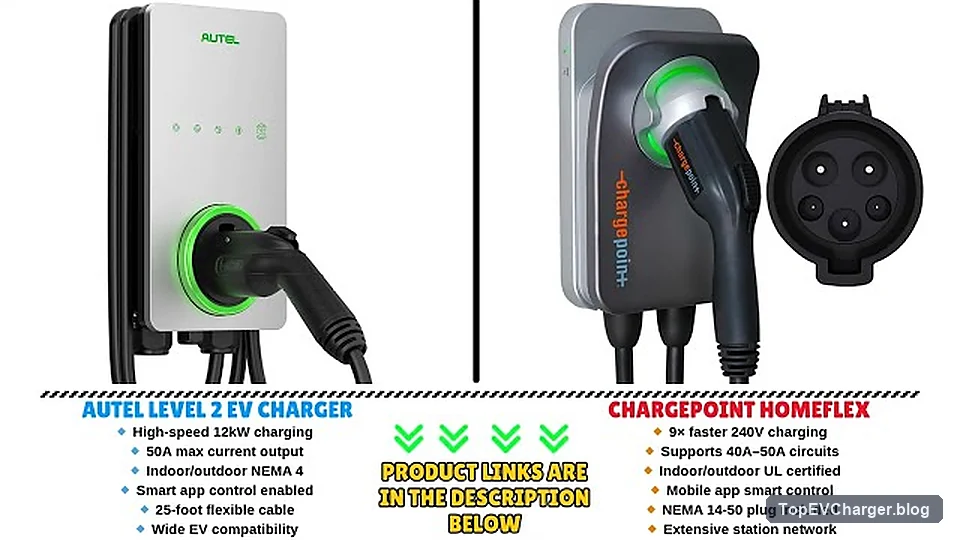
As detailed in our chargepoint home flex nema 14 50 review, the hardware scales dynamically up to 50 amps of output when paired with a properly sized circuit breaker.
Internal wiring gauges and terminal block designs dictate how efficiently these units handle high thermal loads during multi-hour charging sessions. Both units utilize copper busbars to minimize resistance and prevent dangerous localized overheating.
Delivering robust electrical performance requires evaluating internal relay tolerances. The ChargePoint Home Flex scales up to 50 amps, while standard EVoCharge units often cap at 40 amps for hardwire installations.
Voltage fluctuations test internal power supplies significantly. Both units handle standard 240V AC residential feeds, but terminal block sizing dictates maximum wire gauge compatibility during high-draw continuous operating conditions.
Overcurrent protection mechanisms differ slightly between these platforms. Integrated circuit designs monitor thermal runaway risks, ensuring safe power curtailment when ambient garage temperatures exceed normal safety thresholds.
- Evocharge offers stable 32A and 40A configurations.
- Chargepoint delivers adjustable output from 16A to 50A.
- Both systems require professional hardwire or receptacle installation.
Circuit Breaker Sizing & Ampere Limits
National Electrical Code guidelines mandate an 80% continuous load rule for electric vehicle supply equipment. Your installation must match these safety thresholds to prevent nuisance tripping during long overnight charging cycles.
Configuring the Chargepoint Home Flex requires setting physical internal switches or software parameters to match your exact breaker size, whereas the Evocharge model relies on its fixed amperage rating.
- Always follow NEC 80% continuous load rules.
- Match breaker sizing precisely to unit configuration.
Thermal Performance & Continuous Duty Ratings
Managing internal heat dissipation is critical for maintaining long-term component health. The Evocharge iEVSE utilizes a heavy cast aluminum enclosure acting as a massive passive heat sink to dissipate thermal energy.
Highlighted in our best type 2 ev home charger roundup, this unit employs a streamlined composite casing designed to vent internal heat effectively without relying on noisy mechanical cooling fans.
Both chargers maintain stable thermal thresholds even when operating at maximum amperage in high ambient garage temperatures during peak summer months, preventing premature thermal throttling.
Continuous duty EV chargers generate substantial internal heat. Passive cooling fins on the EVoCharge iEVSE dissipate thermal energy efficiently without relying on noisy mechanical fans prone to mechanical failure over time.
Operating at maximum amperage demands superior component thermal rating limits. High-grade MOSFETs inside the ChargePoint Home Flex manage sustained loads up to 12kW without triggering premature thermal throttling safeguards.
Ambient temperature derating curves impact real-world charging speeds. Installers must evaluate local climate extremes because enclosed garage spaces frequently trap heat, reducing peak output capacity during extended summer charging sessions.
- Passive cooling prevents mechanical fan failure points.
- Aluminum heat sinks protect internal printed circuit boards.
- Thermal sensors automatically reduce current if overheating occurs.
Ambient Temperature Tolerances
Extreme weather conditions test the limits of outdoor electrical enclosures. Both units feature wide operating temperature ranges, functioning reliably in sub-zero winters and scorching summer heatwaves alike.
Internal moisture barriers and conformal coatings protect sensitive microcontrollers from condensation buildup caused by rapid temperature fluctuations inside unconditioned residential garages.
- Rated for extreme cold and hot operating environments.
- Conformal circuit board coatings prevent moisture damage.
Enclosure Materials & Weather Resistance Engineering
Physical durability determines how well your charging hardware survives outdoor installation environments. The Evocharge iEVSE features an industrial-grade metal housing engineered for rugged commercial and multi-family parking lots.
You can explore our detailed chargepoint home flex review to understand how its weather-resistant polycarbonate shell is optimized for modern residential architecture while maintaining strict NEMA outdoor protection standards.
Ingress protection ratings for both units ensure safe operation against driving rain, sleet, and dust accumulation when mounted properly according to manufacturer instructions.
Outdoor installations require strict ingress protection ratings. The NEMA 4 enclosure standard utilized by both units guarantees resistance against driving rain, windblown dust, and severe moisture intrusion year-round.
Polycarbonate housing materials react differently to prolonged UV exposure. Robust UV-stabilized resins prevent surface chalking and structural embrittlement, ensuring long-term cabinet integrity when mounted in direct sunlight.
Gasket compression and fastener torque specs dictate ultimate weather sealing longevity. Periodic maintenance checks on housing screws prevent moisture breaches that could otherwise corrode sensitive internal printed circuit boards.
- Evocharge emphasizes heavy metal structural armor.
- Chargepoint utilizes high-impact engineered plastics.
- NEMA 4 outdoor ratings protect against moisture.
Impact Resistance & Vandal Protection
Garage environments expose equipment to accidental impacts from vehicles, sports equipment, and tools. The rigid metal chassis of the Evocharge absorbs heavy kinetic impacts without cracking its outer shell.
Chargepoint uses resilient engineering plastics that resist scratching and minor bumps while maintaining a lighter overall wall-mounting weight for easier DIY installation procedures.
- Metal housings withstand severe mechanical impacts.
- Polymer shells resist corrosion and surface scratches.
Cable Flexibility & Cold-Weather Ergonomics
Handling thick copper charging cables in freezing weather tests everyday user patience. The output cables on both units remain surprisingly flexible down to freezing temperatures, avoiding rigid coiling issues.
Cable management holster designs differ significantly between the two models. Evocharge incorporates a straightforward dock, while Chargepoint utilizes a clever wrap-around holster integrated into the main chassis.
Standard cable lengths span twenty-five feet for both chargers, providing ample reach to access vehicle charge ports regardless of your garage parking orientation.
Handling thick copper charging cables in freezing temperatures challenges users daily. Thermoplastic elastomer cable jackets on the ChargePoint Home Flex maintain superior flexibility down to sub-zero winter operating conditions.
Cable weight correlates directly with copper conductor gauge sizing. A heavier 6 AWG cable requires more physical effort to coil and store correctly compared to lighter 8 AWG alternatives.
Strain relief collars prevent internal conductor fatigue near the main housing entry point. Reinforced boot designs distribute bending stress evenly across the cable jacket, minimizing potential conductor breakage risks.
- Standard twenty-five foot cable reaches all parking angles.
- Cold-flexible compounds prevent winter stiffening.
- Integrated holsters keep connectors clean off the floor.
Strain Relief & Connector Durability
The SAE J1772 connector handle experiences repeated drops and mechanical stress over years of daily plugging. Both manufacturers reinforce the cable entry point with heavy-duty rubber strain relief boots.
Ergonomic thumb latches on the connector heads provide positive mechanical locking feedback, ensuring secure electrical contact during high-amperage power transfer sessions without wearing down contacts.
- Reinforced strain relief boots prevent internal wire fatigue.
- Ergonomic latches ensure secure plug retention.
Connectivity Protocols & Smart Grid Integration
Modern electric vehicle owners demand robust smartphone applications for scheduling and energy monitoring. The Chargepoint Home Flex shines with an intuitive app ecosystem offering detailed charging metrics and utility integration.
The Evocharge iEVSE comes in both non-connected base models and smart variants utilizing open charge point protocols for commercial network management and flexible backend integration.
Wi-Fi connectivity enables remote firmware updates, ensuring your charging hardware remains secure and compatible with newly released electric vehicle communication standards over time.
Wi-Fi module reliability determines remote monitoring success. The EVoCharge iEVSE utilizes standard 2.4 GHz wireless bands, ensuring stable router communication even through thick concrete residential garage walls.
Dynamic load management capabilities require robust application programming interfaces. Cloud-based software platforms enable seamless utility demand response participation and optimized off-peak charging schedules for cost-conscious EV owners.
Bluetooth provisioning simplifies initial setup procedures significantly. Technicians and homeowners can pair their smartphones directly with the charging unit, bypassing complex router security handshakes during deployment.
- Chargepoint offers an industry-leading consumer mobile application.
- Evocharge supports flexible commercial network connectivity.
- Wi-Fi enabled firmware updates secure units against vulnerabilities.
Energy Tracking & Utility Cost Optimization
Smart scheduling features allow you to program your charging sessions during off-peak utility hours. This functionality minimizes monthly electricity expenses significantly across a multi-year ownership timeline.
Detailed usage reports help track kilowatt-hour consumption down to the exact penny, simplifying expense reporting for company-provided vehicle reimbursement programs.
- Program off-peak charging schedules to reduce utility costs.
- Track precise kilowatt-hour consumption metrics easily.
Installation Logistics & Hardwire Configurations
Featured across our best level 2 home charging station guide, both units support flexible plug-in configurations using NEMA 14-50 receptacles or permanent hardwire setups for reliable daily power delivery.
Professional electricians generally recommend hardwiring for maximum amperage delivery and long-term connection reliability, eliminating the potential failure points associated with heavy-duty garage outlets.
Mounting brackets included with each unit allow secure attachment to drywall studs, masonry, or concrete garage pillars using standard lag bolts and appropriate anchors.
Conduit entry points dictate wall-mounting flexibility. Bottom and rear feed options on the ChargePoint Home Flex accommodate diverse electrical supply configurations without requiring awkward conduit bending maneuvers.
Terminal block torque specifications are critical for safety. Using a calibrated torque screwdriver ensures proper electrical connection pressure, eliminating high-resistance joints that generate dangerous localized heat pockets.
Mounting bracket engineering affects overall installation efficiency. Sturdy metal backplates distribute the mechanical weight of the charger securely across drywall studs or masonry anchors, preventing sagging over time.
- Supports NEMA plug-in or permanent hardwire installation.
- Hardwiring eliminates outlet wear during high-draw sessions.
- Included wall brackets simplify secure stud mounting.
Electrical Permit & Inspection Requirements
Local municipal building codes typically require electrical permits and professional inspections for new EV charger circuits. Ensuring your installation complies with the National Electrical Code guarantees household safety.
Qualified electricians verify that your main electrical panel possesses sufficient spare capacity to support continuous high-amperage loads without risking main breaker overloads.
- Always secure necessary local electrical permits.
- Verify home panel capacity before installation.
Long-Term Maintenance & Component Durability
Minimizing long-term maintenance ensures your charging investment operates reliably for over a decade. The Evocharge iEVSE features modular replacement parts that simplify out-of-warranty servicing without total unit replacement.
The Chargepoint Home Flex relies on a sealed architectural assembly backed by strong manufacturer warranties and responsive customer support networks for hardware troubleshooting.
Routine visual inspections of the input plug, cable jacket, and connector pins help catch minor wear before it escalates into critical electrical faults.
Connector pin wear is an inevitable reality of daily plugging cycles. Silver-plated contacts inside the SAE J1772 plug minimize electrical resistance and prevent galvanic corrosion during heavy usage periods.
Firmware update policies influence equipment longevity. Over-the-air updates ensure your charging hardware receives crucial security patches and feature enhancements without requiring physical component replacements or service calls.
Preventive maintenance involves inspecting cable insulation for cuts or abrasions. Catching minor wear issues early prevents catastrophic short circuits and extends the operational lifespan of your residential charging equipment.
- Modular Evocharge design allows straightforward component repairs.
- Sealed Chargepoint construction offers robust weather defenses.
- Periodic visual inspections prevent unexpected equipment downtime.
Warranty Coverage & Manufacturer Support
Manufacturer warranty terms provide peace of mind regarding defects in materials and electrical workmanship. Both brands offer competitive multi-year coverage periods protecting your hardware investment against failure.
Registering your newly installed charging unit immediately upon completion ensures rapid warranty claims processing should any unexpected technical issues arise during its operational lifespan.
- Multi-year manufacturer warranties protect your hardware.
- Prompt online registration streamlines future support.
Frequently Asked Questions
Can I install the Chargepoint Home Flex or Evocharge iEVSE outdoors without a protective shelter?
Yes, both charging stations feature robust NEMA outdoor-rated enclosures designed to withstand direct exposure to rain, snow, and extreme temperatures. Properly sealing the electrical conduit entry prevents moisture intrusion and ensures long-term operational safety.
What size circuit breaker do I need for maximum performance on these units?
Achieving maximum output requires a dedicated sixty-amp breaker for the Chargepoint Home Flex to deliver fifty amps safely. The Evocharge iEVSE typically operates on a fifty-amp breaker to deliver its continuous forty-amp maximum output current.
Do these chargers require an internet connection to function properly every day?
Neither charger requires an active Wi-Fi connection to deliver basic Level 2 electrical power to your vehicle. Offline plug-and-charge functionality remains fully operational, though smart scheduling features require network access.
Is a plug-in installation better than a permanent hardwire setup for my garage?
Hardwiring is generally superior for high-amperage continuous loads because it eliminates potential outlet resistance and thermal fatigue. Permanent hardwire connections provide a safer, cleaner installation without relying on heavy-duty receptacle wear.
How do these chargers handle power restoration after an unexpected home grid outage?
Both units feature automatic power-loss recovery systems that resume charging sessions immediately once grid stability returns. Internal surge protection circuitry safeguards sensitive onboard vehicle electronics from damaging voltage spikes during power restoration.