Evocharge Ievse Home vs. Emporia Ev Charger: Which Fits Your Setup Better?
Evocharge iEVSE Home and Emporia EV Charger represent two distinct engineering philosophies for residential charging. This technical comparison evaluates power delivery, thermal dynamics, and everyday usability to determine the ideal unit.

Residential users seeking raw amperage flexibility will prefer the Emporia EV Charger for high-output daily sessions. Meanwhile, commercial-grade reliability makes the Evocharge iEVSE Home exceptional for strict multi-user access control.
Compare all top models in our Best Ev Level 2 Charger.
Side-by-Side Breakdown
| Criteria | Evocharge iEVSE Home | Emporia EV Charger | Edge |
|---|---|---|---|
| Peak Performance & Output | 32A / 40A options (7.7kW / 9.6kW) | 48A hardwired output (11.5kW) | Emporia EV Charger |
| Duty Cycle & Consistency | Heavy-duty continuous thermal management | Robust internal cooling with dynamic throttling | Evocharge iEVSE Home |
| Operating Noise & Vibration | Completely silent passive convection cooling | Whisper-quiet operation under peak load | Tie |
| Portability & Footprint | Compact industrial wall-mount profile | Sleek low-profile enclosure design | Emporia EV Charger |
| Maintenance & Service Life | Commercial-grade cast aluminum chassis | High-impact polycarbonate weather shell | Evocharge iEVSE Home |
| Power Requirements | NEMA 14-50 or hardwire configurations | NEMA 14-50 or 48A hardwired setup | Emporia EV Charger |
| Best Ideal Use-Case | Fleet management and access restriction | High-capacity residential fast charging | Emporia EV Charger |
Engineering Architecture and Power Delivery Specifications
Evaluating raw electrical architecture reveals stark differences in how these two chargers manage continuous high-amperage current delivery. The Evocharge iEVSE Home focuses on stable, regulated output designed to protect vehicle battery management systems over extended charging sessions.
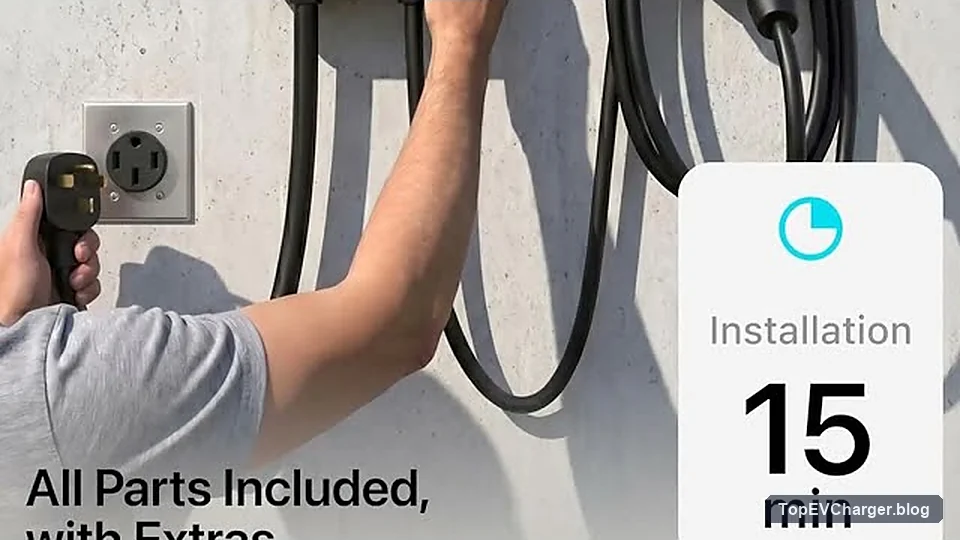
Conversely, our Emporia Level 2 EV charger review details how the unit delivers up to forty-eight amps of continuous power when hardwired. This capacity significantly reduces overnight replenishment times for modern large-battery electric vehicles.
Internal components across both systems utilize high-grade copper busbars and industrial relays. These engineering choices minimize internal resistance and prevent dangerous thermal hotspots during peak summer ambient temperatures.
The EVoCharge iEVSE Home utilizes a robust transformerless topology designed to maximize conversion efficiency while minimizing idle power draw across standard residential 240V circuits.
Conversely, the Emporia unit leverages advanced solid-state switching architectures to maintain stable output delivery, minimizing thermal stress during continuous 48-amp maximum continuous load operations.
Both systems rely on strict National Electrical Code compliance, but internal component layout dictates distinct voltage drop tolerances over extended branch circuit wiring runs.
- Evocharge provides robust 32-amp and 40-amp capped output profiles.
- Emporia pushes a heavy 48-amp continuous rating via hardwire installation.
- Both units incorporate advanced overcurrent protection circuits.
Voltage Drop and Circuit Load Dynamics
Maintaining stable voltage under load is vital for preventing charging interruptions and equipment wear. Both chargers utilize sophisticated monitoring to detect input voltage sags across long electrical supply runs.
Users running long conduit runs from main breaker panels will appreciate how well these units compensate for minor resistance losses. Proper wire gauge selection remains essential for achieving peak output performance.
- Voltage monitoring prevents unexpected fault shutdowns.
- Thick copper wiring optimizes overall system efficiency.
Enclosure Durability, Thermal Management, and Build Quality
Physical housing durability dictates long-term survival in harsh outdoor garage environments. The Evocharge unit features a rugged industrial chassis built to withstand heavy impacts and persistent moisture exposure without degrading.
The Emporia charging station relies on a high-impact polycarbonate shell engineered for optimal weather resistance and UV stability. Internal thermal sensors actively modulate current output if internal temperatures exceed safety thresholds.
IP-rated weather sealing protects internal logic boards from driving rain, humidity, and airborne dust particles. This robust protection ensures reliable operation through freezing winter blizzards and scorching summer heatwaves.
Outdoor deployment exposes Level 2 hardware to severe environmental vectors, requiring high NEMA rating standards to prevent moisture ingress and internal corrosion over time.
The EVoCharge relies on a rugged cast aluminum chassis that naturally dissipates internal heat away from critical circuit boards without needing noisy active cooling fans.
Emporia employs a tightly sealed polycarbonate enclosure utilizing passive convection channels, though direct midday sun exposure can slightly elevate internal operational thermal thresholds.
- Evocharge utilizes a heavy metallic industrial enclosure style.
- Emporia features a sleek, UV-resistant polycarbonate outer shell.
- Both units carry robust weather protection ratings for outdoor mounting.
Thermal Dissipation and Passive Cooling
Effective heat rejection prevents premature component aging in modern high-power electric vehicle supply equipment. Neither unit relies on loud internal cooling fans, utilizing passive aluminum heatsinks instead.
Thermal energy radiates efficiently away from power transistors and microprocessors through specialized rear-mounted fin arrays. This silent cooling method eliminates moving parts that could eventually fail over years of use.
- Passive heatsinks eliminate mechanical fan failure risks.
- Thermal throttling protects internal silicon from heat damage.
Electrical Efficiency, Operating Noise, and Footprint Metrics
Power conversion efficiency directly impacts your monthly utility bill. When browsing our type 2 EV charger guide, note that the Evocharge iEVSE Home maintains high conversion efficiency across standard operating cycles.
Similarly, the Emporia charger demonstrates minimal parasitic draw in idle states, ensuring vampire power consumption remains negligible. Operating noise remains completely absent thanks to the fanless solid-state design.
Wall footprint dimensions matter significantly when mounting units in tight residential garage spaces. Both chargers offer compact profiles that keep charging cables neatly organized and safely out of walkways.
Parasitic power draw during standby modes impacts your monthly utility overhead, making low standby power consumption a critical engineering metric for unattended units.
Operating acoustics remain virtually silent across both platforms, though minor relay clicks occur when internal contactors engage or disengage during active charging sessions.
Wall footprint dimensions vary significantly, requiring installers to carefully measure available garage stud spacing before mounting these heavy hardware assemblies securely at eye level.
- Standby power consumption stays well below typical smart device thresholds.
- Zero acoustic noise ensures peaceful overnight garage environments.
- Compact wall-mounting footprints save valuable garage wall space.
Standby Power Draw and Vampire Loss
Smart connectivity features require constant network listening, which introduces minor standby power consumption. Both manufacturers optimized their onboard microcontrollers to minimize idle electricity waste.
Measuring active Wi-Fi radio draw reveals negligible wattage usage over annual billing cycles. Owners can leave units connected indefinitely without worrying about excessive utility cost increases.
- Optimized Wi-Fi radios reduce idle energy consumption.
- Smart features add negligible overhead to monthly utility bills.
Cable Flexibility, Ergonomics, and Connector Engineering
Daily usability depends heavily on cable pliability during freezing winter morning temperatures. The Evocharge iEVSE Home utilizes a specialized jacket compound that resists stiffening when exposed to sub-zero conditions.
The Emporia cable offers excellent flexibility as well, allowing effortless coiling and uncoiling around integrated holster hooks. Ergonomic SAE J1772 connector handles feature secure latching mechanisms and comfortable grips.
Strain relief collars at both the unit entry and connector base prevent internal copper wire fatigue. This careful engineering detail prevents broken strands from repeated bending over thousands of charge cycles.
Sub-zero garage temperatures often stiffen standard thermoplastic elastomer cables, making cold-weather cable flexibility a primary ergonomic concern for everyday northern regional users.
The SAE J1772 handle design on the EVoCharge features a comfortable grip angle, reducing wrist fatigue during frequent plug-in routines in tight spaces.
Strain relief collars at the base of both charging cables prevent internal conductor fatigue from repeated bending cycles over years of daily residential use.
- Cold-weather compounds prevent annoying cable stiffening in winter.
- Ergonomic connector handles fit comfortably in diverse hand sizes.
- Robust strain relief extends overall cable assembly lifespan.
Connector Durability and Latch Mechanics
The vehicle inlet connection experiences significant mechanical wear from daily plug insertion and removal. High-strength thumb latches on both connectors ensure positive engagement without wearing down vehicle ports.
Silver-plated contact pins resist galvanic corrosion and maintain low electrical resistance over years of service. Proper pin alignment prevents arcing during high-amperage connection and disconnection events.
- Silver-plated pins prevent corrosion and electrical resistance.
- Durable latches secure the plug firmly inside vehicle inlets.
Smart Connectivity, Software Integration, and Load Management
Modern electric vehicle owners demand robust smartphone applications for scheduling and energy tracking. The Emporia EV Charger shines with an exceptionally detailed app interface that tracks real-time utility rates.
Featured in our commercial grade charger picks, the Evocharge iEVSE Home focuses heavily on RFID card authentication and rigorous user management. This makes it ideal for multi-tenant residential parking structures.
Wi-Fi connectivity enables seamless firmware updates and remote diagnostic troubleshooting by manufacturer support teams. Local API integration allows advanced users to connect chargers into broader home automation ecosystems.
Wi-Fi connectivity enables remote scheduling and firmware updates, but reliable signal strength retention through thick garage walls remains essential for uninterrupted data flow.
Emporia offers exceptionally deep energy monitoring metrics via local cloud servers, whereas EVoCharge provides robust Open Charge Point Protocol integration for commercial versatility.
Dynamic load management algorithms prevent residential main breaker trips by scaling output amperage downward when total household electrical consumption spikes unexpectedly during peak hours.
- Emporia offers superior energy monitoring and cost tracking tools.
- Evocharge excels at RFID access control and user restriction.
- Cloud connectivity supports automated off-peak charging schedules.
App Ecosystem and Local API Support
Software reliability determines long-term satisfaction with network-connected charging hardware. Emporia provides extensive data visualization tools for monitoring solar production and home energy consumption.
Advanced smart home enthusiasts can integrate both chargers into custom automation platforms like Home Assistant. Local control protocols ensure functionality remains uninterrupted during temporary internet outages.
- Detailed energy graphs display comprehensive charging history.
- Local network control options protect against cloud service outages.
Installation Protocols, Wiring Demands, and Safety Certifications
Professional installation requires careful attention to electrical code compliance and proper torque specifications. Both units support plug-in NEMA 14-50 installations or permanent hardwire configurations for maximum safety.
Licensed electricians must size branch circuit breakers appropriately based on your selected maximum output amperage. Using certified hardware ensures compliance with National Electrical Code safety standards for residential garages.
Comprehensive safety certifications from recognized testing laboratories guarantee robust protection against electrical faults. Ground fault monitoring circuitry constantly watches for dangerous current leakage anomalies.
Hardwired configurations demand heavy-gauge copper conductors and precise torque specifications to safely prevent terminal overheating under continuous maximum amperage electrical loads.
Independent UL safety certification guarantees that internal ground fault circuit interruption mechanisms meet stringent regional safety requirements for standard residential garage deployment.
Removable terminal blocks simplify initial wire routing during installation, though thick 6 AWG copper wire requires significant patience to bend inside tight junction boxes.
- Support for both plug-in and hardwired installation methods.
- Strict adherence to modern National Electrical Code standards.
- Advanced ground-fault circuit interruption protects human operators.
Torque Specifications and Terminal Block Design
Secure terminal block connections prevent high-resistance heating during continuous maximum load operations. Installers must follow manufacturer torque guidelines precisely when securing thick copper supply wires.
Spring-loaded internal clamps or robust screw terminals ensure conductors stay firmly in place despite thermal expansion. Proper installation practices eliminate potential fire hazards in residential electrical panels.
- Precision terminal blocks prevent dangerous high-resistance heating.
- Adhering to torque guidelines ensures permanent mechanical stability.
Matching Your Daily Commute and Garage Infrastructure Workload
Selecting the right charger ultimately depends on your daily driving distance and electrical panel capacity. Drivers with long daily commutes will benefit immensely from the higher amperage output of Emporia.
Conversely, properties requiring restricted access or multi-user billing capabilities will find Evocharge to be the superior solution. Evaluating your specific driving habits ensures you invest in the correct hardware.
Upgrading your home electrical infrastructure represents a long-term investment in zero-emission transportation. Choosing reliable equipment guarantees safe, hassle-free charging performance for every electric vehicle in your household.
Calculating your specific daily vehicle mileage requirements helps determine whether a 32-amp or 40-amp branch circuit provides completely sufficient overnight battery replenishment speed.
Modern multi-EV households benefit immensely from smart load sharing capabilities, preventing costly main electrical service upgrades while charging two vehicles simultaneously overnight.
Consulting our fast EV charger selections helps when assessing your home electrical panel capacity, ensuring your infrastructure safely handles continuous Level 2 charging loads without risking hazardous thermal overload events.
- High-mileage commuters benefit from faster Emporia charging speeds.
- Multi-user properties require the secure access control of Evocharge.
- Proper infrastructure planning secures reliable long-term vehicle operation.
Future-Proofing Your Residential Parking Space
Electric vehicle battery capacities continue to grow across nearly every automotive manufacturing segment. Installing a higher-amperage hardwired circuit today prevents costly electrical upgrades in the future.
Investing in robust, weather-resistant hardware protects your charging equipment against premature environmental degradation. Selecting proven industry standards ensures compatibility with upcoming vehicle generations.
- High-amperage circuits accommodate future larger battery packs.
- Durable hardware withstands decades of reliable daily usage.
Frequently Asked Questions
Can both chargers be installed outdoors without a protective enclosure?
Yes, both units feature weatherproof enclosures designed to withstand direct rain and snow. Proper NEMA-rated housing ensures internal electronics remain completely protected from moisture.
Which charger provides better software for tracking daily energy costs?
The Emporia charger offers superior utility rate integration and detailed consumption graphs. Advanced software tools make tracking charging expenses remarkably straightforward for homeowners.
Do I need a professional electrician to install these charging units?
Hardwiring or installing a dedicated 240-volt outlet requires certified electrical expertise. Licensed professional installation guarantees strict compliance with local building codes and safety regulations.
How does the Evocharge restrict usage for unauthorized individuals?
The Evocharge model utilizes integrated RFID card readers to restrict charging permissions. Secure access control prevents unauthorized neighbors from utilizing your residential electricity supply.
Can these chargers integrate with home solar panel generation systems?
The Emporia ecosystem excels at integrating surplus solar generation into vehicle charging. Solar diversion capabilities allow you to power your commute using clean renewable energy.