Chargepoint Plug In vs. Hardwired: Which Fits Your Setup Better?
Evaluating the fundamental electrical differences between plug-in and hardwired home charging setups reveals critical trade-offs in installation complexity and everyday garage safety margins.

Hardwired installations deliver superior continuous power delivery for heavy daily driving workloads. Meanwhile, plug-in configurations offer unmatched relocation flexibility if you plan to move residences.
Compare all top models in our Best Ev Level 2 Charger.
Side-by-Side Breakdown
| Criteria | Chargepoint Plug In | Hardwired | Edge |
|---|---|---|---|
| Peak Performance & Output | Limited by receptacle rating | Full circuit capacity utilization | Hardwired |
| Duty Cycle & Consistency | Moderate thermal resistance | Superior thermal dissipation | Hardwired |
| Operating Noise & Vibration | Silent solid-state operation | Silent solid-state operation | Tie |
| Portability & Footprint | High relocation flexibility | Permanent fixture design | Chargepoint Plug In |
| Maintenance & Service Life | Requires receptacle inspection | Minimal long-term maintenance | Hardwired |
| Power Requirements | Dedicated NEMA outlet needed | Direct conduit and wiring | Hardwired |
| Best Ideal Use-Case | Rentals and frequent movers | Permanent long-term homes | Hardwired |
Architectural Differences in Power Delivery
Plug-in residential EV chargers connect via a heavy-duty NEMA outlet, establishing a modular connection point. This design utilizes a factory-installed power cord terminating in a molded plug matching your circuit configuration.
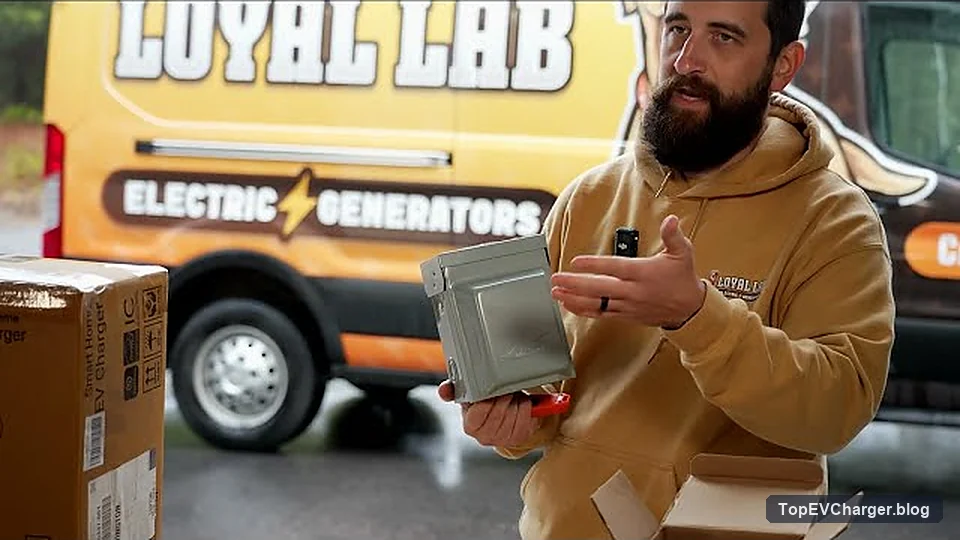
Hardwired units bypass physical receptacle interfaces entirely, bringing supply conductors directly into the internal terminal block. Eliminating the intermediate plug removes a primary point of electrical resistance and thermal stress.
Selecting the correct power architecture depends heavily on your long-term parking habits and whether you prioritize rapid equipment detachment over maximum steady-state electrical efficiency.
- Factory whip configurations dictate maximum amperage limits based on receptacle ratings.
- Direct terminal connections eliminate receptacle wear during high-cycle charging sessions.
- Modular plug setups require specialized GFCI breakers per current electrical code.
Receptacle Limitations and Voltage Drop
Standard NEMA receptacles, evaluated in our ChargePoint Home Flex NEMA 14-50 review, introduce mechanical spring tension points that degrade over thousands of mating cycles, eventually generating destructive micro-arcs.
Direct-wire pathways eliminate these vulnerable mechanical interfaces, ensuring maximum conductivity efficiency across extended multi-hour charging sessions without localized overheating risks in the wall cavity.
- Spring contact fatigue increases electrical resistance over extended operational timelines.
- Thermal imaging often reveals elevated temperatures around standard garage wall outlets.
Thermal Performance and Long-Term Durability
High-amperage continuous electrical loads place severe thermal demands on home charging hardware. As detailed in our ChargePoint Home Flex review, hardwired configurations typically handle sustained fifty-amp draws with superior thermal dissipation.
Plug-in variants must route current through plug blades and receptacle contacts. These physical connection interfaces naturally accumulate heat under maximum continuous load, potentially accelerating wear on the surrounding housing materials.
Managing heat effectively ensures that your charging equipment maintains peak efficiency throughout scorching summer months without triggering thermal throttling safeguards.
- Direct wiring minimizes localized hotspots within residential branch circuit wiring paths.
- Receptacle degradation often triggers thermal fault codes in advanced smart chargers.
- Solid terminal torque specs prevent micro-vibration loosening over years of operation.
Conductor Integrity and Material Stress
Thermal expansion and contraction cycles gradually loosen mechanical fasteners inside standard wall receptacles. This gradual loosening process increases electrical resistance and accelerates component degradation.
Permanent hardwired terminals utilize robust pressure plates that maintain constant tension against copper conductors, preventing loosening caused by routine thermal expansion cycles.
- Copper bus bars resist oxidation much better than exposed receptacle blades.
- Permanent torque distribution prevents localized arcing inside the enclosure.
Electrical Panel Capacity and Load Management
Evaluating your main electrical service panel is vital before committing to either installation topology. Many older residential properties operate on one hundred amp services, requiring careful load calculations to prevent overloads.
Hardwired chargers integrate seamlessly with dynamic load management systems, communicating via hardwired data lines or robust wireless protocols. This capability dynamically scales charging current based on real-time home energy consumption.
Understanding your home electrical threshold protects your main breaker from nuisance tripping while maximizing available charging speed during off-peak utility hours.
- Smart load splitters allow high-power chargers on restricted panels.
- Panel capacity audits prevent costly electrical infrastructure failures later.
- Current transformers monitor total household energy draw in real time.
Amperage Limits for Plug-In Units
National Electrical Code guidelines limit continuous loads on plug-in EV chargers to eighty percent of the receptacle rating. Consequently, a standard forty-amp circuit restricts maximum continuous output to thirty-two amps.
Hardwiring allows you to utilize the full breaker capacity safely, enabling true forty-eight amp delivery when paired with appropriate copper wire gauges and properly rated thermal-magnetic circuit breakers.
- Eighty percent rule dictates continuous load restrictions on standard outlets.
- Circuit breaker sizing must match wire ampacity ratings precisely.
Installation Complexity and NEC Compliance Standards
Installing a plug-in unit suited for standard garages mirrors requirements found in our best level 2 EV charger for plug-in hybrids roundup. While simpler in execution, current electrical codes mandate expensive GFCI breakers.
Hardwired installations require a licensed electrician to run conduit, pull individual THHN copper wires, and torque terminal connections to exact manufacturer specifications. This professional approach guarantees full compliance with local building regulations.
Navigating local permitting requirements ensures your electrical modifications satisfy all regional safety standards and protect your homeowner insurance validity.
- Outdoor plug-in units require weather-rated covers complying with damp location standards.
- Hardwired systems eliminate bulky wall receptacles, offering a cleaner garage aesthetic.
- Professional permitting ensures insurance validity following any electrical component failure.
Conduit Routing and Circuit Protection
Running protective metal or PVC conduit safeguards individual electrical conductors against physical damage from vehicles or storage items in busy residential garages.
Proper circuit protection relies on selecting correct breaker types that guard against both short circuits and dangerous ground fault occurrences.
- Conduit protects internal wiring from mechanical impacts.
- Ground fault breakers protect users from shock hazards.
Portability Factors and Real-World Relocation Scenarios
The primary advantage featured in our best plug and play level 2 EV charger overview is innate unit portability. If you remodel, you simply unplug the hardware, unbolt the bracket, and take it along.
Hardwired units are permanently integrated into your home's electrical grid. Disconnecting a hardwired charger requires shutting off the main breaker, unbolting supply wires, and capping conductors safely within a junction box.
Weighing how often you move residences helps determine whether portable flexibility outweighs the permanent efficiency benefits of a hardwired setup.
- Portable units travel easily if you transition to a new home.
- Permanent hardware stays behind to enhance future property resale value.
- Bracket mounting systems simplify unit removal for plug-in models.
Resale Value and Equipment Transfer
Leaving a hardwired charger behind when selling a home often serves as an attractive selling feature for prospective EV-owning buyers. It represents a finished, professional infrastructure upgrade ready for immediate daily use.
Conversely, taking your plug-in unit allows you to retain an expensive piece of hardware, though you must factor in the cost of reinstalling a matching heavy-duty receptacle at your next destination.
- Permanently installed chargers appeal to modern home buyers.
- Retaining portable units requires new receptacle installations elsewhere.
Operational Safety and Enclosure Protection Ratings
Both plug-in and hardwired configurations maintain rigorous safety certifications from recognized testing laboratories. Enclosure ratings ensure adequate protection against moisture, dust, and accidental impacts during daily residential garage operations.
However, hardwired systems remove the exposed outdoor receptacle vulnerability where water ingress or physical strain on the cord plug can trigger ground fault interruptions during heavy storm events or seasonal freezing.
Maintaining proper environmental sealing prevents premature corrosion and guarantees dependable outdoor or semi-protected garage operation across all seasonal weather changes.
- NEMA enclosures protect internal electronics against harsh environmental weather conditions.
- Integrated ground monitoring protects users against potential insulation breakdown risks.
- Proper torque maintenance prevents terminal oxidation in humid garage environments.
Weatherproofing and Moisture Resistance
Outdoor installations demand robust gasket seals and corrosion-resistant hardware to withstand driving rain, snow accumulation, and extreme temperature fluctuations.
Hardwired connections eliminate external plug interfaces that might collect moisture or dirt over years of exposure to outdoor weather elements.
- Gasket seals prevent moisture penetration in wet locations.
- Corrosion-resistant screws maintain structural enclosure integrity.
Choosing the Right Topology for Your Garage
Selecting between these two configurations depends heavily on your vehicle's maximum acceptance rate, your long-term housing plans, and your existing electrical panel capacity. Assess these factors before purchasing expensive hardware.
Consult with a qualified local electrician to evaluate your service drop and wiring capacity. Making an informed infrastructure choice guarantees safe, reliable, and efficient overnight charging for years to come.
Prioritizing safety, charging speed, and future adaptability ensures your home charging investment meets your driving lifestyle needs seamlessly.
- Assess vehicle onboard charger limits before selecting amperage.
- Evaluate housing stability to decide between portability and permanence.
- Consult certified electricians for professional site load audits.
Final Decision Framework
Reviewing your daily mileage requirements helps clarify whether maximum speed or flexible portability holds greater importance for your household charging routine.
Balancing upfront installation costs against long-term durability ensures you select the optimal charging setup for your specific residential garage environment.
- Daily driving habits dictate necessary charging speeds.
- Budget planning includes potential panel upgrade costs.
Frequently Asked Questions
Can I convert my plug-in EV charger to a hardwired unit later?
Many modern EV chargers support straightforward field conversion by removing the factory plug whip and routing supply wires directly into the internal terminal block.
Always consult the official manufacturer manual and local building codes to guarantee safe internal wiring modifications without accidentally compromising your comprehensive home insurance policy or warranty coverage.
Is a hardwired charger faster than a plug-in charger?
Hardwired chargers typically deliver faster charging speeds because they completely avoid the strict continuous amperage caps imposed on standard wall receptacle circuits by modern building codes.
Maximizing your electrical panel capacity enables higher continuous power output for faster overnight vehicle replenishment when handling large battery capacity electric vehicles in your garage.
Do I need a permit to install a hardwired EV charger?
Most municipal building jurisdictions require an official electrical permit and professional inspection for any new hardwired appliance installation to ensure strict local building code compliance.
Securing proper installation permits protects your entire home electrical infrastructure and guarantees valid coverage under your comprehensive residential property insurance policy after setup.
Can I install a plug-in EV charger myself without an electrician?
You can safely plug the charging unit into an existing, properly rated heavy-duty NEMA receptacle if it already matches your specific vehicle hardware requirements.
However, installing a brand new high-voltage outlet definitely demands a licensed professional electrician to handle correct breaker sizing and heavy-duty wiring gauges.
Which option offers better reliability over years of heavy daily use?
Hardwired units generally offer superior long-term reliability because they completely eliminate mechanical plug connections that naturally degrade under continuous thermal expansion cycles.
Minimizing vulnerable electrical transition points significantly reduces the risk of destructive thermal faults or premature hardware failure during intensive daily vehicle charging routines.