6 Awg vs. 4 Awg Wire Ev Charger: Which Fits Your Setup Better?
Sizing your home EV supply equipment requires balancing maximum continuous ampacity with physical routing constraints. Choosing between these conductors determines your thermal headroom and installation safety margins.

For standard 48-amp charging over short distances, 6 AWG copper provides exceptional value. However, 4 AWG copper remains the mandatory choice for long runs or maximum future-proofing.
Compare all top models in our Best Ev Level 2 Charger.
Side-by-Side Breakdown
| Criteria | 6 Awg | 4 Awg Wire Ev Charger | Edge |
|---|---|---|---|
| Peak Performance & Output | Supports up to 50-amp breakers safely | Supports up to 65-amp breakers safely | 4 Awg Wire Ev Charger |
| Duty Cycle & Consistency | Handles continuous 48A loads efficiently | Handles heavy continuous loads with minimal thermal rise | 4 Awg Wire Ev Charger |
| Operating Noise & Vibration | Zero mechanical noise or electrical hum | Zero mechanical noise or electrical hum | Tie |
| Portability & Footprint | Easier to bend inside standard electrical panels | Thicker gauge requires larger conduit and wider bends | 6 Awg |
| Maintenance & Service Life | Long service life under standard garage conditions | Extended thermal longevity under peak loads | 4 Awg Wire Ev Charger |
| Power Requirements | Matched for standard 50-amp residential circuits | Optimized for heavy-duty subpanels and long runs | 4 Awg Wire Ev Charger |
| Best Ideal Use-Case | Standard home garages with short panel distances | Long detached garage runs and high-output chargers | 4 Awg Wire Ev Charger |
Understanding NEC Sizing Mandates for Level 2 EV Charging
Navigating the National Electrical Code is essential for installing any residential charging equipment safely. Electrical inspectors enforce strict guidelines to prevent overheating and catastrophic wiring failures during extended charging cycles.
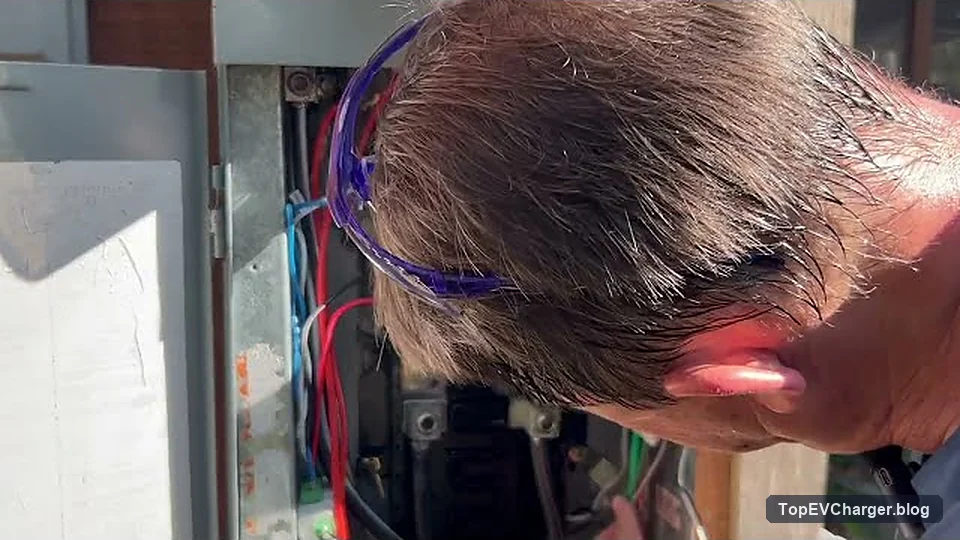
When shopping for the best ev level 2 charger, remember the 125% continuous load rule dictates that your circuit conductors must handle increased current draw. This ensures safe operation without overheating wires.
- National Electrical Code sets strict minimum wire gauges
- Continuous loads require 125 percent over-sizing calculations
- Safety margins prevent terminal melting and insulation breakdown
Continuous Duty Realities
Electric vehicles draw maximum current for hours continuously, putting sustained thermal stress on your copper wires. Selecting the correct conductor prevents voltage degradation and protects your home electrical system.
Understanding these thermal realities helps you avoid costly rework and failed electrical inspections during your final permit sign-off process.
- Extended charging generates significant sustained heat
- Thermal stress tests inferior conductor installations over time
Ampacity Ratings and Thermal Limits in Table 310.16
Consulting our ev charger wire size chart reveals the baseline ampacity ratings for various copper wire sizes based on terminal temperature ratings. Your specific hardware ratings dictate the exact column you must use.
Most residential EV chargers and circuit breakers are rated for 75°C terminations, allowing higher allowable ampacities than older 60°C ratings. Matching your wire insulation type to these terminal ratings is critical.
- Table 310.16 outlines maximum safe copper ampacities
- Terminal temperature ratings dictate allowable circuit limits
- Proper insulation selection prevents premature conductor degradation
THHN vs NM-B Insulation Limits
THHN copper wire inside conduit benefits from a higher 75°C or 90°C rating depending on application specifics. Romex NM-B cable remains restricted to the lower 60°C column for ampacity sizing purposes.
This insulation distinction frequently forces installers to upsize their residential cable choices when running non-metallic sheathed cables through finished garage walls.
- THHN conduit wiring offers superior thermal performance
- NM-B cable requires conservative 60°C ampacity calculations
Voltage Drop Calculations for Extended Garage Runs
Distance plays a massive role in determining whether you should use six-gauge or four-gauge copper conductors. Long cable runs experience natural electrical resistance, leading to noticeable voltage drops at the vehicle inlet.
Even if you select the best level 2 charger for jeep 4xe, keeping overall voltage drop below three percent ensures your unit operates at peak efficiency without wasting electricity as unwanted heat.
- Long runs increase electrical resistance and heat generation
- Voltage drops reduce total charging speed and efficiency
- Thicker conductors mitigate long-distance power loss effectively
Calculating Run Distances
When your electrical panel sits more than fifty feet from your parking spot, voltage drop becomes a major design factor. Stepping up to a thicker wire size resolves this distance challenge.
Engineers rely on standard resistance formulas to calculate exact distance thresholds before upgrading conductor diameters for safety.
- Runs over fifty feet often demand thicker wire
- Calculations prevent sluggish charging performance over distance
Conduit Fill Capacity and Heat Dissipation Realities
Physical installation constraints require careful planning regarding conduit sizing and wire bundle density. Pulling thicker cables through tight PVC or EMT metal conduit requires patience and proper lubrication.
Overcrowding conduits traps heat, lowering the allowable ampacity of your conductors according to official National Electrical Code adjustment factors.
- Conduit fill rules prevent physical damage during wire pulling
- Heat dissipation suffers inside tightly packed raceways
- Proper sizing ensures airflow and long-term thermal stability
Bending Radius Requirements
Thicker conductors demand wider physical bending radiuses to prevent stressing internal copper strands. Forcing thick cables into tight junction boxes violates code and risks loose terminal connections.
Planning your conduit layout with smooth sweeping elbows makes pulling heavy gauge copper significantly easier for DIYers and professional electricians alike.
- Heavy copper requires generous bending radiuses in boxes
- Tight turns risk kinking or fracturing solid conductor strands
Hardwired Installations vs Plug-In Circuit Demands
Hardwired EV chargers bypass the thermal vulnerabilities of traditional 1450 receptacle outlets entirely. Direct wire connections eliminate intermediate connection points that frequently fail under heavy continuous loads.
Plug-in installations require GFCI breaker protection at the main panel, adding significant hardware costs compared to standard hardwired dedicated breaker configurations.
- Hardwiring eliminates vulnerable receptacle plug interfaces
- NEMA outlets mandate expensive upstream GFCI breaker protection
- Direct connections offer superior long-term thermal reliability
Receptacle Heat Concerns
Standard heavy-duty industrial outlets handle repeated plug insertions, but they remain prone to internal spring fatigue over years of use. Hardwiring removes this mechanical failure point completely.
Choosing a hardwired setup allows you to utilize your chosen wire gauge safely without worrying about melted plastic outlet housings.
- Outlets experience spring fatigue and terminal oxidation
- Hardwiring provides permanent, maintenance-free electrical connections
Total Material Cost and Installation Labor Breakdown
Selecting the best 240v ev charger involves balancing upfront material expenses against long-term operational safety. Thicker copper wire commands a noticeably higher price per foot at local electrical supply houses.
Labor costs may also increase slightly when handling heavier conductors due to increased physical stiffness and more challenging panel termination requirements.
- Thicker copper wire increases initial project material costs
- Labor effort rises when routing stiff heavy-gauge conductors
- Proper upfront investment prevents costly electrical replacements later
Weighing Upfront vs Long-Term Value
While saving money on thinner wire sounds attractive initially, the risk of thermal overload makes long-term frugality dangerous. Investing in proper sizing protects your home from fire hazards.
Comparing total project estimates helps homeowners find the ideal balance between installation safety and budget constraints.
- Saving money on wire sizing introduces serious safety risks
- Quality installations protect property value and vehicle chargers
Future-Proofing for Higher Amperage EV Power Demands
Electric vehicle battery capacities continue to grow, pushing charging hardware toward higher amperage outputs. Installing robust wiring today prepares your home for next-generation vehicle technologies seamlessly.
Choosing an oversized conductor now saves you from tearing open drywall to rewire your garage when you upgrade your charger capacity later.
- Next-generation vehicles demand faster home charging speeds
- Future-proofing eliminates the need for expensive secondary retrofits
- Installing larger wire provides unmatched operational flexibility
Preparing for Dual Charger Setups
Many households eventually adopt a second electric vehicle, requiring expanded garage charging capabilities or load-sharing setups. Heavy wiring lays the groundwork for future electrical expansion.
Anticipating these household energy shifts ensures your initial electrical service upgrade handles tomorrow's demands without breaking a sweat.
- Multi-EV households demand resilient home electrical capacity
- Robust wiring supports future subpanel and splitter additions
Frequently Asked Questions
Can I use six-gauge wire for a 48-amp EV charger?
Yes, six-gauge copper wire is rated to handle standard 48-amp continuous EV chargers when installed properly using 75°C rated terminals and compliant conduit. Always verify local electrical codes before starting your installation.
When is four-gauge wire strictly mandatory for EV charging?
You must use four-gauge copper wire when your circuit run exceeds fifty feet to prevent excessive voltage drop or when feeding higher amperage subpanels. Long distances create resistance that thinner conductors cannot overcome efficiently.
Does NM-B Romex cable require upsizing for EV chargers?
Yes, because non-metallic sheathed cable falls under the restrictive 60°C insulation column in NEC Table 310.16. This thermal limitation often forces installers to upsize their cable selection when running wires through insulated walls.
Is hardwiring better than using a plug-in NEMA outlet?
Hardwiring provides superior safety by eliminating intermediate plug connections that are prone to thermal fatigue and melting. Direct connections also bypass expensive mandatory GFCI breaker requirements in many jurisdictions.
How does conduit fill affect my wire gauge choice?
Overcrowded conduits trap heat and force electricians to apply ampacity adjustment factors that reduce safe current capacity. Proper conduit sizing ensures adequate airflow and maintains your wiring safety margins.